The Aspire consortium — comprising HOCHTIEF PPP Solutions, Vinci Building, and Cityheart — has been selected to design, build, finance, and operate a major student accommodation programme for the University of Southampton under a 50-year public-private partnership concession valued at approximately €200 million (£170 million). The contract, awarded following a competitive tender, covers the creation of 1,092 new student bed spaces across the Connaught and South Stoneham campuses, the refurbishment of 399 existing rooms, and the restoration of the Grade II listed Stoneham House for use as a landmark living and learning space. Construction is scheduled to begin later in 2026, pending planning submission for the Wessex Lane campus element, and is targeted for completion by 2029. The project forms a central pillar of the University of Southampton’s ambition to grow its student population to 30,000 by 2031 — and represents a significant contract win for both HOCHTIEF’s European PPP operations and for Vinci Building’s UK higher education construction business.
Three Campuses, Three New Communities: What the Programme Will Build
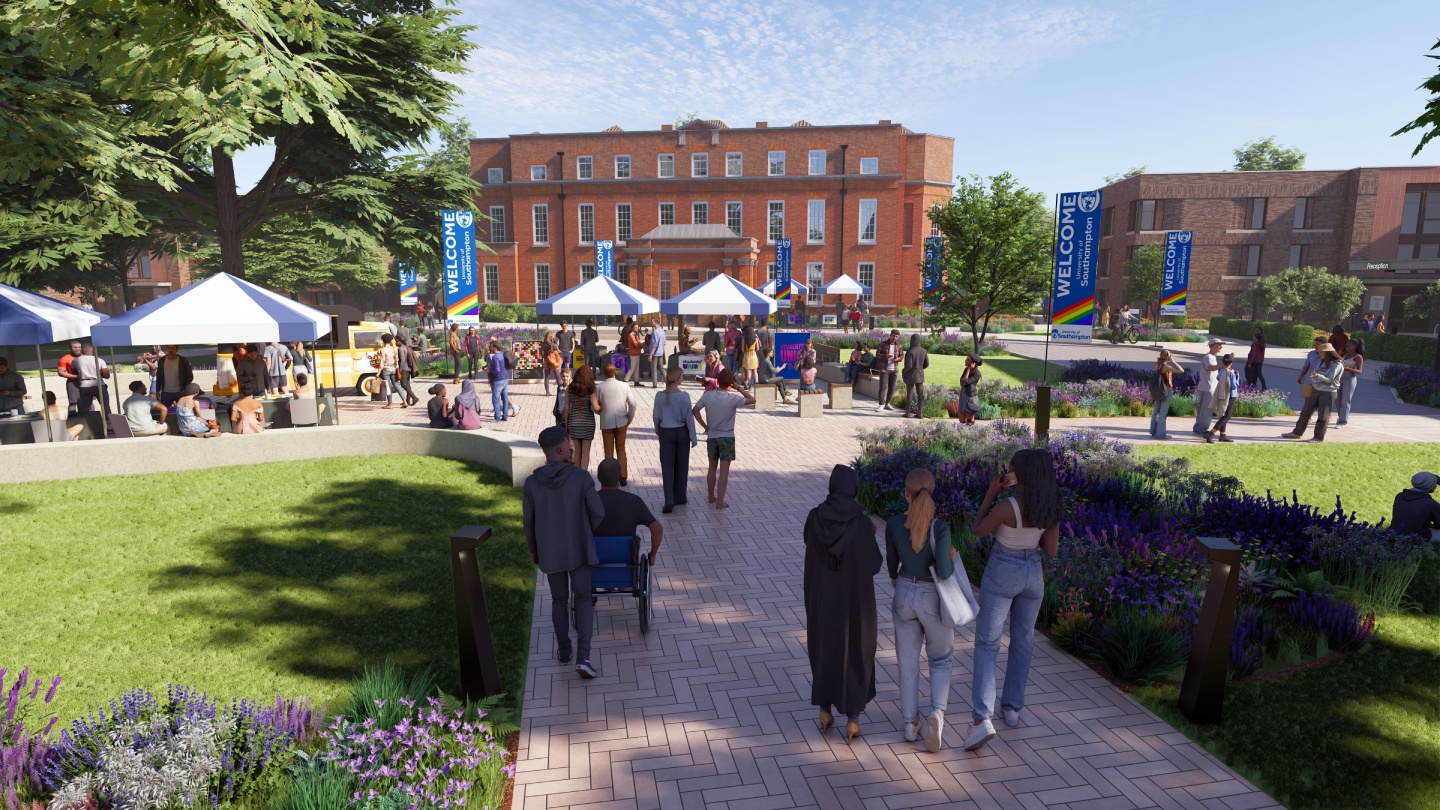
The Aspire programme is structured around three interconnected residential environments across the university estate, each designed to create a distinct sense of place while contributing to the broader transformation of the university’s accommodation offering. At South Stoneham — the centrepiece of the new development — the plans envision a new public square that will serve as a social hub for both residential students and the wider campus community. Stoneham Courtyard, the newly designed residential precinct radiating from that square, represents the largest single tranche of new beds and will be built to current energy and environmental standards that significantly exceed the building regulations requirements that governed the existing stock it supplements.
Project Fact Sheet: University of Southampton Aspire Student Accommodation Programme
Project Name: University of Southampton Aspire Student Accommodation Programme
Location: Connaught Campus, South Stoneham Campus, and Archers Road (Wessex Lane area), Southampton, UK
Contract Value: €200 million (~£170 million)
Contract Type: 50-year Design-Build-Finance-Operate (DBFO) PPP concession
New Bed Spaces: 1,092
Refurbished Rooms: 399
Listed Building: Stoneham House (Grade II) — restoration and reactivation as living and learning space
Construction Start: 2026 (later in year; planning for Wessex Lane pending)
Target Completion: 2029
Sustainability: Emission-free operation; exceeds UK Net Zero Carbon targets
Affordability Commitment: 10% increase in affordable student accommodation in portfolio
University Growth Target: 30,000 students by 2031
Consortium Collective Track Record: ~30,000 student beds delivered across UK
Project Team: University of Southampton Aspire PPP
Client: University of Southampton
Consortium Name: Aspire
Consortium Lead (PPP / Finance): HOCHTIEF PPP Solutions (subsidiary of HOCHTIEF AG / ACS Group)
HOCHTIEF CEO: Juan Santamaría
Consortium Lead (Design & Build): Vinci Building (UK arm of Vinci Construction)
Consortium Member (Operations): Cityheart Limited
Architect: Willmore Iles Architects Ltd.
Planning Application (Wessex Lane): Being submitted March/April 2026
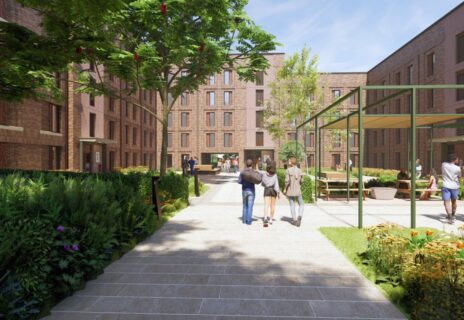
At Connaught, a redesigned quad will provide the architectural framework for a renewed residential community — restoring a sense of campus coherence to a part of the estate that has historically felt fragmented, and creating the kind of legible collegiate outdoor space that student accommodation research consistently shows improves wellbeing, social connection, and academic engagement. The third component — the refurbishment of halls at Archers Road — brings the existing room stock at that location up to contemporary standards, addressing the most persistent criticisms of older university accommodation: inadequate thermal performance, poor acoustic separation, limited natural light, and bathroom and kitchen provision that fails modern expectations. Stoneham House, the Grade II listed historic building, will be restored from its current underutilised state and brought back into active use as a mixed living and learning space — a careful heritage reactivation that preserves one of the university’s most architecturally significant buildings while giving it a sustainable programme for the 21st century.
The Aspire Consortium: HOCHTIEF PPP Solutions, Vinci Building, and Cityheart
The Aspire consortium was assembled from three organisations with complementary expertise across the design-build-finance-operate spectrum that a 50-year PPP student accommodation contract demands. HOCHTIEF PPP Solutions — the concession and public-private partnership business within the German construction giant that sits at the core of the ACS Group — brings the long-term infrastructure financing and asset management experience that underpins the project’s concession structure. HOCHTIEF’s PPP division has been active in UK infrastructure since the early years of the Private Finance Initiative, and has over recent years expanded its student accommodation portfolio across multiple university partnerships. Vinci Building, the UK contracting business of the French-headquartered Vinci construction group, provides the primary design-and-build delivery capability — managing the integrated design management, procurement, supply chain, and on-site construction execution. Cityheart, the specialist UK developer and operator of student residential communities, contributes the operational knowledge that will govern how these buildings are managed, maintained, and continuously improved for the full 50-year concession term.
Between them, the three Aspire partners cite a collective track record of approximately 30,000 student beds delivered across the UK — a portfolio that gives the consortium the depth of lessons learned, sub-contractor relationships, and operational benchmarks required to execute a project of this scale while meeting the University of Southampton’s ambition for a step-change in accommodation quality. HOCHTIEF CEO Juan Santamaría, who has been publicly articulating the company’s commitment to strengthening its UK infrastructure market presence, has positioned the Southampton contract as a demonstration of HOCHTIEF’s end-to-end infrastructure capability — combining design, construction, financing, and operations in a single long-term partnership structure that creates sustained value for both the university and the consortium.
Emission-Free Buildings, 10% More Affordable Beds, and the Net Zero Commitment
The Aspire programme at the University of Southampton has been designed from first principles around two commitments that go beyond the standard sustainability clauses in most UK student accommodation contracts. First, all new and refurbished buildings will be designed to operate entirely emission-free — targeting operational net zero carbon performance that exceeds the UK’s national Net Zero Carbon targets. This means all space heating, hot water, and on-site energy systems must be decarbonised at the point of delivery, not simply offset through purchased certificates. The buildings will use heat pump systems, renewable electricity connections, and high-performance fabric specifications to achieve this performance in the challenging climate and operational conditions of student accommodation, where occupancy patterns, high hot water demand, and 24-hour activity create energy loads that are harder to decarbonise than typical commercial office environments.

Second, the affordability commitment embedded in the PPP agreement requires the consortium to increase the proportion of affordable student accommodation within the total accommodation portfolio by 10 per cent — a target that directly addresses one of the UK higher education sector’s most politically charged challenges. With student accommodation costs in many university cities rising sharply, student unions and the government alike have highlighted affordability as a systemic risk to widening participation in higher education. For the University of Southampton — which draws students from across the socioeconomic spectrum and has made widening access a core institutional commitment — this contractual affordability increment is a meaningful policy signal embedded in a 50-year infrastructure deal. Plans for the Wessex Lane campus are being submitted for planning this week, creating three new residential communities within landscaped parkland as the spatial anchor for the broader estate transformation.
University of Southampton’s 30,000 Student Growth Ambition and the UK’s Student Housing Crisis
The University of Southampton’s drive to grow from its current student population to 30,000 by 2031 sits within a national policy context in which the UK government has set ambitious targets for expanding higher education participation, particularly among students from underrepresented backgrounds and from regions with historically lower progression rates. For Southampton, growth to 30,000 requires not only sufficient teaching and laboratory infrastructure but adequate, affordable, high-quality residential accommodation that allows students — particularly first-year undergraduates who depend on university-managed halls — to make the transition to university life without the anxiety of a private rental market that in many university cities has become unaffordable and highly competitive. This focus on high-quality residential solutions is mirrored in the private sector, as seen with Redevco proceeding with a 391-unit sustainable Build-to-Rent (BTR) project in Glasgow, which aims to address the urgent demand for modern, professionally managed housing in major UK urban centers.
The broader UK student accommodation market is experiencing a structural shortage that makes the Southampton Aspire programme not merely a local infrastructure decision but a nationally significant model for how universities can use the PPP mechanism to accelerate accommodation delivery at scale without consuming their own capital. The UK Purpose Built Student Accommodation (PBSA) sector has seen rapid growth in private investment since 2010, but the premium market segment — high-amenity, high-cost beds — has expanded disproportionately compared to affordable provision, creating a growing mismatch between supply and the needs of the most financially stretched students. By embedding a 10 per cent affordability uplift as a contractual requirement in the Aspire deal, the University of Southampton has used its procurement power to ensure that the expansion of capacity directly addresses this market failure rather than replicating it.
Leave a Reply