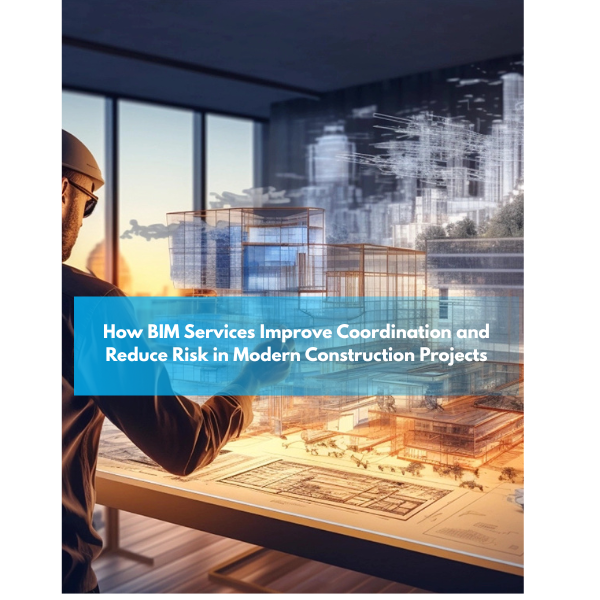
The construction industry is experiencing rising pressures to deliver complex projects faster, with lower budgets and fewer errors. With more integrated building systems and geographically distributed project teams, traditional coordination methods are no longer sufficient. It is at this point that Building Information Modelling (BIM) services become a critical component in modern project delivery.
BIM is more than a CAD tool. When used correctly, it becomes a coordination and decision-making platform that allows project stakeholders to identify risks early and prevent costly rework in construction projects.
Why Coordination Remains a Significant Construction Problem
Even in today’s construction industry, many projects are still managed using disjointed drawings and workflows. The architecture, engineering, and MEP groups work on information simultaneously, resulting in clashes that are identified on site.
This lack of coordination leads to:
1. Design clashes between systems
2. Late-stage design changes
3. RFIs and construction delays
4. Cost of rework
BIM services mitigate these issues by providing a collaborative digital space where all disciplines can collaborate using coordinated data.
BIM: More Than a Model
BIM essentially integrates models of different disciplines in a federated environment. This enables the team to analyze how different building elements interact spatially and functionally before actual construction work starts.
By using coordinated BIM processes, the project team can:
1. Identify clashes between architectural, structural, and MEP systems
2. Review constructability during design development
3. Validate access, clearance, and maintenance requirements
4. Resolve conflicts collaboratively before site execution
This helps to minimize risks and makes it easier to take informed decisions throughout the project life cycle.
Minimizing Construction Risks by Engaging BIM Services Early
Construction risks often begin during the early design phases of a project, even before the actual construction work begins on site. Inadequate coordination, lack of clarity, and design changes at the last minute often result in delays and cost overruns.
Engaging BIM services early helps to:
1. Identify high-risk interfaces between systems
2. Assess the impact of design changes before implementation
3. Improve confidence in coordinated construction documents
4. Reduce the likelihood of on-site conflicts
Consequently, BIM becomes a proactive risk management tool rather than a reactive problem-solving solution.
Enabling Multidisciplinary Collaboration
Construction projects of today require a high degree of collaboration among various stakeholders. BIM services provide a common platform for architects, engineers, contractors, and consultants to view and coordinate their work together.
This collaborative environment:
Improves communication between disciplines
Reduces misinterpretation of drawings
Improves accountability among teams
Fosters collaborative decision-making
Leave a Reply