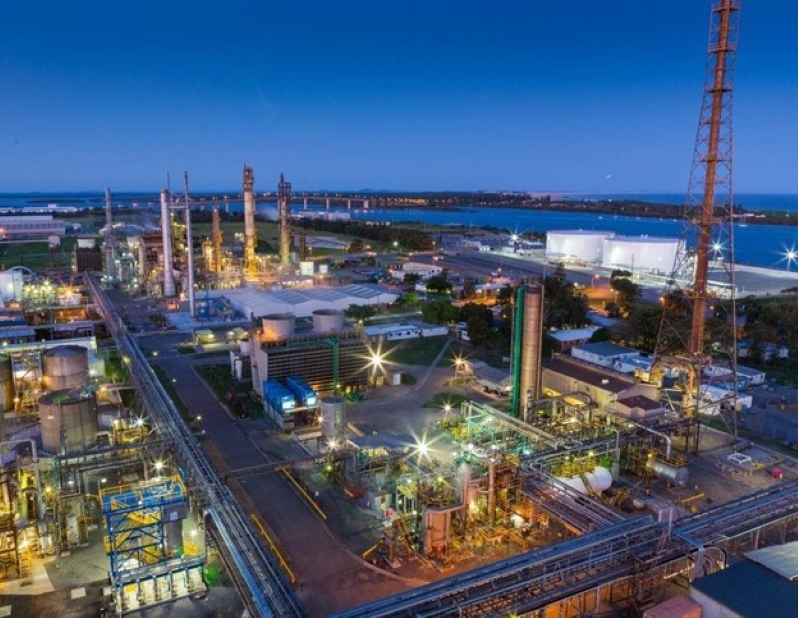
Australia’s transition away from coal-fired generation is picking up pace in New South Wales, where the former Liddell Power Station site is being transformed into the Hunter Energy Hub project – one of the country’s most ambitious renewable energy and storage redevelopment projects.
Spearheaded by AGL Energy, the project aims to repurpose the historic Hunter Valley coal generation precinct into a multi-technology clean energy and industrial hub. It will be centered on grid-scale battery storage, renewable energy integration, advanced manufacturing and circular economy industries. The redevelopment has also become a flagship example of how ageing thermal generation assets can be converted into next-generation energy infrastructure while preserving grid connections and supporting regional economic transition.
Hunter Energy Hub Project Overview
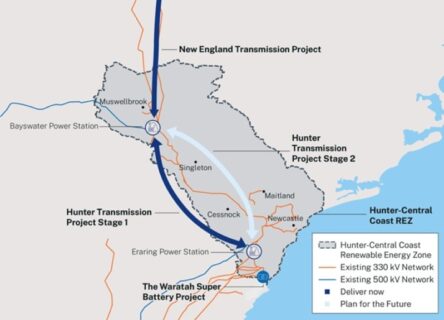
Hunter Energy Hub is located near Muswellbrook in the Hunter Valley region of New South Wales, approximately 230km northwest of Sydney. The site previously hosted the 2,000MW Liddell coal-fired power station. The coal-fired station officially closed in April 2023 after more than five decades of operation. Since then, AGL has put in motion plans to redevelop the site into a clean energy hub. This is with aim of supporting Australia’s energy transition while maintaining reliability in the National Electricity Market (NEM).
Latest May 2026 Developments
The most significant recent milestone came on May 26, 2026, when the iconic 170-metre chimney stacks of the former Liddell Power Station were demolished in a controlled blast. The demolition marked a symbolic turning point in Australia’s energy transition. It also cleared the way for further development works associated with the Hunter Energy Hub.
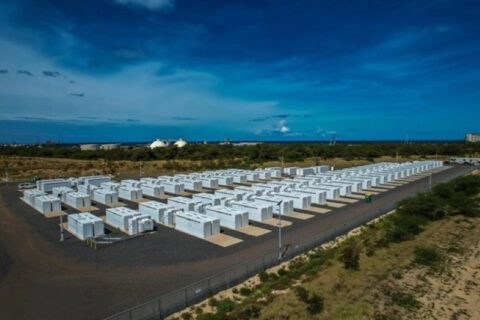
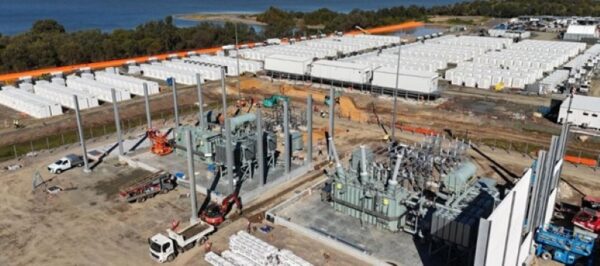
At the same time, commissioning activities are underway for the 500MW/1,000MWh Liddell Battery Energy Storage System (BESS). Lindell BESS forms the first major operational component of the new energy hub. According to AGL, the first 250MW section entered commissioning in March 2026, with full commercial operation expected by June 2026. The project also represents one of the largest grid-scale batteries in Australia. It is intended to provide storage capacity, renewable firming and grid stability services to the NEM.
Lindell BESS carries an investment value of approximately AUD 750 million. It has also involved more than 600 workers during construction. The battery system is being delivered in partnership with Fluence Energy, a major global battery storage integrator.
Hunter Energy Hub: Project Scope and Vision
Hunter Energy Hub is envisioned as a diversified clean energy and industrial ecosystem rather than a standalone battery project. AGL’s long-term plans include renewable energy generation and pumped hydro storage. Battery and solar panel recycling, solar panel manufacturing and other low-carbon industrial activities also feature in the plan.
One of the proposed anchor projects linked to the hub is the Muswellbrook Pumped Hydro project. Muswellbrook hydro project is expected to provide long-duration energy storage capacity for the grid.
The hub is also being positioned as a industrial precinct that can use existing transmission infrastructure inherited from the former coal power station.
Additionally, AGL has entered into collaborations aimed at establishing advanced manufacturing and recycling industries at the site. These include:
- Solar panel manufacturing initiatives with SunDrive
- Battery recycling proposals with Renewable Metals
- Solar panel recycling and cable manufacturing initiatives with Elecsome
These partnerships are intended to support the hub’s circular economy. This is while generating long-term industrial employment opportunities in the Hunter Valley region.
Importance of Hunter Energy Hub Project in Australia
The redevelopment of Hunter Energy Hub is part of a broader transformation underway across Australia’s energy sector. As ageing coal-fired power stations retire, utilities and governments are also increasingly investing in cleaner generation. These span battery storage, renewables and transmission upgrades to maintain energy reliability while reducing carbon emissions.
Liddell’s closure became one of Australia’s most closely watched energy transition events after years of national debate over grid stability and electricity pricing. The site’s transformation into the Hunter Energy Hub is therefore being viewed as both a practical infrastructure redevelopment and a symbolic milestone in Australia’s decarbonization ambition.
Additionally, Hunter Valley itself has historically been one of Australia’s most important coal-producing regions. The emergence of renewable energy manufacturing, battery storage and recycling industries within the region is indeed, turning over a new leaf. Hunter Energy Hub is expected to play a major role in supporting economic diversification and workforce transition over the next decade.
Infrastructure and Grid Integration
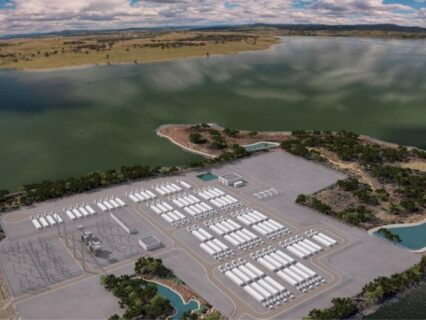
One of the project’s biggest advantages is the reuse of legacy transmission infrastructure associated with the former Liddell and Bayswater coal stations. Existing high-voltage connections also significantly reduce the complexity and cost of integrating new renewable and storage projects into the electricity network.
Additionally, Liddell BESS itself will provide fast-response grid support services, energy arbitrage capability and renewable integration support. It is also expected to improve overall system reliability as more intermittent solar and wind generation enters the grid.
Liddell BESS’ transmission infrastructure is being supporting by a 330/33kV battery substation. Additional transmission line works are also being delivered by Transgrid.
Sustainability and Circular Economy Focus
Beyond renewable energy generation and storage, Hunter Energy Hub will also incorporate industrial recycling and manufacturing processes. These will support Australia’s clean energy supply chain. Proposed activities include recycling solar panels and lithium-ion batteries. These will also help reduce waste and support domestic manufacturing capacity.
The hub’s proximity to Port of Newcastle will also allow for export opportunities and industrial logistics for future clean energy industries.
Hunter Energy Hub Project Development Outlook
Hunter Energy Hub in Muswellbrook, NSW is emerging as one of Australia’s most important energy transition projects. It will combine large-scale storage, industrial redevelopment and clean energy manufacturing within a former coal-generation precinct.
With the demolition of the Liddell stacks now complete and the 500MW battery nearing full commercial operation, the project has entered a new phase that could shape the future of industrial energy redevelopment across Australia.
Hunter Energy Hub Project Fact Sheet
Location: Muswellbrook in Hunter Valley, New South Wales
Developer: AGL Energy
Former Site: Liddell Power Station
Project Type: Renewable energy and industrial energy hub
Core Components:
- Grid-scale battery storage
- Pumped hydro proposals
- Renewable energy integration
- Battery recycling
- Solar panel recycling
- Solar manufacturing
Flagship Project: 500MW/1,000MWh Liddell Battery
Estimated Battery Investment: AUD 750 million
Liddell Battery Status: Commissioning underway
Expected Full Battery Operation: June 2026
Former Coal Plant Closure: April 2023
Major Demolition Milestone: Chimney demolition completed May 2026
Strategic Objective: Coal-to-clean-energy transition and industrial redevelopment
Project Timeline
April 2023 – Liddell Power Station officially closes
2024 – Construction of the Liddell Battery progresses
March 2026 – First 250MW of battery enters commissioning
May 2026 – Liddell chimney stacks demolished
June 2026 – Expected full commercial operation of battery
2026 Onward – Expansion of manufacturing, recycling and renewable projects planned
Project Team
Owner and Developer: AGL Energy
Battery Integration Partner: Fluence Energy
Transmission Infrastructure Partner: Transgrid
Solar Manufacturing Partner: SunDrive
Recycling and Circular Economy Partners: Renewable Metal, Elecsome
Government and Energy Agencies: Australian Renewable Energy Agency (ARENA), Australian Energy Market Operator (AEMO)
Leave a Reply