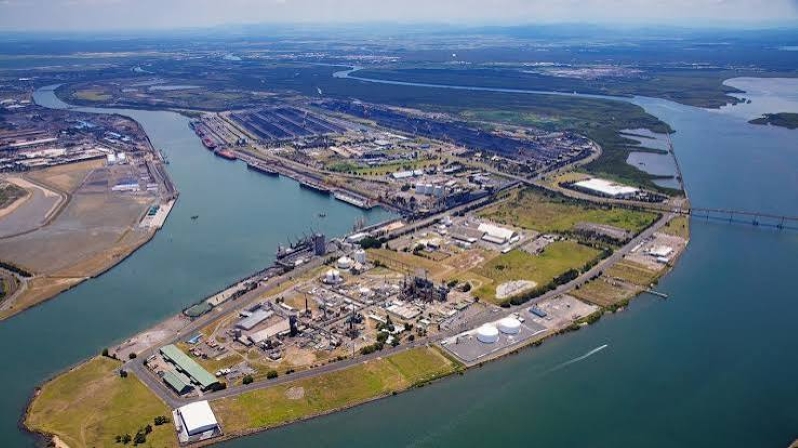
Australia-based explosives and chemicals manufacturer Orica has taken a Final Investment Decision (FID) valued at A$432 million (US$281 million) to proceed with its Hunter Valley Hydrogen Hub (HVHH) in New South Wales. The FID will support the development through the Australian Renewable Energy Agency’s (ARENA) Hydrogen Headstart Program. It also marks the first project under the initiative to progress from funding approval to full investment commitment.
The development of Orica’s Hunter Valley Hydrogen Hub comes after a difficult period for Australia’s hydrogen sector. Recently, several high-profile projects have been delayed or cancelled amid rising costs and uncertain demand. This effectively positions Orica’s Hunter Valley Hydrogen Hub project as one of the country’s first large-scale industrial renewable hydrogen facilities to move into construction.
Construction of Orica’s Hunter Valley Hydrogen Hub is expected to begin this year, with commissioning targeted for 2029. Once operational, the project will be among the largest renewable hydrogen facilities in the Southern Hemisphere.
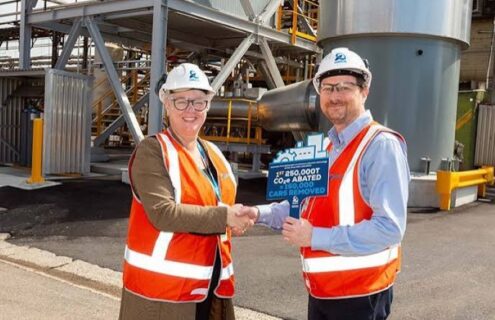
Gains in Australia’s Hydrogen Market
Unlike many green hydrogen developments targeting export markets, the Hunter Valley Hydrogen Hub has a guaranteed domestic customer from day one. Renewable hydrogen produced at the facility will replace natural gas currently used as feedstock in ammonia manufacturing at Orica’s long-established Kooragang Island plant near Newcastle. This significantly lowers commercial risk by integrating hydrogen production into an existing industrial operation with established demand rather than relying on future export opportunities.
The investment also represents an important demonstration project for Australia’s Hydrogen Headstart Program. The program was created to bridge the cost gap between renewable hydrogen and conventional fossil-fuel-based production. This is through production credits over a ten-year period.
Government officials also view the project as evidence that industrial-scale renewable hydrogen can progress beyond pilot projects into commercial deployment. This is despite challenging market conditions – a factor that has led to the shelving of projects such as Edify Energy’s Townsville Region Hydrogen Hub in Queensland.
Orica’s Hunter Valley Hydrogen Hub: Project Overview
The first phase of the Hunter Valley Hydrogen Hub will feature a 50 MW grid-connected electrolyser. It will be powered by renewable electricity and supplied with recycled water. The facility is also expected to produce approximately 4,700 tons of renewable hydrogen annually, equivalent to about 12 tons per day.
Rather than supplying transportation or export markets initially, the hydrogen will be consumed directly within Orica’s ammonia manufacturing process. This will replace about 7.5% of the natural gas currently used as feedstock. Effectively, it will also enable the production of lower-carbon ammonia and ammonium nitrate products used extensively by Australia’s mining, agriculture, food and industrial sectors.
The project is also expected to release natural gas back into Australia’s domestic market by reducing industrial consumption.
Previous Challenges Faced by the Project
Orica’s Hunter Valley Hydrogen Hub Final Investment Decision (FID) follows a turbulent period for the project.
In October 2024, former development partner Origin Energy withdrew from hydrogen development. Origin cited uncertainty surrounding market demand, project economics and the pace of industry development. Despite that setback, Orica continued advancing the project and secured additional government support.
The latest investment decision is a show of renewed confidence in industrial hydrogen applications. Hydrogen is also increasingly seen as a replacement fuel from fossil-fuel.
Environmental Benefits
According to Orica and the Australian Government, the project will:
- Produce approximately 4,700 tons of renewable hydrogen annually
- Reduce natural gas demand at the Kooragang Island facility by around 7.5%
- Cut emissions equivalent to removing approximately 26,500 passenger vehicles from Australian roads each year
- Support production of lower-carbon ammonia and ammonium nitrate
- Demonstrate decarbonization pathways for heavy industry
Orica’s Hunter Valley Hydrogen Hub project is also expected to create around 160 construction jobs and approximately 10 permanent operational positions once commissioned.
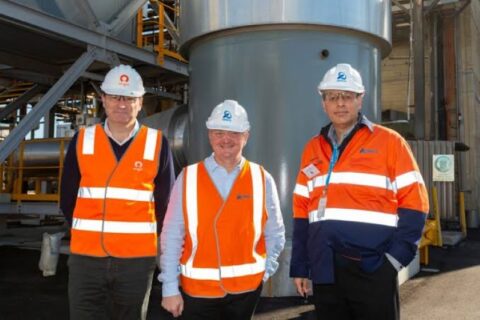
Orica’s Hunter Valley Hydrogen Hub: Project Financing
Total government support includes:
- A$432 million through ARENA’s Hydrogen Headstart Program (production credits)
- A$70 million from the Commonwealth Regional Hydrogen Hubs Program
- A$45 million through the New South Wales Hydrogen Hub Initiative
Orica itself expects to invest approximately A$245-283 million through 2029 to develop the facility. Government funding is structured as production credits paid over ten years. This helps bridge the commercial gap between renewable hydrogen production costs and prevailing market prices.
Hunter Valley Hydrogen Hub (HVHH) Project Fact Sheet
Location: Kooragang Island, Newcastle, New South Wales. Tied to Orica’s Kooragang Island chemical complex.
Status: Final Investment Decision reached (July 2026)
Developer: Orica Limited
Technology: Renewable hydrogen production via electrolysis
Electrolyser Capacity: 50 MW
Hydrogen Production: Approximately 4,700 tons annually (12 tons daily)
Primary Use: Renewable hydrogen replacing natural gas feedstock in ammonia production
Government Support:
- A$432 million – ARENA Hydrogen Headstart
- A$70 million – Commonwealth Regional Hydrogen Hubs Program
- A$45 million – NSW Hydrogen Hub Initiative
Orica Investment: Approximately A$245-283 million
Construction Start: 2026
Expected Operations: 2029
Construction Jobs: Approximately 160
Permanent Jobs: Approximately 10
Estimated Emissions Reduction: Equivalent to removing 26,500 cars from the road annually

Leave a Reply