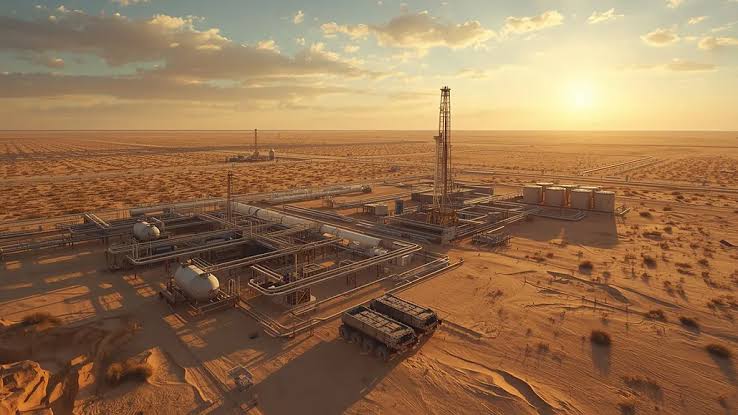
Illizi South Gas project has entered a major construction phase after on-site work officially began on the $5.4 billion development in southeastern Algeria. The milestone marks the transition from planning and approvals to field execution. It also reinforces Algeria’s strategy to expand natural gas production, attract foreign investment, and strengthen long-term energy exports while meeting growing domestic demand.
The project covers the Illizi South block, located about 100km south of In Amenas near the Libyan border. Saudi Arabia’s Midad Energy is financing the entire investment under a production-sharing agreement with Algeria’s state-owned energy company Sonatrach. Construction activities follow the Algerian government’s formal approval of the development agreement earlier this year.
The agreement runs for 30 years, with an option to extend for another decade. It also includes a seven-year exploration phase before full production reaches its projected capacity.
Illizi South Gas Project construction enters execution phase
The start of field work represents the first visible stage of one of Algeria’s largest upstream energy investments in recent years. Early construction includes site preparation, supporting infrastructure, exploration facilities, and groundwork for future production systems.
Midad Energy will fund every stage of exploration and development without direct public financing. Around $288 million has already been allocated to exploration and appraisal activities during the initial phase.
Moreover, developers will deploy modern digital technologies throughout construction and future operations. Sonatrach also confirmed that all works must comply with Algeria’s environmental regulations and national hydrocarbon legislation.
The project falls under Algeria’s Hydrocarbon Law 19-13, which aims to attract international investors while improving the country’s upstream competitiveness. Consequently, officials expect the development to support future exploration across the Illizi Basin.
Illizi South Gas Project strengthens Algeria’s energy infrastructure
The Illizi South development will significantly increase Algeria’s long-term hydrocarbon production. Current projections estimate total output of about 993 million barrels of oil equivalent during the contract period.
The development should also produce approximately 125 billion cubic metres of marketable natural gas. Additionally, production is expected to include roughly 204 million barrels of liquid hydrocarbons comprising liquefied petroleum gas and condensates.
These volumes will help Algeria reinforce its position as one of Africa’s leading natural gas producers. Furthermore, the additional production supports the country’s broader investment programme targeting upstream expansion and export growth.
The project also reflects increasing energy cooperation between Algeria and Saudi Arabia. Their partnership began with a memorandum of understanding signed in 2024 before evolving into the current production-sharing agreement.
Industry observers believe the investment demonstrates renewed confidence in Algeria’s upstream sector. As construction progresses, contractors will continue developing production infrastructure needed to unlock the field’s commercial potential over the coming decades.
Illizi South Gas Project supports regional construction growth
Large-scale energy developments continue to drive construction activity across North Africa. The Illizi South project joins several major investments aimed at expanding production capacity and modernising regional energy infrastructure.
Beyond drilling facilities, the project will require roads, utilities, processing infrastructure, gathering systems, and supporting industrial installations. These works are expected to create opportunities for engineering contractors, specialist suppliers, logistics companies, and technology providers throughout the project’s lifespan.
As construction advances, the development is expected to strengthen Algeria’s energy resilience while supporting future exports to international markets. The long-term investment also underlines the country’s commitment to expanding production through international partnerships and modern project delivery practices.
The development also complements other strategic upstream investments across Algeria. These include the ongoing modernization of the Rhourde El Baguel oil field and associated gas infrastructure, where Sonatrach continues expanding processing capacity and production facilities to strengthen the country’s long-term hydrocarbon output.
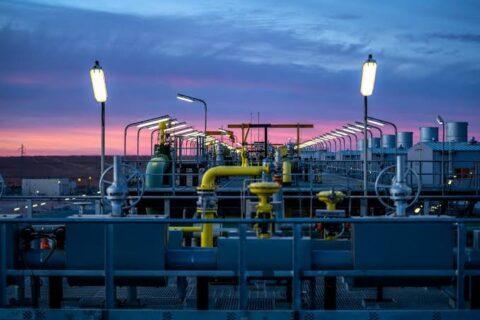
Project fact sheet
Project: Illizi South Gas Project
Location: Illizi South block, approximately 100km south of In Amenas, southeastern Algeria
Country: Algeria
Project value: $5.4 billion
Sector: Upstream oil and gas
Development model: Production-sharing agreement
Current status: On-site construction and field development underway
Contract duration: 30 years, with an optional 10-year extension
Initial exploration period: Seven years
Exploration investment: $288 million
Total production: Approximately 993 million barrels of oil equivalent
Estimated marketable gas production: Around 125 billion cubic metres
Estimated liquid hydrocarbons: About 204 million barrels, including LPG and condensates
Legal framework: Algeria Hydrocarbon Law 19-13
Funding: Fully financed by Midad Energy
Strategic objective: Expand Algeria’s gas production and strengthen export capacity
Project team
Project owner: Sonatrach
Investment partner: Midad Energy North Africa
Parent investor: Midad Energy, Saudi Arabia
Government approval: Presidency of Algeria
Regulatory authority: National Agency for the Valorisation of Hydrocarbon Resources (ALNAFT)
Supervising ministry: Algeria Ministry of Energy, Mines and Renewable Energies
Contract signatories:
- Rachid Hachichi, Chief Executive Officer, Sonatrach
- Sheikh Abdelilah Ben Mohamed Ben Abdellah Al-Aiban, Chief Executive Officer, Midad Energy North Africa
Environmental oversight: Algerian environmental and hydrocarbon regulatory authorities
Engineering and construction contractors: To be announced as project execution advances.

Leave a Reply