Nippon Steel has completed its $14.9 billion acquisition of U.S. Steel following an extended regulatory and political review process. Following the transaction, the company outlined plans to invest approximately $11 billion in capital expenditures aimed at upgrading and expanding U.S. Steel’s operations.
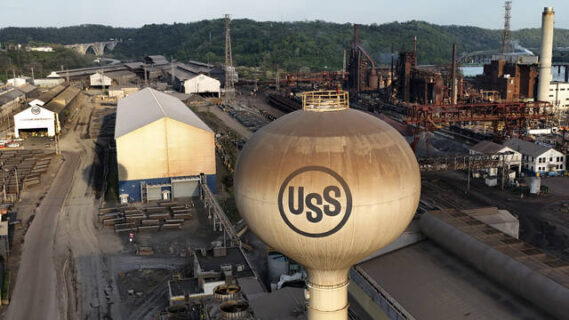
The investment program is intended to support operational modernization, efficiency improvements, and increased production capacity across selected facilities. The plan forms part of Nippon Steel’s post-acquisition integration strategy for U.S. Steel’s assets within its broader global operations portfolio. One of the major Nippon Steel US investment projects taking shape is a slag recycler project in Pittsburgh, Pennsylvania. The project is taking shape at the state-owned company’s Edgar Thomson facility in Braddock. They noted that they have received the necessary permits to commence construction of the recycler project. A slag recycler is a machine that turns the by-products of steel making into useful materials.
A Blueprint for Profit and Modernization
The core objective of this multi-billion-dollar investment is clear: to dramatically increase U.S. Steel’s financial performance. Nippon Steel aims to achieve this by transferring its world-renowned operational techniques and advanced technologies to its new American subsidiary. Consequently, the company projects U.S. Steel’s annual profit contribution to soar from an expected 80 billion yen this year to a staggering 250 billion yen ($1.70 billion) as early as 2028. To get there, the investment will focus on expanding capacity and shifting production towards more high-grade, value-added steel products for demanding sectors like the automotive industry.
Shovels in the Ground: Upgrading America’s Steel Heartland
This revitalization is not just a plan on paper; it involves significant, tangible upgrades to key facilities. Among the major projects is the construction of a brand-new hot-rolling mill at U.S. Steel’s Mon Valley Works in Pennsylvania and a complete refurbishment of the No. 14 blast furnace at Gary Works in Indiana. Furthermore, Nippon Steel is exploring building entirely new mills from the ground up, including massive 3-million-ton electric arc furnaces similar to its state-of-the-art Big River 2 plant. As a result of these efforts, U.S. Steel’s domestic crude steel capacity is expected to climb from 17 million to 20 million tons.
Details on the Nippon Steel Deal
The journey to finalize this acquisition was one of the most contentious corporate deals in recent memory. The transaction faced intense political opposition in the United States from both President Joe Biden and President Donald Trump, who raised concerns over national security and the potential impact on American jobs. The powerful United Steelworkers union also fiercely opposed the deal, making it a major talking point in the lead-up to the 2024 presidential election. U.S. Steel, founded in 1901 by industrial titans like J.P. Morgan and Andrew Carnegie, was once the largest corporation in the world and a powerful symbol of American industrial might, which made its sale to a foreign entity a deeply sensitive issue. Furthermore, all around the world, steel production has been receiving major investments. Kenya and Uganda are working together to launch the largest steel factory in East Africa and Nigeria has also poured billions of dollars into the Ajaokuta Steel Plant.
The Nippon Steel Investment Factsheet
Acquisition Cost: $14.9 billion.
New Investment: $11 billion planned to revitalize U.S. Steel’s operations.
Profit Goal: To increase U.S. Steel’s annual profit to $1.7 billion by 2028.
Key Method: Transferring advanced Japanese technology and operational techniques.
Capacity Boost: Aims to increase U.S. Steel’s domestic capacity to 20 million tons.
Key Upgrades: Includes a new mill in Pennsylvania and a furnace refurbishment in Indiana.
New Tech: Plans involve building new, efficient electric arc furnaces.
Global Reach: The deal brings Nippon Steel’s global capacity to 86 million tons.
Major Hurdle: The acquisition faced strong political opposition in the United States.
Historical Note: U.S. Steel was founded in 1901 and was once a powerful symbol of American industry.

Leave a Reply