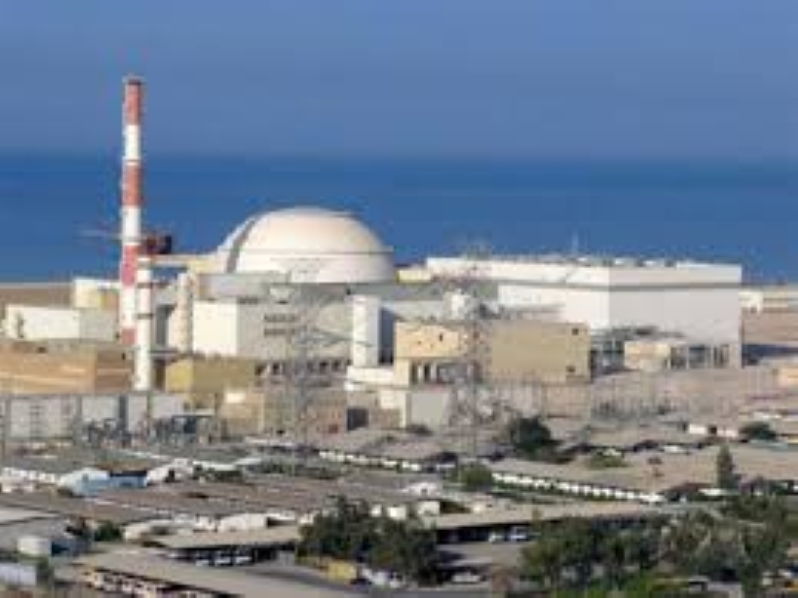
Iran is pushing ahead with an ambitious plan to build new nuclear power plants across five different coastal sites. Mohammad Eslami, the head of the Atomic Energy Organization of Iran (AEOI), announced the strategy as part of a major effort to change how the country gets its electricity. By placing these massive plants right on the coast, the government plans to use seawater for crucial cooling systems while boosting power supply across the country.
Eslami shared the update during a meeting with parliament’s energy and construction committees, confirming that the five chosen coastal locations have moved past early assessments and into the development pipeline. The entire coastal expansion follows a 20-year master plan launched in 2022, which aims to make nuclear energy the backbone of Iran’s long-term power grid and industrial growth.
Project Overview and Construction Status
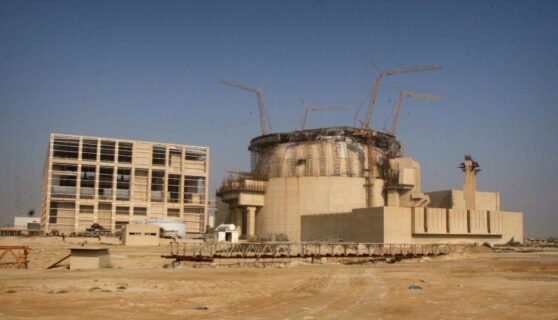
Currently, the heart of Iran’s nuclear construction is the massive expansion of the existing Bushehr Nuclear Power Plant on the southern Gulf coast. While the government maps out the five new coastal sites, shovel-action is focused on building Bushehr Units 2 and 3. This expansion is also one of the largest engineering projects in the region, at a price tag of around $10 billion.
Crews at the Bushehr site are currently working on heavy structural concrete pours and building the massive containment vessels. Because the components- like reactor pressure vessels and steam generators – are too heavy for standard roads, the project relies heavily on ships to deliver equipment directly to the coastal docks. Tehran also plans to use the exact same marine intake and cooling designs tested at Bushehr for the five new sites, which should make future construction much faster.
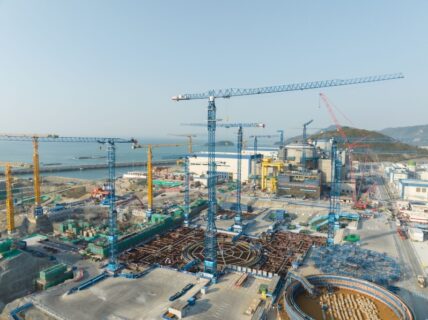
Why is Iran Planning to Build Five New Nuclear Power Plants Along its Coast?
Building the new nuclear power plants across five different coastal sites solves two major constrains for Iran: water scarcity and power grid strain. Nuclear reactors need a constant, massive supply of water to keep cool and prevent overheating. By using ocean water, Tehran plans on avoiding draining its already struggling inland rivers and underground water supplies, saving fresh water for other inland use like farming and the cities.
Connecting the five the new nuclear power plants to the national grid is also a major win for the Iran’s energy balance. The energy ministry recently reported that Bushehr’s active Unit 1 has generated over 80 billion kilowatt-hours (kWh) of electricity since it started. To put that in perspective, using nuclear energy instead of fossil fuels has saved Iran from burning roughly 131 million barrels of oil or 21.3 billion cubic meters of natural gas.
By building new nuclear power plants along the northern and southern coasts, including the massive multi-billion-dollar Iran-Hormoz nuclear power plant, Iran also hopes to power new industrial zones and even run large desalination plants to turn seawater into drinking water for nearby regions.
Funding the Mega-Project
Financing the $10 billion expansion at Bushehr, alongside early site prep for the five new nuclear power plants is from state budgets, national development funds and trade partnerships. Historically, Iran has also leaned hard on Russian technical and financial help through the state nuclear company Rosatom. However, the economics is increasingly shifting toward resource swapping.
Every megawatt of electricity generated by a nuclear plant means a megawatt’s worth of oil or gas doesn’t have to be burned domestically. Iran can then export the saved oil and gas on the global market. The money made from these exports creates a direct revenue stream that helps pay off the massive construction costs of building the nuclear plants.
Development Outlook on the Five New Power Plants Planned by Iran and What it Means for the Nuclear Industry
The massive infrastructure push by Iran to build new nuclear power plants across five different coastal sites comes at a very tense time for the region. Energy facilities across the Middle East face growing security risks. Tehran media has also noted that the Bushehr plant has been a point of concern in the ongoing US-Israel-Iran war, though officials emphasize that its heavily reinforced concrete shields and local defense systems are designed to protect the core and keep the power running.
Despite these challenges, the coastal nuclear program remains a top priority for Tehran. The AEOI plans to keep construction ongoing by coordinating with the engineers and builders currently working on Bushehr Units 2 and 3 straight over to the five new coastal sites as soon as ground preparation is complete.
Key Project Risks
Iran’s coastal expansion program faces several severe challenges. Geopolitical and security risks is high up the risk due to the ongoing Iran war. To protect the nuclear power plants from external threats, the AEOI relies on heavily reinforced concrete containment domes, underground auxiliary backup systems and multiple redundant cooling loops designed to keep the reactors safe.
Beyond security, international sanctions also present constant supply chain risks. This makes it difficult to source specialized nuclear components. To counter this, Iran is focusing heavily on manufacturing more components within its own borders. It is also standardizing its builds around Russian technical designs so as to help with procurement.
Environmental and seismic hazards also pose a moderate but steady risk to coastal nuclear power plants. To address this risk, engineers are building earthquake-resistant foundations and constructing high sea walls to protect the facilities from unexpected storm surges and marine flooding.
Fact Sheet for Iran Coastal Nuclear Expansion Program
Key Assets: Bushehr Units 2 and 3 (under active construction) and 5 new coastal sites (in planning and site preparation stages)
Total Power Generated from Bushehr Unit 1: Over 80 billion kWh to date
Technology Type: Light-water and heavy-water pressurized reactors
Fuel Savings: Equivalent to 131 million barrels of oil saved so far
Project Roadmap: Iran’s 2022 Comprehensive Strategic Plan
Leave a Reply