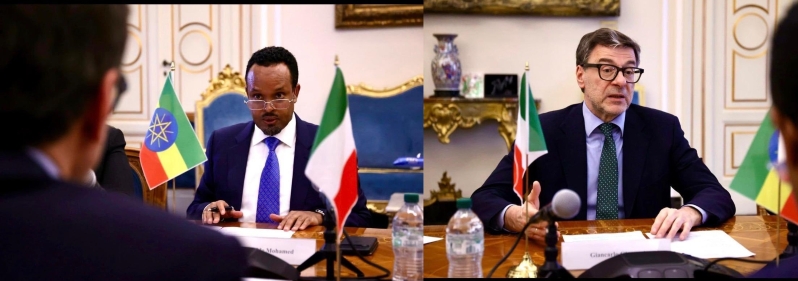
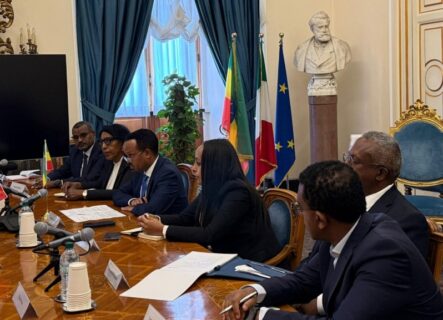
Italy has emphasized its strong commitment to back flagship infrastructure agenda in Ethiopia, pledging financing support for the Koysha Hydropower Project and key components of the planned Bishoftu International Airport. The bilateral agreement is seen as a means to deepen cooperation. It also aligns with Ethiopia’s broader economic transformation strategy. The announcement followed high-level talks in Rome on March 18, 2026, between Ethiopian Finance Minister Ahmed Shide and Italian Minister of Economy and Finance Giancarlo Giorgetti.
Under the discussions, Italy reaffirmed its commitment to help close the financing gap for the Koysha Hydroelectric Project in Ethiopia. Koysha is one of Ethiopia’s largest clean energy infrastructure investments. Italy also explored collaboration on financing selective components of the Bishoftu Airport Development Project, a cornerstone of the country’s aviation modernization plans. In addition, Italy also agreed to back Ethiopia’s development policy program in coordination with ongoing World Bank budget support initiatives. This is seen as a way of strengthening the macroeconomic reform agenda alongside critical infrastructure finance.
Why is the Italy-Ethiopia Project Financing Important?
Ethiopia’s energy sector has been central to the country’s economic vision. The government has also been prioritizing renewable power expansion, regional power exports and cross-border connectivity to drive industrialization and integration across East Africa. The Koysha Hydropower Project is expected to significantly expand the nation’s electricity production capacity, complementing existing facilities such as the Grand Ethiopian Renaissance Dam (GERD). The hydropower project will also increase exports to neighboring markets and enhancing grid resilience.
Similarly, Bishoftu International Airport Project represents a transformational development for Ethiopia’s aviation infrastructure. The airport positions the country as a competitive regional and international transport hub. The potential Italian financing framework also reflects growing confidence among European partners in Ethiopia’s infrastructure ambitions as part of joint economic and development priorities.
Italy and Ethiopia project financing also came as part of broader bilateral discussions involving debt restructuring support under the G20 Common Framework for debt treatment. China and other partners have also participated in this, highlighting the convergence of infrastructure financing, macroeconomic stability and long-term partnership on Ethiopia’s investment agenda.

Project Factsheets
Koysha Hydropower Project
Location: Southern Ethiopia (Omo River Basin)
Type: Large‑scale Hydroelectric Power Plant
Developer: Ethiopian Electric Power (EEP)
Strategic Importance:
- Major renewable baseload generation capacity in Ethiopia
- Supports domestic energy security and export potential
- Enhances grid reliability and industrial power supply
- Central to national energy expansion strategy
Capacity: 2,160 MW
Estimated Cost: Multi‑billion USD scale (financing ongoing)
Status: Financing and construction underway. Italy and Ethiopia project financing partnership reaffirmed in March 2026
Expected Commercial Operation: Mid‑to‑late 2020s
Key Features:
- Large gravity dam and reservoir
- Multiple turbine generation units
- Associated transmission infrastructure to national grid
- Contribution to regional power pool and cross‑border export potential
Financing & Support:
- Government of Ethiopia budget & concessional loans
- Italian Ministry of Economy and Finance – bilateral support framework
- World Bank/Development partners – budget support and co‑financing
- Export credit and investment agencies (Italy/multilateral)
- Private sector participation via project finance instruments
Policy Impact
Aligned with Ethiopia’s Growth and Transformation Plan (GTP) and power export ambition. Bilateral financing also tied to macroeconomic coordination under G20 Common Framework.
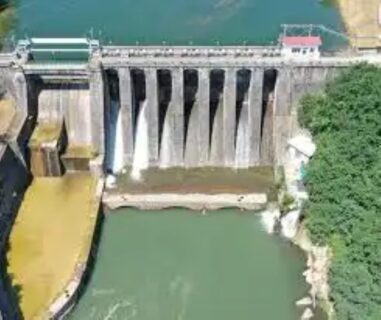
Contractors and Stakeholders Behind Koysha Hydropower Project
Ethiopian Electric Power (EEP) — Owner/Project Developer
Webuild — Main EPC Contractor (formerly Salini Impregilo)
Studio Pietrangeli Consulting Engineers — Engineering Specialist & Technical Advisory
Tractebel Engie — Project Consultant (Engineering & Advisory)
VAW — Hydrodynamic Model & Scour Testing Contractor
Pizzi Instruments — Monitoring Instruments Supplier
Stantec — Contract Management Services
Servizi Assicurativi del Commercio Estero (SACE) — Export Credit & Financial Support
Dongfang Electric — Turbine & Generator Supplier
Bishoftu International Airport Project
Location: Bishoftu (Debre Zeit), Oromia Region, Ethiopia
Type: Civil & International Airport Infrastructure
Developer: Ethiopian Airports Enterprise / Ethiopian Civil Aviation Authority
Strategic Importance:
- Expands Ethiopia’s aviation capacity
- Serves as a regional international gateway
- Supports tourism and international trade
- Decongests Addis Ababa Bole International Airport
Estimated Cost: Approximately $10 billion. African Development Bank is also leading the mobilization of up to $8 billion in debt funding for Bishoftu Airport project. Italy and Ethiopia project financing discussions also ongoing.
Status: Financing framework exploration with Italian partners (March 2026)
Design Features:
- Long‑runway facilities suitable for wide‑body aircraft
- Passenger terminal with international arrivals/departures capacity
- Cargo handling facilities and logistics zones
- Ground access and multimodal connectivity provisions
Expected Commercial Operation: Mid‑to‑late 2020s (dependent on finance close)
Policy Support:
Part of Ethiopia’s aviation modernization strategy and infrastructure diversification roadmap. Also linked with national development plans and regional transport corridors.
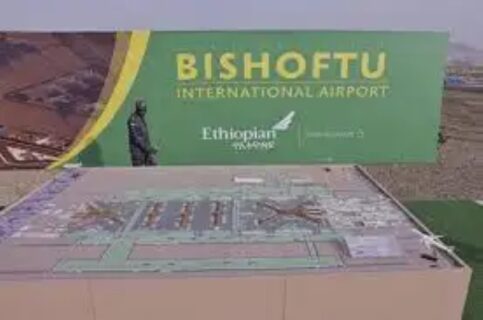
Contractors and Stakeholders Behind Bishoftu International Airport Project
Ethiopian Airlines Group — Project Sponsor & Owner Operator
African Development Bank (AfDB) — Mandated Lead Arranger & Lender
Dar Al‑Handasah (DAR) — Lead Technical Consultant, Master Planner & Engineering Advisory
Zaha Hadid Architects (ZHA) — Terminal & Airport Design Architect
Pascall+Watson — Architectural & Interiors Consulting Partner
Landrum & Brown (Sidara sister firm) — Airport Planning & Airfield Design
Beijing Urban Construction Group (BUCG) — Enabling Works Contractor
China Communications Construction Company (CCCC) — Infrastructure/Earthworks Contractor
Allied Infrastructure Group — Specialized Logistics Contractor
KPMG — Financial Advisor & Structuring Partner
Clyde & Co — Legal Advisory Partner
African Development Bank DFI Partners (e.g., International Development Finance Corporation) — Financing Support
Leave a Reply