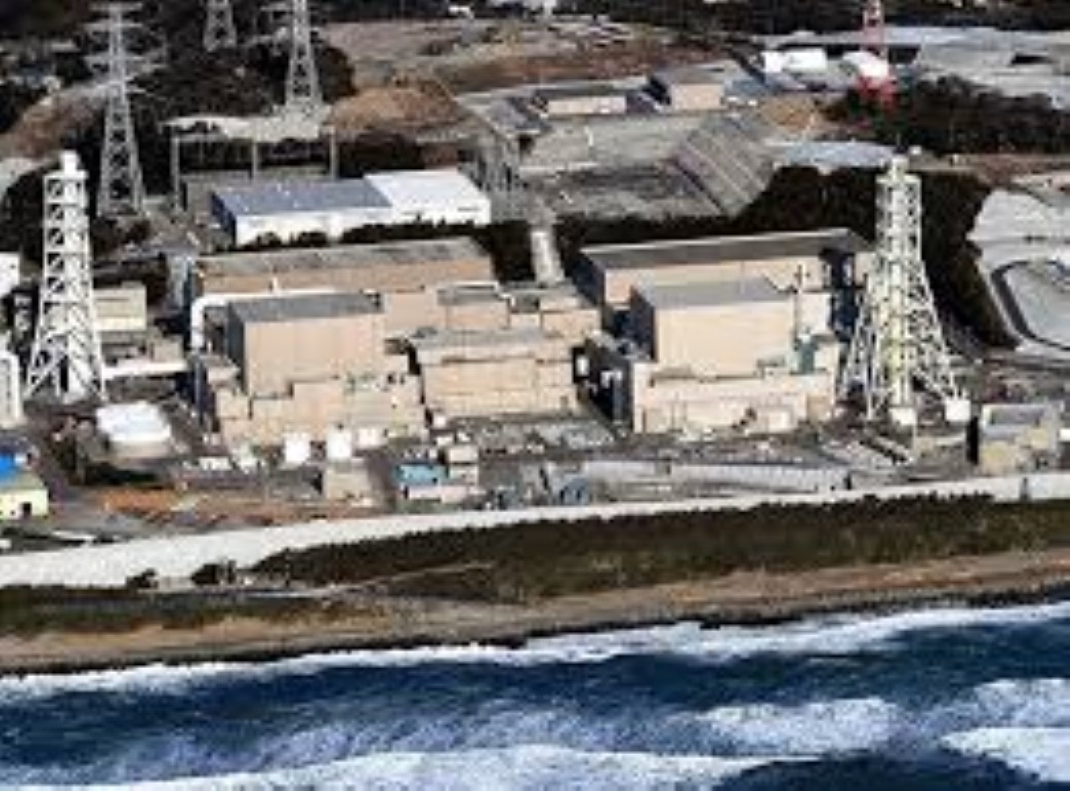
Japan’s plan to restart Hamaoka nuclear power plant has suffered a significant setback after Chubu Electric Power Co. admitted possible safety data irregularities in the seismic assessment of the plant. This has prompted the Nuclear Regulation Authority (NRA) to suspend its safety review and the restart of Units 3 and 4. The revelation has also raised concerns over regulatory transparency in Japan’s nuclear sector. Hamaoka nuclear power plant is located near the Nankai Trough, a major seismic zone where a megaquake is anticipated.
Details on the Development
Chubu Electric’s disclosure of possible safety data irregularities revolves around calculations of “standard seismic motion”. This is the maximum expected earthquake shaking the reactors could withstand. Chubu’s data may have been derived using methodologies that differed from what was communicated to the NRA. Additionally, internal review and external whistleblower reports indicate that these irregularities could have underestimated potential ground motion, prompting the NRA to halt its regulatory screening of safety assessments for Units 3 and 4. Chubu’s president has publicly apologized, acknowledged the gravity of the issue, and initiated a third-party investigation to assess how the inconsistency arose.
The suspension of the restart timeline for Hamaoka’s idle reactors pushes any potential reactivation further past 2026-2027 expectations.
Hamaoka Nuclear Power Plant and Japan’s Nuclear Energy Landscape
Since the 2011 Fukushima Daiichi disaster, Japan has pursued one of the most intensive nuclear regulatory overhauls in the world. This is with an aim of targeting seismic and tsunami safety criteria. Some of these restarts include Kashiwazaki Kariwa and Tomari. New build outs at Mihama nuclear plant are also taking shape.
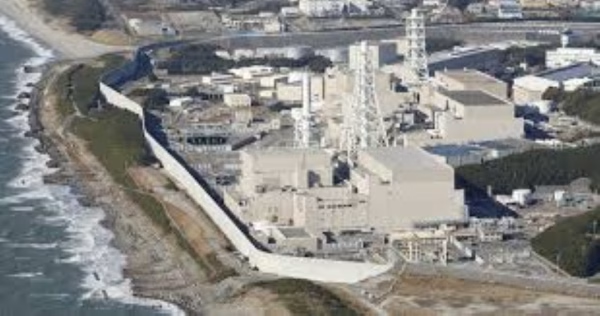
Nuclear restarts have also been politically and socially contested. However, for successive governments, they have remained central to reducing dependance on fossil fuels and cutting down greenhouse gas emissions. Nuclear energy is also being viewed as a means to stabilize the grid amid rising electricity demand in the region. Hamaoka nuclear power plant has long been emblematic of this tension. Its shutdown left a significant generation gap in central Japan, and its restart has been framed as both an energy security priority and a test of public trust in nuclear.
Energy Markets Outlook
Chubu Electric’s shares have since plunged sharply, recording their largest single-day decline in more than a decade.
Hamaoka Nuclear Power Plant Project Factsheet
Operator: Chubu Electric Power Co.
Location: Omaezaki, Shizuoka Prefecture, Japan
Reactors Affected: Units 3 and 4 boiling water reactors
Regulatory Body: Nuclear Regulation Authority (NRA)
Current Status: Safety review suspended. Restart delayed pending investigation
Project Timeline
2011: All reactors including Hamaoka taken offline following the Fukushima Daiichi disaster.
2013-2023: Hamaoka undergoes safety inspections and regulatory overview under post-Fukushima standards.
September 2023: NRA determines Hamaoka’s standard seismic motion calculations are generally appropriate as part of restart review.
February 2025: Whistleblower alerts NRA of discrepancies in seismic data submitted by Chubu Electric.
December 2025: NRA suspends safety review for Hamaoka’s Units 3 and 4 pending clarification of data irregularities.
January 2026: Chubu Electric discloses possible misapplication of seismic data. Third-party investigation to start as regulatory review remains on hold.
Leave a Reply