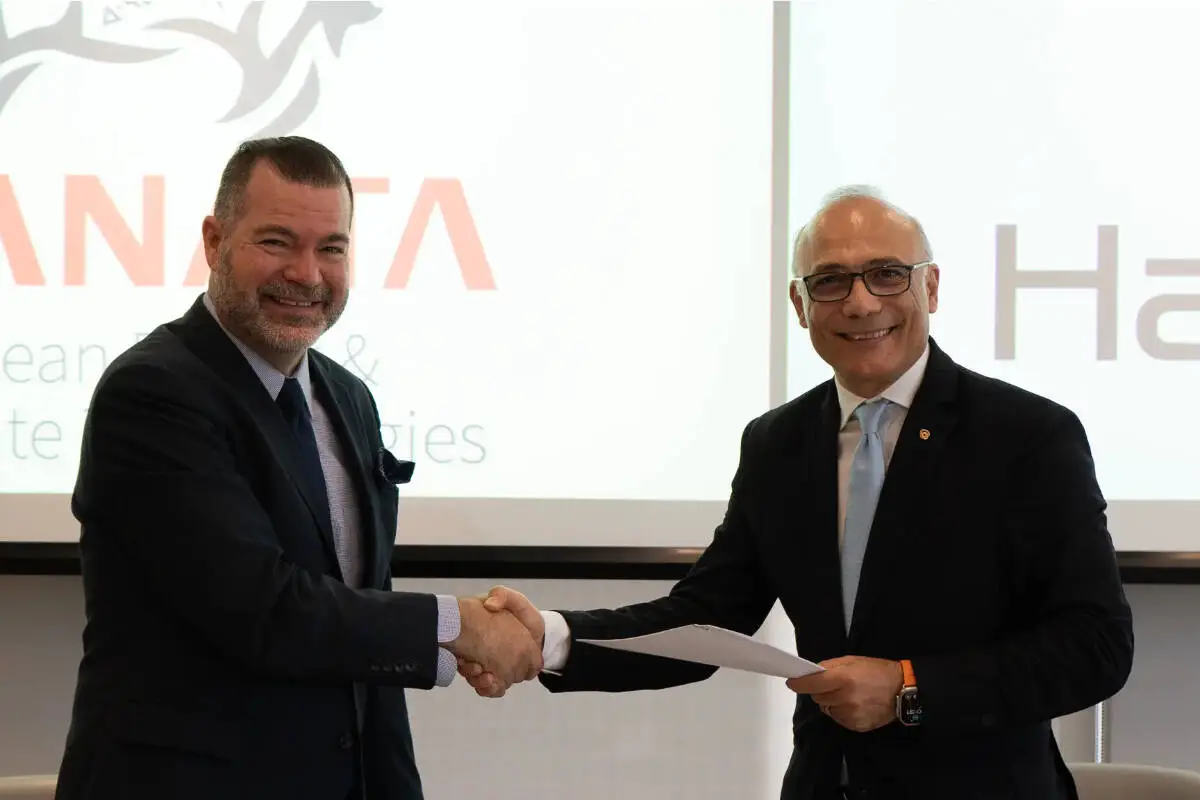
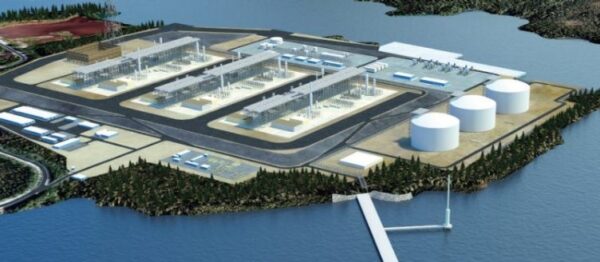
Kanata LNG, a proposed US$15.7 billion floating liquefied natural gas export facility for the Prince Rupert area of northwest British Columbia, has taken a visible step forward after attracting one of the world’s largest shipbuilders as a potential partner. Vancouver based Kanata Clean Power & Climate Technologies and South Korea’s Hanwha Ocean signed a preliminary memorandum of understanding on 16 June 2026, an agreement that commits neither side to construction but sets out joint work on engineering, construction, operations, maintenance, investment and long term collaboration. The development is built around floating, modular liquefaction technology, an approach that places the processing units on floating structures rather than on a large fixed onshore plant, and Kanata says it could export up to 12 million tonnes of LNG a year. Gas would be drawn from the prolific fields of northeast British Columbia, though the company has not yet specified how it would reach the coast. The proponent has also offered participating First Nations the chance to take up to a 50 percent ownership stake, a structure that mirrors the Indigenous partnerships now common across Canadian LNG. Hanwha Ocean’s role would draw on its floating infrastructure and offshore engineering capabilities, which the Korean group wants to bring to the project as it advances. For now Kanata LNG sits at an early stage, with the memorandum marking interest rather than a final investment decision or a fixed construction timeline.
How Kanata LNG Fits British Columbia’s Crowded LNG Race
The proposal lands in the middle of the busiest stretch of Canada’s LNG buildout. British Columbia’s north coast already hosts LNG Canada at Kitimat, the roughly $40 billion, 14 million tonne terminal led by Shell that shipped the country’s first export cargo in mid 2025, while smaller plants at Woodfibre near Squamish and Cedar near Kitimat are both under construction. The closest parallel to Kanata is Ksi Lisims LNG, another proposed floating facility on the same north coast that targets the same 12 million tonne scale and, like Kanata, is built around an Indigenous partnership. Ksi Lisims sits much further down the track, having signed a German offtake deal and a BC Hydro power agreement and earned a referral to the federal Major Projects Office. That gap matters, because Kanata is still at the memorandum stage. The wider backdrop looks favourable on paper, with Canada now the world’s sixth largest LNG exporter and the federal energy minister talking openly about pushing national output toward 100 million tonnes a year. The contrast with Alberta is instructive, since projects there such as a 204 megawatt gas plant near Grande Cache feed the domestic grid rather than overseas markets. Kanata must still turn ambition into financing, permits and firm Asian buyers.
Kanata LNG Timeline, Risks and What Comes Next
For now the project’s status is exactly what the document says it is, a statement of intent. The two companies will explore how Hanwha Ocean’s shipbuilding and offshore engineering might fit, while Kanata works on the harder questions of moving gas to the coast, winning federal and provincial permits, lining up Asian buyers and reaching a final investment decision. None of those steps carries a confirmed date. The proposal also faces immediate scrutiny over its location, after the Prince Rupert Port Authority said it had no awareness of the project and that no LNG developments were being considered on lands within its jurisdiction, a striking gap for a facility pitched for that harbour. Kanata has said governments and rights holding First Nations were given advance notice, and Gitxaala Enterprises Corporation has confirmed early talks, though the company has declined to name other parties. Analysts have also warned that global LNG markets are heading into oversupply later this decade, which could test new entrants. If Kanata clears those hurdles, the prize is sizeable, a 12 million tonne export stream and a First Nations ownership share of up to half the venture.
Project Fact Sheet
- Project Name: Kanata LNG
- Location: Near Prince Rupert, north coast of British Columbia, Canada
- Project Value: Estimated at US$15.7 billion, per the proponent’s June 2026 announcement
- Proponent / Developer: Kanata Clean Power & Climate Technologies Corp., based in Vancouver
- Strategic Partner: Hanwha Ocean of South Korea, under a preliminary memorandum of understanding
- Export Capacity: Up to 12 million tonnes of LNG per year
- Key Components: Floating, modular liquefaction units and a marine export terminal, with feed gas sourced from northeast British Columbia
- Procurement Model: Early stage partnership, with engineering, construction, operations and investment to be explored jointly and no contracts yet awarded
- Ownership Structure: Up to 50 percent equity offered to participating First Nations
- Target Market: Asia Pacific buyers, served through Prince Rupert, the closest Pacific port in North America to Northeast Asia
- Current Status: Preliminary memorandum of understanding signed in June 2026, with no final investment decision
- Strategic Impact: Would add major LNG export capacity on Canada’s west coast and create a substantial Indigenous ownership stake
Project Team
- Project Proponent: Kanata Clean Power & Climate Technologies Corp., Vancouver, Canada
- Chief Executive Officer, Kanata: Robert F. Delamar
- Strategic Partner: Hanwha Ocean, South Korea, covering shipbuilding, floating LNG and offshore engineering
- Energy Plant Unit President, Hanwha Ocean: Philippe Levy
- Indigenous Partner (preliminary talks): Gitxaala Enterprises Corporation, the business arm of the Gitxaala Nation
- Host Port Authority: Prince Rupert Port Authority, which has said it is not aware of the project
- Engineering, Procurement and Construction Contractor: Not yet awarded
- Feed Gas Supply and Transport: Not yet disclosed
Frequently Asked Questions
What is the Kanata LNG project? Kanata LNG is a proposed US$15.7 billion floating liquefied natural gas export facility for the Prince Rupert area of British Columbia, able to ship up to 12 million tonnes of LNG a year.
Where would the Kanata LNG facility be located? The Kanata LNG facility is proposed for the Prince Rupert area on the north coast of British Columbia, although the Prince Rupert Port Authority has said it is not aware of the project.
Who is behind the Kanata LNG project? Kanata LNG is led by Vancouver based Kanata Clean Power & Climate Technologies, which signed a preliminary partnership with South Korea’s Hanwha Ocean in June 2026.
How much will the Kanata LNG project cost? The Kanata LNG project carries an estimated price tag of about US$15.7 billion, according to its proponent.
When will the Kanata LNG project be built? No construction timeline has been set, because the project remains at the memorandum of understanding stage with no final investment decision.




Leave a Reply