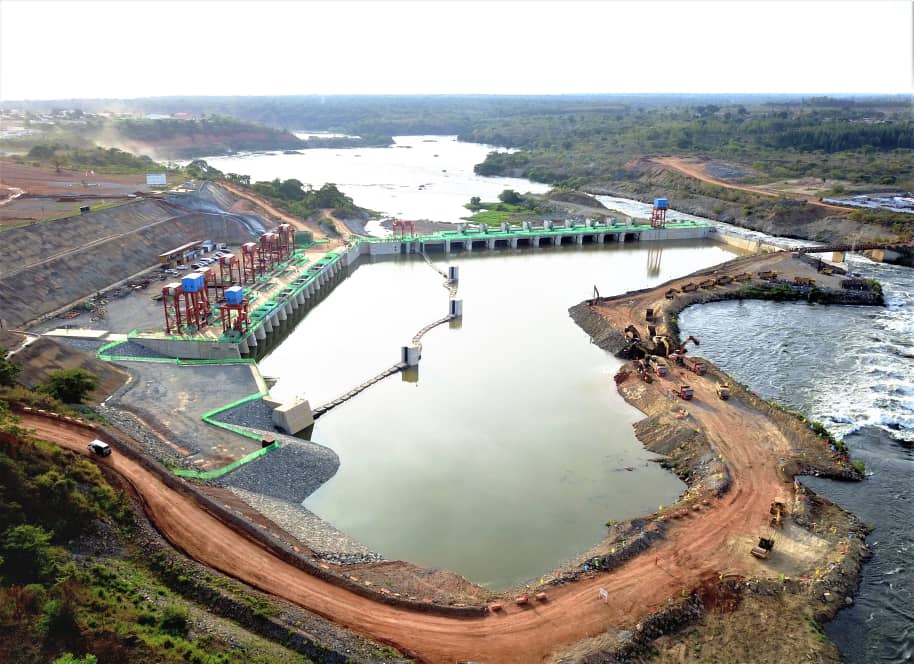
Recent developments around Uganda’s Karuma Hydropower Plant highlight a growing paradox of success. The 600 MW facility, fully operational since 2024, is now driving a significant rise in national electricity supply and utility revenues, with Uganda Electricity Generation Company reporting about a 40% increase in income linked to its first full year of generation.
This surge has contributed to Uganda reaching over 2,000 MW in installed capacity, creating a deliberate electricity surplus that policymakers increasingly view as an opportunity for industrialisation and export
However, the same surplus has exposed structural challenges, demand remains relatively low, raising concerns about loan repayment and underutilisation of capacity
To address this, Uganda is accelerating regional interconnection projects, including transmission lines toward South Sudan and East Africa, positioning Karuma as an export-oriented asset
This trajectory closely mirrors the vision behind the Grand Inga 3 project in the Democratic Republic of Congo: both mega-hydropower schemes depend on large-scale cross-border electricity trade to remain financially viable. Just as Karuma’s surplus is pushing Uganda into regional power markets, Grand Inga 3 is designed from the outset to export massive volumes of electricity, particularly to Southern Africa. This suggests a future where interconnected African grids allow projects like Karuma and Inga to complement each other in balancing supply, unlocking industrial demand, and stabilizing continental energy flows.
September 19, 2025
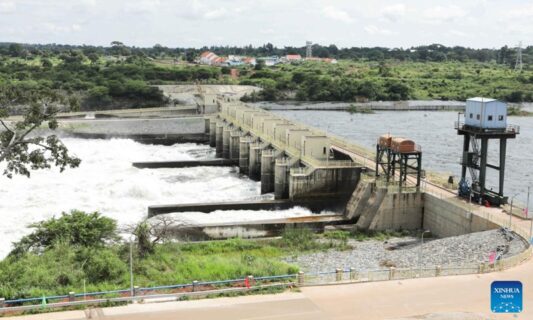
Uganda’s total electricity generation has reached 2,052 megawatts (MW) following the completion of the Chinese-built 600-MW Karuma Hydropower Plant.
Ruth Nankabirwa, Uganda’s minister of energy and mineral development, said to reporters that this marks a major milestone as the East African country works to secure affordable electricity to drive economic growth. Also, production of surplus electricity will enable the country to export the electricity and generate income. This is evident through the Uganda-South Sudan interconnection project where Uganda seeks to export electricity to South Sudan.
The Karuma plant, financed by the Export-Import Bank of China, was commissioned by Ugandan President Yoweri Museveni in September last year. It is the second hydropower project funded by China in Uganda, following the 183-MW Isimba Hydropower Plant, which was commissioned in 2019.
The 600 MW Karuma Hydropower Plant was commissioned by Uganda’s President Yoweri Museveni at a ceremony he was accompanied by the county’s first lady on Thursday.
The mega Karuma Hydropower Plant is termed as a strategic infrastructure project that will empower the country’s communities, bolster the economy, and generally help Uganda achieve universal access to electricity by 2030.
Karuma Hydropower Plant Project Factsheet
Name: Karuma hydropower plant
Location: Karuma Town Council, Kiryandongo District
Capacity: 600MW
Contractors/developers: Sinohydro and Alstom
Cost: $1.688 billion
Commencement date: 2013
Completion date: 2024
The Karuma hydropower plant is located in Karuma Town Council, Kiryandongo District. It features a 284-kilometre transmission line that runs all the way to Kawanda in Kampala, another 55-kilometre line that runs to Olwiyo in Nwoya, and lastly a 75-kilometre line to Lira Cit. These connectivity routes ensure power distribution to key load centres all over the country.
Significance of the Project
“Karuma represents a major milestone in our national energy strategy. It will significantly boost our power generation capacity, enhance energy security, and support sustainable development,” said Dr Ruth Nankabirwa Ssentamu, the Minister of Energy and Mineral Development.
Hydropower still stands as Uganda’s leading source of energy, having a total potential of more than 4,100 MW. Adding Karuma’s 600 MW increases Uganda’s generation capacity to 2,045.5 MW, far exceeding the current peak demand of between 900 MW and 1,000 MW.
“Peak demand has surged from 257 MW in 2004 to 988 MW in 2024, driven by economic growth and expanded electrification. Access to electricity has also grown significantly, from 5% in 2004 to 57% in 2023, a significant achievement in our rural electrification efforts,” noted Eng. Irene Pauline Bateebe.
Bateebe also highlighted Uganda’s set target of generating 52,000 MW by the year 2040 and the goal of achieving Sustainable Development Goal (SDG) 7—universal access to affordable, reliable, sustainable, and modern energy. She emphasised that projects like Karuma bring Uganda closer to realising these targets.
Joseph Oryem Lilly, the LC1 Chairperson of Karuma Central Ward, lauded the project for transforming the lives of the local population and attracting development to the area. He noted that the influx of new residents has boosted sectors like hospitality, creating jobs and improving livelihoods.
Uganda’s Energy Journey
President Museveni traced Uganda’s hydropower journey back to the inauguration of the Owen Falls Dam in 1954, which laid the foundation for the country’s energy sector.
He says that subsequent projects like the 200 MW Kiira Hydropower Station (2003) and the 183.2 MW Isimba Hydropower Project (2019) have further boosted Uganda’s generation capacity.
“The Karuma Hydropower Project is the latest and most ambitious step in our still ongoing energy evolution,” Museveni commented.
In the year 2011, the Ugandan government secured $1.4 billion (UGX 5.192 trillion) in funding from the Exim Bank of China, contributing an additional $353 million (UGX 1.309 trillion) in counterpart funding. The Karuma project, executed over 12 years by China’s Sinohydro Corporation Ltd., cost a total of $1.688 billion (UGX 6.261 trillion).
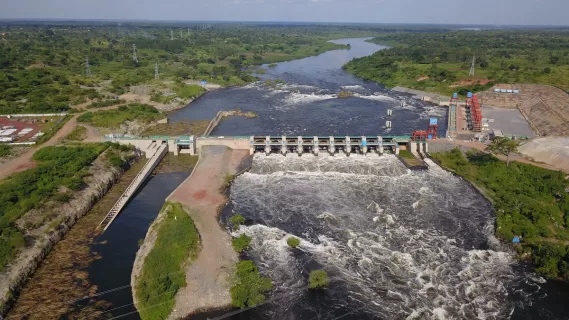
As of the month of July 2024, Uganda’s total grid length was marked at 4,496.4 km, with 42 substations and a transformation capacity of 6,945.5 MVA. Karuma is now the country’s largest power installation and also stands as Africa’s largest underground power plant.
It serves as a cornerstone of Uganda’s broader development agenda under the National Development Plan III, which sees energy as a key driver in transforming Uganda from a peasant economy to a prosperous nation by 2050.
Project Team
Main Contractor
Sinohydro Corporation: The primary Engineering, Procurement, and Construction (EPC) contractor responsible for building the dam and power station.
Financing & Government Bodies
Export-Import Bank of China: Provided the majority of financing (about 85% of project cost).
Government of Uganda: Funded the remaining portion and oversaw the project.
Uganda Electricity Generation Company Limited: Project owner and implementing agency
Owner’s Engineer / Supervisory Consultants
Artelia Group
KKATT Consult
- These firms formed a joint venture acting as the Owner’s Engineer, supervising construction and ensuring quality control.
Electrical & Grid Integration
Uganda Electricity Transmission Company Limited
- Responsible for transmission lines and integrating generated power into the national grid.
Also read: The Mega US$4.5 Billion Batoka Hydro-power Project Commencement Set for 2025
Africa’s Largest Hydroelectric Project: The Grand Ethiopian Renaissance Dam Nears Completion
Karuma Power Dam to be Launched in September 2023
Karuma hydroelectric power station, one of the largest in Uganda
Uganda’s Karuma Hydro power project nears completion of its first turbine
Leave a Reply