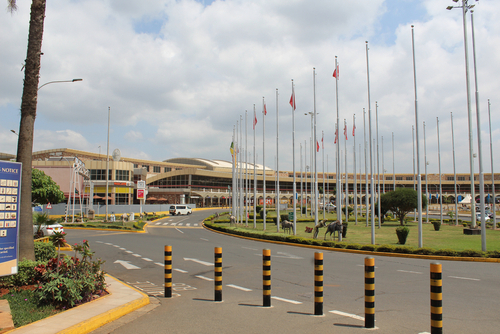
As part of its efforts to modernise aviation facilities in Kenya and enhance passenger services, the Kenya Airports Authority (KAA) has undertaken a massive programme of infrastructure upgrades at Jomo Kenyatta International Airport (JKIA), Moi International Airport (MIA), and Kisumu International Airport (KIA). These initiatives coincide with government plans to develop a new world-class airport projected at KSh264 billion (approximately $2.04 billion) to address long-term congestion problems at JKIA.
KAA has also published tenders seeking proposals on various projects, including construction, slope stabilisation, commercial development, and digital solutions at the three major hubs and some regional airports. The renovations aim to enhance operational efficiency, passenger comfort, and safety while matching the increasing air travel demand in East Africa.
JKIA Upgrades
At JKIA, Kenya’s main international gateway, the focus is on enhancing business services and passenger comfort. Upgrades include the design, fit-out, operation, and management of diverse restaurant outlets, such as quick service restaurants, African cuisine restaurants, and cafes across Terminals 1A (international), 1D (domestic), and 2 (low-cost and regional carriers). Special airport taxis will also improve ground transportation, allowing passengers to safely and conveniently book rides.
Moi International Airport Upgrades
Moi International Airport in Mombasa, a key entry point for coastal tourism and trade, will receive structural and environmental improvements. These include slope and ground stabilisation works for long-term resilience, the creation of a garden-style restaurant to attract visitors, and enhancements to mechanical ventilation and air-conditioning systems for better indoor environments in the tropical climate.
Kisumu International Airport Upgrades
At Kisumu International Airport, serving western Kenya and the Lake Victoria region, slope stabilisation and land reclamation will address environmental hazards such as flooding. Additional measures include introducing bag-wrapping services to improve passenger security and operational efficiency.
Nationwide Administrative and Ancillary Improvements
The wider upgrade programme includes implementing an Electronic Document and Records Management System (EDRMS) across all airports under KAA to enable paperless, efficient administration. Ancillary enhancements will also improve advertising, ground handling, and taxis at regional airports such as Ukunda, Malindi, Wilson, Nanyuki, and Isiolo.
These upgrades mitigate longstanding challenges in Kenya’s aviation infrastructure, including capacity management and maintenance, and prepare the system for future expansion. They complement government plans for a new international airport announced by President William Ruto in January 2026, set to begin in April or May 2026. The KSh264 billion project, following the failed 2024 Adani Group expansion agreement at JKIA, will include additional terminals, runways, and aircraft bays to increase capacity and reduce congestion.
Project Factsheet
- Country: Kenya
- Sector: Aviation infrastructure / Airport modernisation
- Project Owner: Kenya Airports Authority (KAA)
Context
- JKIA, Moi International Airport, and Kisumu International Airport are undergoing major upgrades to improve passenger experience and operational efficiency.
- Part of a larger initiative to make Kenya a leading regional aviation hub.
Key Issues Addressed
- Passenger inconvenience and inefficiency.
- Slope instability and other structural weaknesses.
- Limited commercial and online services.
Strategic Response
- Contracted construction, stabilisation, commercial, and digital projects.
- Administrative efficiency via nationwide EDRMS.
Transaction Structure
- Competitive open bidding for private sector participation in upgrades.
- New airport project fully funded by the government.
Current Status
- Bids issued for several upgrade items.
- Planning underway for construction of the new airport.
Market Backdrop
- Rising demand in air traffic and tourism.
- Need to compete regionally and boost economic growth.
Strategic Objectives
- Implement immediate improvements to current airports for instant impact.
- Develop long-term capacity through new infrastructure.
- Minimise congestion while increasing tourism, trade, and connectivity.
Leave a Reply