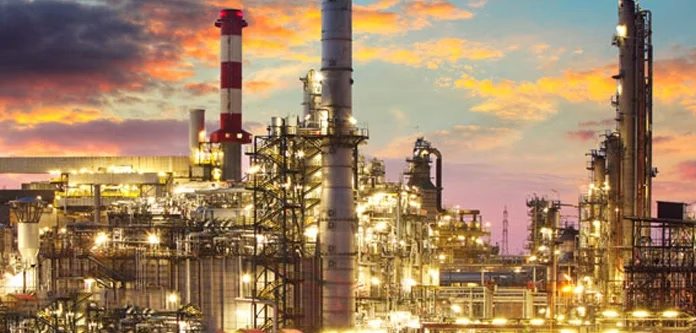
Kenya’s state-owned Kenya Pipeline company has noted that it is unfazed by the Uganda oil refinery plant in Albertine Graben. Expected to cost $4 billion, Uganda National Oil Company (UNOC) has partnered with Dubai-based Alpha MBM. The Uganda National Oil Company is designated to hold a 40% equity in the refinery. On the other and, Alpha MBM Investments LLC will hold the remaining stake.
The refinery’s anticipated completion is currently between 2029 and 2030. This agreement has acquired considerable attention from numerous oil stakeholders. One of them is Kenya Pipeline which indicated that the proposal posed no threat. Once complete, the refinery in Albertine Graben would have the capacity to produce 60,000 barrels of crude oil per day with the EACOP pipeline expected to be of service.
This means it would effectively cut down Uganda’s $2 billion yearly petroleum product import bill. Moreover, since Uganda is landlocked, the oil is primarily imported through Kenya. The refinery would hamper some of Kenya Pipeline’s endeavors such as the Eldoret-Kampala-Kigali refined petroleum products pipeline project.
Kenya Pipeline’s Stand on Uganda Oil Refinery Plant in Albertine Graben
Despite projections on its adverse impact on Kenya’s oil market, Kenya Pipeline has noted that it is not threatened. Managing Director, Joe Sang has refuted such claims noting that the company would be largely unaffected by the refinery project. “Uganda refinery is not a threat, it will take up to 15 years for Uganda to start refining oil,” he noted during a media brief. About 90% of the company’s refined petroleum (about 2.5 billion liters per year) is exported to Uganda, making it the company’s major transit market for petroleum products.
Because of this, Kenya Pipeline is optimistic that Uganda will also keep importing refined goods for the “foreseeable future.” The company primarily manages the transportation of refined oil across the East African region. “Even when refining capacity becomes a reality, world oil markets are fully integrated, meaning there are no regional markets for oil. All oil competes in the world oil markets on the basis of its production and scale economics,” Kenya Pipeline revealed.
Project Factsheet
Name of the Project: Uganda oil refinery plant.
Location: Albertine Graben, Uganda.
Project cost estimation: $4billion.
Project sponsors:
Uganda National Oil Company (UNOC)
Also include Alpha MBM Investments LLC (located in Dubai)
Ownership structure:
UNOC: 40% equity stake
Alpha MBM Investments LLC: 60 percent equity.
Planned capacity:
60,000 barrels of crude oil per day
Timeline:
Expected completion window: 2029-2030
Strategic objective:
Decrease the Uganda petroleum products import bill of about 2 billion yearly.
Also enhance domestic refining in a landlocked economy.
Regional context:
Uganda is now importing the bulk of refined petroleum via Kenya.
Kenya is also the main transit route to Ugandan fuel imports.
Effects on Kenya Pipeline Company (KPC):
Possible long term impact on refined product transit volumes.
Also implications that may arise with respect to the Eldoret-Kampala-Kigali refined petroleum pipeline project.
Kenya Pipeline’s position:
The refinery is not a threat in the short term, publicly.
The future of Uganda as a key importer of refined products is also expected to be long term.
Industry significance:
One of East Africa’s largest downstream oil investments
Also closely monitored by regional energy and infrastructure stakeholders
Leave a Reply