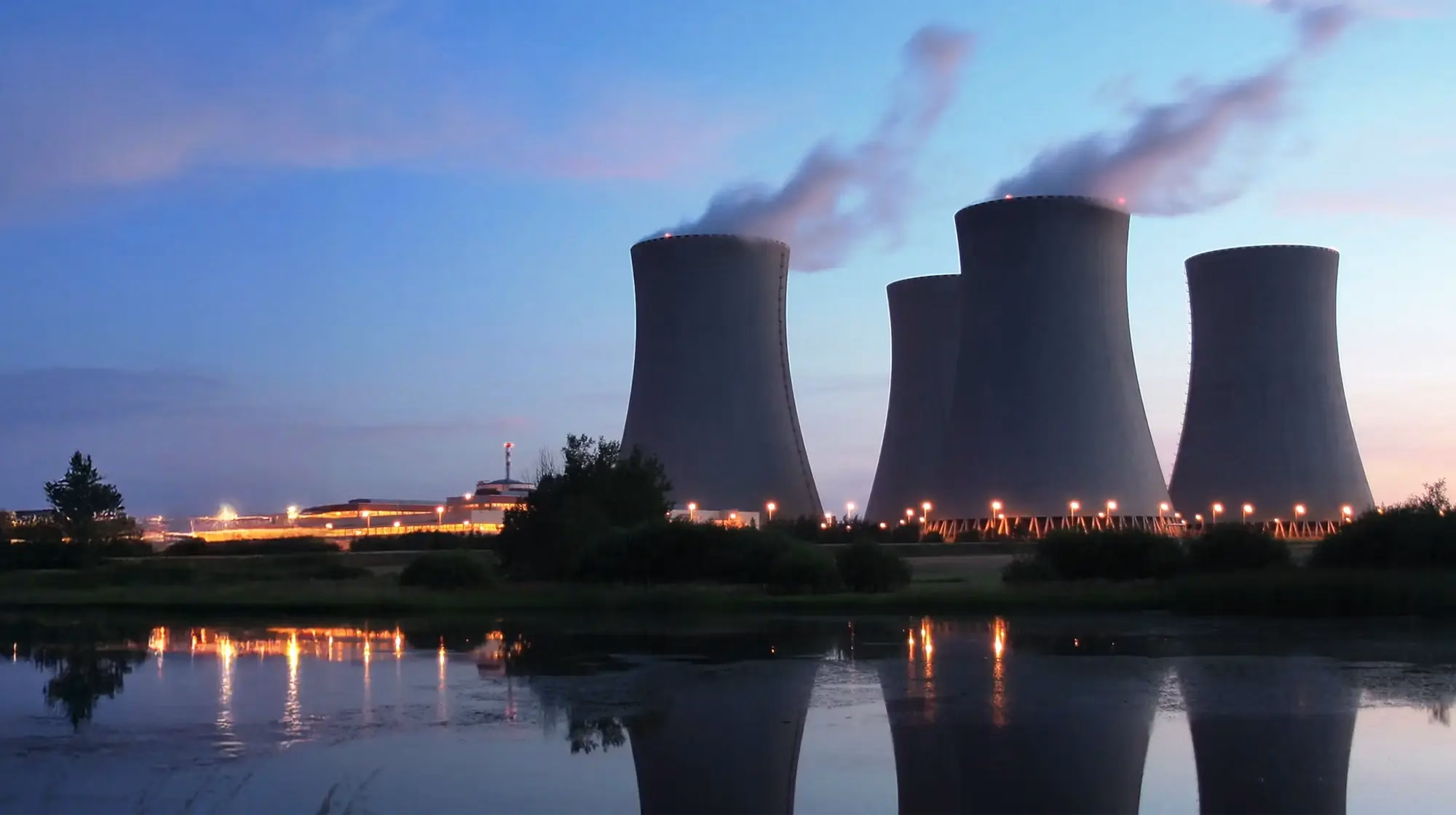
Kenya’s nuclear power plant ambitions are starting to take shape as state-owned KenGen is named its owner-operator. Energy Cabinet Secretary Opiyo Wandayi noted that the planned plant will be developed by Nuclear Power and Energy Agency (NuPEA). Furthermore, it is expected to begin with 2 GW with capacity expected to scale to 6 GW in later phases. “This marks the beginning of Kenya’s nuclear-power era,” Wandayi said. “Assigning KenGen the owner-operator role anchors the programme in technical capability and public trust.”
The announcement was made during the signing of a Memorandum of Understanding between KenGen and NuPEA. It creates a Joint Engagement Framework to guide public awareness, stakeholder consultation and institutional readiness for nuclear power. KenGen board chair Alfred Agoi has noted that the company’s experience running geothermal, hydro, wind, and solar assets positions it to manage the plant.
State of Affairs Regarding KenGen Nuclear Power Plant
The construction of Kenya’s first nuclear power plant by KenGen is one that is expected to facilitate the country’s energy demands. Managing Director and CEO Peter Njenga said nuclear energy would offer Kenya a stable, low-carbon baseload option. The power provided would support manufacturing and digital industries. “This agreement is a step toward strengthening Kenya’s long-term energy security,” he said. NuPEA CEO Justus Wabuyabo described the partnership as a shift from planning to implementation readiness. Kenya is still evaluating nuclear power for its future energy mix. Over the year, the construction of the plant has seemed more feasible than ever. However, this has not been devoid of setbacks.
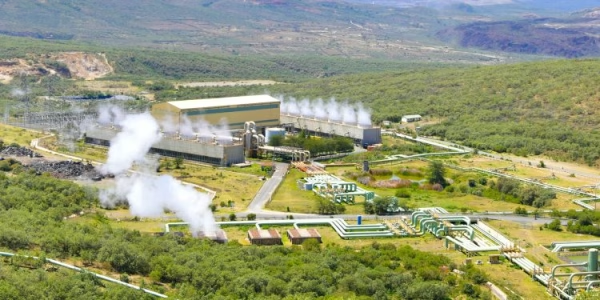
Earlier in the year, residents in Kilifi protested over the construction of the plant in the region. The main reason for this is their fear that the plant would do more harm than good. Nonetheless, the government has assured residents of their safety and inclusion in the project. Public engagement and readiness was also a part shed light on during the MoU signing. The framework will involve a Joint Working Group tasked with developing a national communication and engagement strategy. It will also identify stakeholders across counties, run public education campaigns and convene technical forums. Furthermore, readiness will also include training journalists and county leaders on nuclear fundamentals. Nuclear power projects are taking shape across East Africa as Uganda also makes plans on their first nuclear plant.
In other developments across Kenya, Bamburi Cement, the country’s leading cement and concrete manufacturer, signed a KSh32 billion Engineering, Procurement, and Construction (EPC) contract with Sinoma CBMI Construction Co., Ltd on December 16, 2025, to build a turnkey clinkerisation plant in Matuga, Kwale County.

Leave a Reply