
Updated January 28, 2026:
A tender awarded for the $232 million Nairobi Railway City central station project by the Kenya Railway Commission (KRC) has been cancelled. Kenya Railways Corporation (KRC) has been ordered to re-evaluate the project’s tender and award it within 21 days. The directive follows a successful challenge by China Civil Engineering Construction Corporation (CCECC), the lowest bidder. The company challenged the tender that had been awarded to rival firm China Road and Bridge Corporation (CRBC). The cancellation was done by the Public Procurement Administrative Review Board (PPARB). The board ordered KRC to reconvene the evaluation committee and re-evaluate its financial aspects. Moreover, this was done in line with the tender documents and the Constitution. It was also done in line with the Public Procurement and Asset Disposal Act and the 2020 regulations.
The project attracted three bidders, including CCECC, CRBC, and a consortium comprising China Overseas Engineering Group Company Limited and China Railway Group Limited (CRCEG-COVEC). All three bidders passed the preliminary and technical evaluation stages. However, CCECC submitted a Sh23 billion bid while CRBC placed a Sh30 billion bid while the consortium bid Sh32 billion. The evaluation committee recommended the tender to be awarded to CRBC despite CCECC having placed a bid that was Sh7 billion less.
In its decision, the PPARB found that the evaluation committee committed an illegality in the evaluation and award of the tender. Moreover, this was contrary to the provisions of the tender documents. The board also ruled that KRC’s notification letters to bidders failed to meet the required legal threshold. Another project that was cancelled and ordered for re-evaluation was the Nairobi-Mombasa Usahihi Expressway in which Everstrong is yet to resubmit its bid once more.
December 16, 2025:
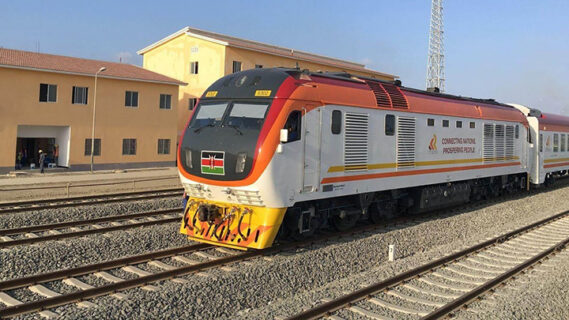
Kenya’s government has commenced expansion plans on the Nairobi Railway City Central station project to increase its capacity. The aim is to ease congestion and improve connectivity within the country’s capital. The Environmental and Social Impact Assessment (ESIA) from the Kenya Railways Corporation already outlines the scope. Phase one of the Nairobi Railway City project entails addition of other facilities.
These include 2-level buildings as well as station entrances and exits. It also includes platforms and canopies and access footbridge to ease access to the station. According to Kenya Railways, some of the notable developments will take place on the East side of the heritage building. This is where a new entrance building will connect directly to a platform bridge with access to all platforms.
Furthermore, the corporation is set to construct a smaller facility at the West. The facility will provide pass gender exiting points as well as the construction of a second platform bridge. To the South of the station, another entrance and exit are to be constructed. It will be similar to those of the Northern side. This means the entrance and exit would be possible from any platform to both the north and south of the city. The project aligns with the Nairobi rail expansion plan, a 165-kilometer rail project being implemented by the government and the World Bank.
Project Factsheet
Project: Nairobi Railway City Central Station Project
Implementing Agency: Kenya Railways Corporation
Objective: Increase capacity and reduce congestion
Platform Capacity: Expansion from 2 to 9 platforms
Key Works: New entrances/exits, additional platforms, footbridges, canopies
Integration: Rail, BRT, and pedestrian transport
Status: ESIA completed, planning underway
Impact: Higher passenger capacity and improved urban connectivity
Outlook on the Nairobi Railway City Central Station Project
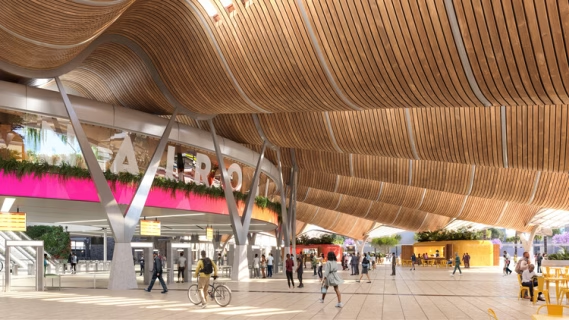
The expansion of the Nairobi Railway City Central Station Project will be fundamental in ensuring that passengers have an easy time getting from one place to another. “A key part of the station development will be increasing capacity from two platforms to nine platforms. It will facilitate a significant increase in passenger demand and proposed new services,” the report stated.
The ESIA report notes the project will redevelop the station into a multimodal transport interchange. Furthermore, it will integrate rail, BRT, and pedestrian movement. The project will also convert the current congested matatu and bus parking areas into public parks, plazas, and recreational spaces. However, the assessment found that the construction phase will present challenges such as noise, dust, traffic disruption, and waste generation in the surrounding areas.
However, it also notes that these impacts can be managed through proposed mitigation measures. These are measures proposed by the National Environment Management Authority (NEMA). They include conducting regular noise survey programmes and maintaining construction equipment to handle the noise. Developing long-term biodiversity landscape enhancement is also part of the measures. On managing waste, practicing waste segregation during the construction of the facilities is advised. Minimizing machine idling time is also proposed likely to mitigate traffic disruptions.
Leave a Reply