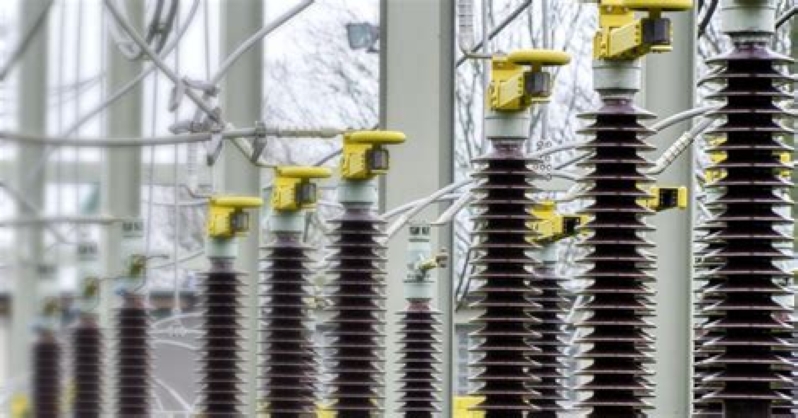
Sweden has paused development of the Konti-Skan Connect interconnector project linking southwestern Sweden and Denmark, escalating an increasingly tense dispute with the European Union over how electricity congestion revenues should be allocated.
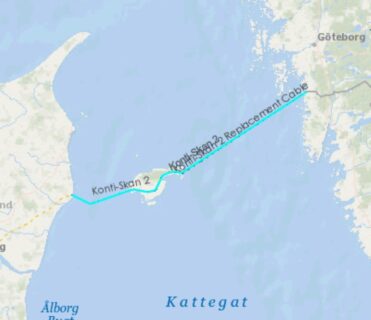
The announcement was made by Sweden’s Energy Minister Ebba Busch. Busch stated that Stockholm would halt investment in new transmission links to continental Europe until disagreements with the European Commission are resolved. The move directly impacts one of the Nordic region’s most important planned electricity infrastructure upgrades – the replacement and capacity expansion of the aging Konti-Skan 1 and 2 high-voltage direct current (HVDC) cables connecting Sweden and Denmark.
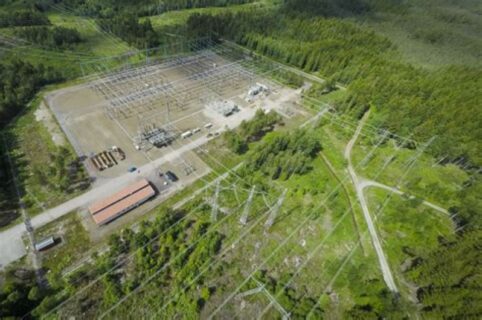
EU Grid Funding Dispute
The dispute centers on proposed EU reforms requiring a greater share of “congestion revenues” to be redirected toward broader European grid infrastructure projects. The revenues are fees collected when electricity transmission challenges occur.
Sweden argues these funds should instead remain under national control to finance domestic grid reinforcement and generation expansion. This also includes its major nuclear revival strategy. Swedish officials estimate the country could generate approximately SEK130 billion (about US$14 billion) in congestion revenues over the next decade, funds Stockholm increasingly views as critical to national energy security and industrial competitiveness.
Suspended Konti-Skan Connect Project
The paused project, jointly developed by Sweden’s grid operator Svenska kraftnat and Denmark’s Energinet, was intended to replace the aging Konti-Skan transmission assets with a new 1,000 MW HVDC link, up from the current 715 MW capacity.
The cable is strategically significant for Nordic electricity balancing and supply. It is also at the center of broader EU market integration. Konti-Skan is also important as Sweden expands low-carbon baseload capacity, and Denmark scales offshore wind and other energy projects including the US$8.7 billion Megaton Green Energy Park.
Konti-Skan Power Cable Development Pause: Policy Shift in Sweden
The decision to pause development of the Konti-Skan HVDC power cable project speaks most of Sweden’s energy and industrial policy. While Sweden remains a major exporter of electricity generated from hydropower, nuclear, and renewables, domestic political pressure has intensified around ensuring affordable power for local industry and households before supporting broader European balancing needs.
Sweden’s center-right government is simultaneously pursuing one of Europe’s most ambitious nuclear expansion agendas, seeking financing frameworks for four large-scale reactors or equivalent modular nuclear capacity totaling roughly 5,000 MW. Half of this capacity is targeted for commissioning by 2035. The government increasingly views congestion revenues as an important funding mechanism to support these ambitions.
For the EU, the dispute highlights growing tensions between national energy sovereignty and market integration. Brussels has also pushed for stronger cross-border infrastructure financing mechanisms to accelerate decarbonization, improve resilience, and support electricity market coupling across member states. However, Sweden’s pushback could embolden other member states resisting centralized control of grid revenues.
Halting development of Konti-Skan Connect Project also has implications for Denmark, whose highly renewable grid depends heavily on cross-border flexibility and regional balancing, especially as offshore wind deployment increases.
Project Cost
Konti-Skan Connect project was previously estimated by Svenska kraftnat at approximately SEK6.5 billion on the Swedish side alone, with costs shared equally with Energinet. The project was designated as a Project of Common Interest (PCI) within the EU framework, which typically improves access to streamlined permitting and potential funding support.
However, Sweden’s latest stance suggests willingness to sacrifice short-term infrastructure integration in favor of preserving national control over future revenue streams and domestic reinvestment flexibility.
No revised financing timeline has been announced following the suspension
Outlook on Paused Konti Skan Connect Project
The suspension introduces significant uncertainty into Nordic power market planning. While the project remains technically justified due to the aging nature of existing infrastructure, political factors now dominate its near-term trajectory.
A negotiated EU compromise on congestion revenue allocation remains the clearest route to reviving the project. Without such a resolution, Sweden may continue freezing new interconnector investments. This could potentially slow broader European grid integration. It could also complicate decarbonization efforts dependent on cross-border electricity flows.
The dispute also speaks of governance and fiscal sovereignty conflicts in Europe’s energy transition. Technical deployment challenges are no longer the sole issue. Sweden’s willingness to weaponize infrastructure planning also shows just how critical transmission economics have become in the next phase of Europe’s clean energy buildout.
Worst Case Scenario
Prolonged disagreement between Sweden and the EU could indefinitely delay procurement, permitting, and financing activities. Denmark may also face increased balancing and import/export constraints if replacement timelines for the existing assets are pushed too far.
There is also reputational risk for the EU’s Project of Common Interest framework if nationally strategic projects can be stalled over disputes unrelated to technical feasibility or environmental approval.
Longer term, failure to proceed could reduce Nordic transmission resilience. It could also undermine the efficiency gains expected from higher interconnection capacity across northern Europe.
Konti-Skan Connect Project Fact Sheet
Location: Between Lindome, Sweden and Vester Hassing, Denmark
Project Type: Cross-border electricity transmission interconnector
Technology: High Voltage Direct Current (HVDC)
Planned Capacity: 1,000 MW
Current Capacity: 715 MW
Estimated Swedish Investment: SEK6.5 billion
Ownership Structure: 50/50 between Svenska kraftnat and Energinet
Project Status: Suspended
Planned Construction Start: 2030
Planned Commissioning: 2036
EU Classification: Project of Common Interest (PCI)
Developers and Stakeholders
Developers
- Svenska kraftnat
- Energinet
Government Stakeholders
- Swedish Ministry of Climate and Enterprise
- Danish Ministry of Climate, Energy and Utilities
- European Commission Directorate-General for Energy
Regulators
- Swedish Energy Markets Inspectorate
- Danish Utility Regulator
- European Commission
Leave a Reply