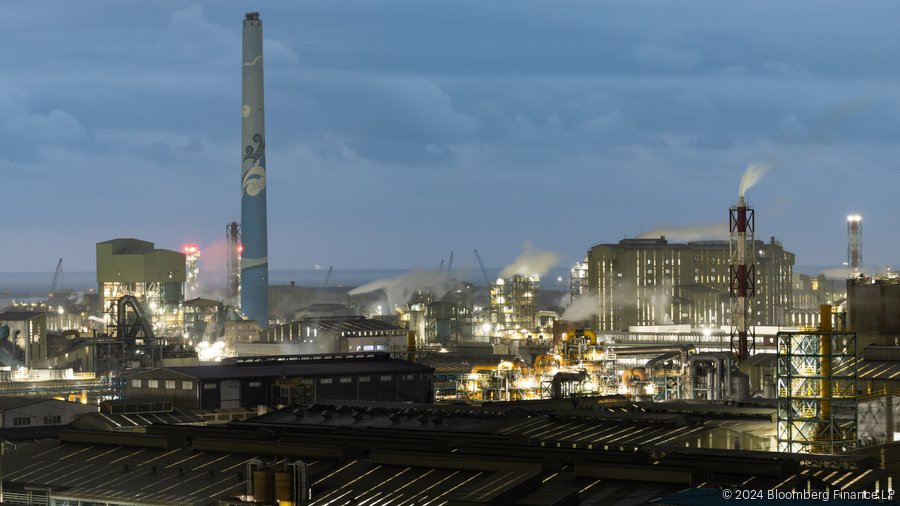
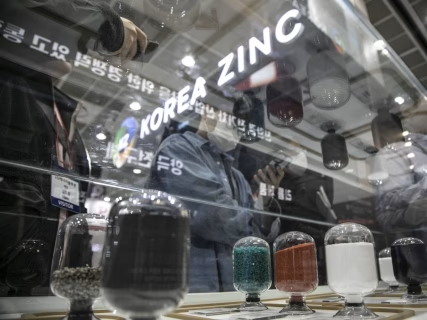
Korea Zinc is seeking a $2.35 billion loan to fund the construction of a US critical minerals plant to be developed in Tennessee. The US smelter plant is part of its efforts to help Washington boost its domestic manufacturing and metal-processing capacity. JPMorgan Chase & Co. is the sole mandated lead arranger and underwriter of the five-year loan. Nonetheless, talks with banks are ongoing and terms could still change, those familiar with the matter noted.
A Korea Zinc spokesperson said “the fundraising is proceeding smoothly” and that the project will contribute to “strengthening economic and security cooperation between South Korea and the US, as well as diversifying the global supply chain.”
However, a representative for JPMorgan declined to comment. The funding plans by Korea Zinc highlight the scale of debt required by US allies to build up a local supply chain for industries reliant on critical minerals. This is despite the firm being one of the world’s largest processors of metals. America’s exploration for critical mineral stretches far beyond its borders as it funds Africa’s Lobito Corridor railway project to facilitate transportation of critical minerals from the Longonjo mines. The construction of North America’s only cobalt sulfate refinery may also be fundamental in facilitating US supply as operation for the plant is set for 2027.
Additionally, the US also recently come to agreement with Japan on an action plan for rare earths and critical minerals development in the country. This aggregates to America’s efforts aimed at gaining supply chain independence from other major global mineral producers like China.
Scope on the Korea Zinc Critical Minerals Plant in Tennessee
In December, Korea Zinc bought the Nyrstar plant in Tennessee with plans to convert it into a major critical minerals plant. The firm, the US government and also other unnamed investors established a foreign joint venture called Crucible Metals LLC to oversee the $7.4 billion project.
For the Seoul-based firm, the move comes as it grapples with a management dispute sparked in recent years. This is after top shareholder Young Poong Corp., and MBK Partners Ltd. launched an unsolicited takeover bid for the company.
The plans for the critical minerals plant are part of President Donald Trump’s agenda as he pursues an American First Policy. These includes the US being able to produce rare earth elements, lithium and cobalt, among others. The materials are essential to sectors such as chip-making, aerospace and defense.
Project Overview
- Project Type: Critical minerals processing / smelting plant.
- Total Project Value: $7.4 billion
- Loan sought: $2.35 billion
- Goal: Enhance US domestic critical mineral supply.
Key Developer
- Korea Zinc
Project Entity
- Special Purpose Vehicle: Crucible Metals LLC.
- Form: Joint venture with US government and other investors.
Financing
- Lead Arranger and Underwriter: JPMorgan Chase and Co.
- Status: Loan negotiations in progress (terms may change)
Location
- State: Tennessee
- Country: United States
Project Scope
- Repurposing of current Nyrstar plant to a critical minerals processing plant.
- Handling of major materials such as:
- Rare earth elements
- Lithium
- Cobalt
Project Status
- Stage: Financing and development stage.
- Milestone: Nyrstar facility acquisition finalized (December)
Strategic Context
- Favors US attempts to localize critical minerals supply chains.
- Lessens dependence on foreign processing of strategic materials.
- Conforms to industrial policy of advanced manufacturing and energy security.
Strategic Significance
- Among the biggest critical minerals investments in the US.
- Improves US-South Korea industrial collaboration.
- Makes Tennessee a center of high-tech materials processing.
Leave a Reply