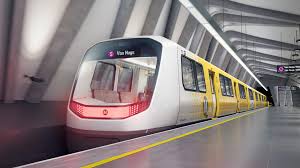
The Los Angeles County Metropolitan Transportation Authority (LA Metro) Board of Directors has voted to advance a modified version of Sepulveda Transit Corridor Partners’ (STCP) proposed alternative for a high-capacity, fully underground rail line connecting the San Fernando Valley and the Westside.
Sepulveda Transit Corridor Partners is a consortium consisting of Bechtel, Meridiam, and American Triple I (ATI), along with other members such as Mott MacDonald, TYLin, Systra, and RATP Dev. The chosen concept is Alternative 5. This alternative has been chosen as it performed best in the technical evaluation process and public review process, which included the circulation of a Draft Environmental Impact Report in 2025.
Underground Rail Selected for Sepulveda Pass
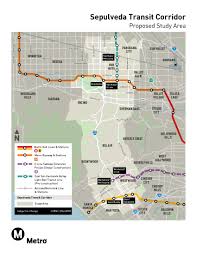
The chosen alternative is a fully underground high-capacity heavy rail line connecting the San Fernando Valley and the Westside of Los Angeles County. This alternative will pass through the Sepulveda Pass and will have stations at the Metro G Line, Ventura Boulevard, UCLA, and the Wilshire/Metro D Line. This alternative will provide a grade-separated north-south transportation corridor in one of the most congested areas in the region. Although the Board has voted for this alternative as the preferred concept for moving forward, the decisions regarding the cost and funding for the project have not yet been made.
Based on the analysis conducted by LA Metro, the modified Alternative 5 had the greatest balance of public benefit and value to taxpayers. The underground rail project is expected to transport over 100,000 daily riders, providing a quicker and more efficient mode of transportation along the heavily congested I-405 corridor. Proposed stations for the initial operating segments include the Metro G Line, Ventura Boulevard, UCLA, and the Wilshire/Metro D Line.
Six alternatives considered for Sepulveda Pass rail line
LA Metro evaluated six build alternatives (plus a No Project option) during the environmental review for the Sepulveda Transit Corridor Project:
Alternative 1: Aerial monorail along I‑405 with a bus connection to UCLA.
Alternative 2: Aerial monorail with an automated people mover to UCLA (eliminated in 2024).
Alternative 3: Monorail with a partial tunnel and an underground station at UCLA.
Alternative 4: Automated heavy rail, partially elevated in the San Fernando Valley.
Alternative 5: Automated heavy rail, fully tunneled.
Alternative 6: Driver-operated heavy rail.
After public and technical review, the Board approved a Modified Alternative 5 on January 22, 2026. The chosen plan combines Alternative 5’s fully underground heavy rail technology with a refined Valley alignment similar to Alternative 6, replacing earlier “mostly underground” DEIR designs and establishing the preferred concept moving forward.
Major rail projects advancing in Los Angeles County
Similar to Phase 2B2 of the Foothill Gold Line, which is advancing a 2.3‑mile extension from Pomona to Claremont with Parsons handling design and construction planning, the Sepulveda Transit Corridor Project is now moving forward with a fully underground heavy rail alignment connecting the San Fernando Valley to the Westside. Both projects are part of Los Angeles County’s broader push to expand high-capacity transit, reduce congestion, and improve commuter mobility across some of the region’s most heavily traveled corridors. While Phase 2B2 is in the design and procurement phase with a targeted 2031 opening, the Sepulveda line has reached the Locally Preferred Alternative approval, setting the stage for detailed engineering and environmental work.
With the approval by the Board, LA Metro can continue the development process of the project along with the STCP team. The team comprises expertise from various rail projects around the world, including the Maryland Purple Line project, the Doha, Riyadh, and Paris metro projects, and the Elizabeth line project in London. The project is seen as a key mobility project for LA County, providing regional connectivity while supporting regional economic and environmental goals.
As Los Angeles advances the Sepulveda Transit Corridor underground rail project to tackle growing commuter demand, cities across the U.S. and worldwide are exploring innovative solutions to urban congestion. In Atlanta, Glydways recently broke ground on its first public autonomous transit system, offering on-demand, electric service along a dedicated guideway. Projects like these highlight how metropolitan areas are experimenting with diverse transit technologies to expand capacity, improve reliability, and reduce reliance on roads
Project Factsheet: Sepulveda Transit Corridor Project
Overview
Location: Los Angeles County, California
Type: High-capacity, fully underground rail line
Expected Daily Ridership: 100,000+ riders
Purpose: Connect San Fernando Valley to the Westside, providing alternative to congested I-405 corridor
Selected Developer Consortium
Consortium Name: Sepulveda Transit Corridor Partners (STCP)
Lead Partners:
Bechtel – California-founded engineering and construction company
Meridiam – Global investor, developer, and long-term asset manager
American Triple I (ATI) – Infrastructure investor, owner, developer, and manager
Additional Team Members:
Mott MacDonald
TYLin
Systra
RATP Dev (global transit system operator)
Project Details
Route: San Fernando Valley to Westside Los Angeles
Initial Operating Segment Stations:
Metro G Line
Ventura Boulevard
University of California, Los Angeles (UCLA)
Wilshire/Metro D Line
Selected Alternative: Modified version of STCP’s Alternative 5
Selection Process: One of five alternatives that underwent rigorous public and expert scrutiny, including Draft Environmental Impact Report public circulation
Project Benefits
Fast, reliable alternative to heavily congested I-405 corridor
Improved mobility across the region’s most traveled corridors
Enhanced connectivity between San Fernando Valley and West LA
Job creation
Regional economic development
Environmental benefits
Strong value for taxpayers
Next Steps
LA Metro will continue developing the project in partnership with the STCP team
Leave a Reply