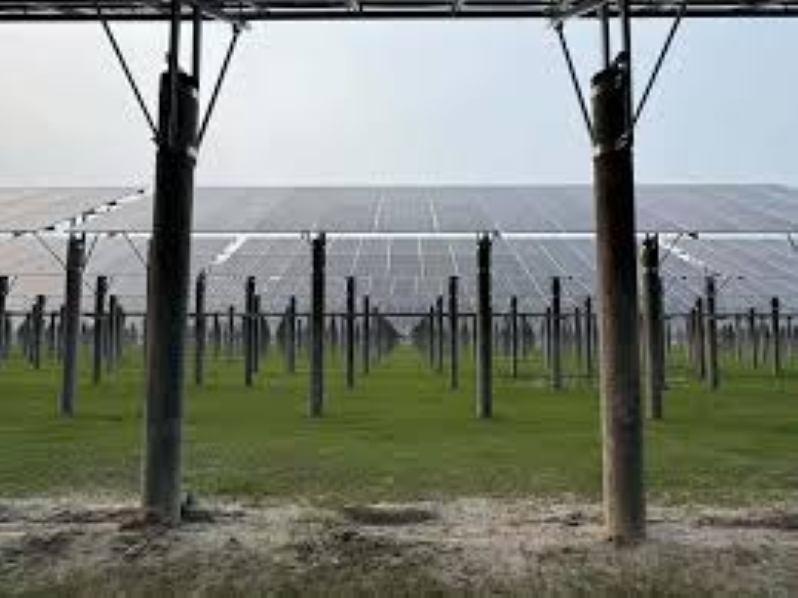
Bangladesh is advancing plans for its largest solar power farm – a 442MW grid-connected plant in Rampal, Bagerhat – marking a decisive shift in the country’s energy strategy away from coal toward renewables. The project is spearheaded by the Bangladesh Power Development Board (BPDB), and targets completion by December 2030. Additionally, the 442 MW solar power farm will use existing infrastructure adjacent to the Rampal coal power station.
With an estimated cost of Tk2,502 crore (US$230 million) and a proposed tariff of Tk6.18/kWh, the 442 MW Rampal solar farm is also being positioned as both a cost-efficient and critical addition to Bangladesh’s growing renewable energy portfolio.
442 MW Rampal solar farm: A symbolic and practical turning point in Bangladesh’s energy transition
The Rampal solar project is an important structural pivot in Bangladesh’s power sector. Historically reliant on natural gas and increasingly on imported coal, the country is now accelerating renewable deployment amid rising fuel costs, foreign exchange pressure, and energy security concerns as well felt with the Hormuz war.
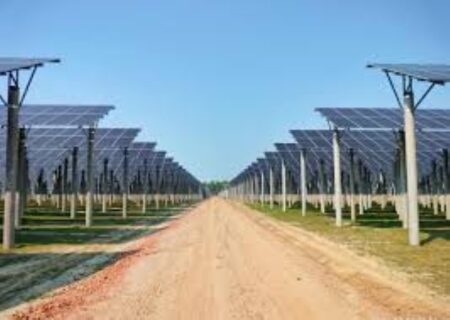
The solar plant will be developed on land already acquired by BPDB, originally for the 1,320MW Rampal Power Station. This will thereby circumvent land acquisition bottlenecks that have slowed other utility-scale projects.
Importantly, the project benefits from:
- Existing grid connectivity and transmission corridors
- Reduced site preparation costs
- Established industrial zoning
This reuse of coal-era infrastructure for solar generation is also a show of broader transition strategy pivoting around repurposing fossil-fuel assets while gradually decarbonizing the generation mix. The decarbonization of the country’s generation mix also features nuclear energy with Bangladesh’s first nuclear project eyeing initial electricity supply to the national grid by mid-2026 after recently entering its fuel-loading phase.
The project also aligns with Bangladesh’s renewable ambitions. This is as the country seeks to scale solar capacity beyond its current leading installations such as the 275MW Gaibandha solar park.
Earlier proposals and development of 442 MW Rampal solar farm through the years
Rampal solar farm has been at the center of Bangladesh’s energy transition debate for over a decade. Initially dominated by large-scale coal development, the site is now evolving into a hybrid energy hub.
Earlier proposals included:
- A 300MW solar project led by ACWA Power with private-sector partners under a BOO model
- Potential expansion phases pushing capacity toward 700MW to 1,000MW
- A planned integration with adjacent industrial and grid infrastructure
However, regulatory shifts, including the repeal of Bangladesh’s Special Power Act, halted earlier joint venture structures, prompting BPDB to reposition the project as a publicly driven initiative with competitive procurement.
Fact sheet for Rampal solar power plant, the largest in Bangladesh
Location: Rampal, Bagerhat, Bangladesh
Developer: BPDB
Cost: Tk2,502 crore (US$230m)
Tariff: Tk6.18/kWh
Estimated annual revenue: Tk352.41 crore
Completion date: December 2030
Land: 685 acres within existing 1,834-acre energy zone
Procurement: International competitive bidding
Technical Overview
Capacity: 442MW grid-connected solar PV
Technology: Utility-scale solar PV
Capacity factor: 17%
The relatively lower capacity factor compared to other sites such as Sonagazi at 21% is offset by significantly reduced capital and infrastructure costs. This also results in a more competitive tariff.
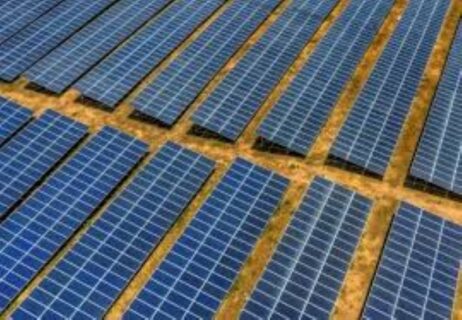
Development and construction partners for the largest solar farm in Bangladesh
Project Owner
- Bangladesh Power Development Board (BPDB)
Infrastructure Support
- Bangladesh-India Friendship Power Company Limited who is the operator of the adjacent coal plant
- National Thermal Power Corporation – JV partner in coal project
Previous Development Partners
- ACWA Power in previous JV proposal
- Comfit Composite Knit Ltd
- Viyellatex Spinning Ltd
Construction and procurement plan for the 442 MW Rampal Solar Farm
Construction for the largest solar farm in Bangladesh, the 442 MW Rampal solar project is expected to follow an international competitive bidding (ICB) model. This is a marked shift from earlier negotiated joint ventures. The model intended to:
- Drive down EPC costs
- Improve tariff competitiveness
- Attract global solar developers and financiers
A feasibility study completed in May 2025 also confirmed that minimal additional land development would be required, accelerating readiness for tendering.
What lies ahead for the largest solar farm in Bangladesh, the 442 MW Rampal solar power plant
Rampal is emerging as a symbolic and practical turning point in Bangladesh’s energy transition. The juxtaposition of a large coal plant and a flagship solar project at the same site highlights the country’s dual-track strategy of maintaining baseload reliability while scaling renewables.
If delivered on schedule, the 442 MW Rampal solar farm will:
- Become the largest solar plant in Bangladesh
- Set a benchmark for cost-efficient solar deployment
- Serve as a model for repurposing fossil fuel infrastructure
Furthermore, Rampal solar farm adds to the growing global tide of institutional confidence in solar as a mainstream generation source rather than a supplementary one.

Leave a Reply