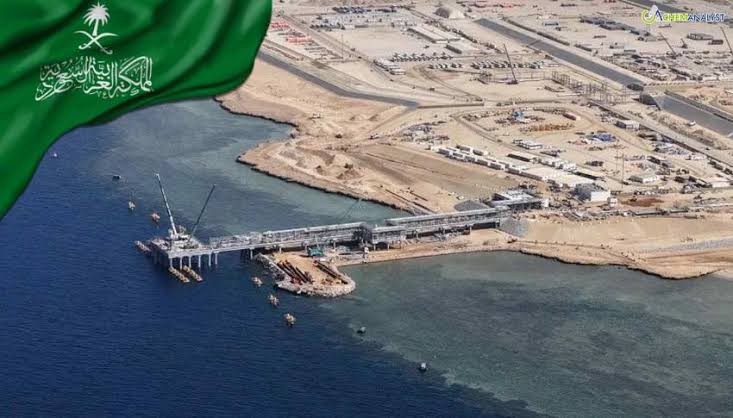
The Yanbu Green Hydrogen Project has moved beyond the early planning stage as Saudi Arabia advances a second major clean-fuel hub. The proposed $5 billion first phase will combine renewable generation, electrolysis and ammonia production at Yanbu Industrial City.
The development has also gained new technology and export partnerships since its earlier 2025 announcement. Meanwhile, Larsen & Toubro has progressed from discussions to a formal cooperation framework for the renewable-energy and grid package.
Yanbu Green Hydrogen Project moves toward final investment decision
The Yanbu Green Hydrogen Project is currently advancing through front-end engineering design and technical development.
ACWA Power awarded the FEED contract to Técnicas Reunidas and Sinopec Guangzhou Engineering in 2025. The engineering work covers the integrated hydrogen and ammonia production facilities.
The project is designed around up to 4.4 GW of electrolysis capacity. It will use dedicated solar and wind generation to supply renewable electricity.
The renewable package targets about 10 GW of combined solar and wind capacity. It will also include battery storage, substations and transmission infrastructure.
Larsen & Toubro signed a memorandum of understanding with ACWA Power in September 2025. The agreement covers the project’s renewable-energy and grid scope.
The planned package includes solar PV, wind, battery storage, substations and transmission lines. L&T also committed to entering an EPC contract after final proposal approval.
That agreement represents a significant change from the preliminary discussions covered in the project’s earlier development stage. The renewable package now has a defined cooperation framework, although the final EPC award remains subject to approval.
Yanbu Green Hydrogen Project adds ammonia technology
The project has also strengthened its downstream processing architecture. Topsoe was selected in January 2026 to provide ammonia synthesis technology for the development. Its scope includes engineering, proprietary equipment and catalysts supplied to the FEED contractors.
The technology will convert renewable hydrogen into green ammonia for export. Topsoe’s dynamic ammonia system can adjust production as renewable electricity availability changes.
The first planned ammonia units will have a combined capacity of 2,700 tonnes per day. The project could replicate the configuration across subsequent production units.
The development targets approximately 400,000 tones of renewable hydrogen annually. That hydrogen will feed green ammonia production for international markets.
The project’s export strategy has also advanced beyond preliminary market discussions. ACWA Power signed an agreement with EnBW, VNG and Rostock Port in February 2026.
The agreement establishes a proposed green-ammonia supply corridor from Yanbu to Germany. VNG plans to crack the imported ammonia back into hydrogen for Germany’s energy system.
This emerging export route gives the project a clearer commercial direction. It also links Saudi renewable generation with European demand for low-carbon fuels.
Also read: Insight Into the $8.4 Billion World’s Largest Green Hydrogen Plant Project in Saudi Arabia
Yanbu Green Hydrogen Project targets 2030 commercial operations
The project still faces several milestones before construction can begin at full scale. The FEED phase remains critical because it will establish the technical configuration and construction requirements. ACWA Power expects the final investment decision during 2026.
The project also secured pre-certification under the European RFNBO framework in May 2026. The assessment supports its eligibility for European renewable-fuel markets.
Meanwhile, Saudi Arabia continues building a broader hydrogen export strategy around projects such as Yanbu and NEOM.
The Yanbu development could produce more than 2.2 million tones of green ammonia annually. Commercial operations remain targeted for 2030.
Its scale would make it substantially larger than the 2.2 GW electrolyser system at NEOM. The two developments therefore represent complementary pillars of Saudi Arabia’s emerging hydrogen industry.
The latest progress also gives the earlier Yanbu development story a substantially different outlook. What began with L&T discussions has developed into a wider project structure involving FEED contractors, technology suppliers, renewable infrastructure planning and European export partners.
For context, Saudi Arabia’s other flagship hydrogen development at NEOM has already entered commissioning. The NEOM Green Hydrogen Project is targeting 600 tonnes of hydrogen production daily when commissioned in 2027.
This contrast highlights Yanbu’s current position: NEOM is moving toward production, while Yanbu is still preparing for investment and construction.
A Solidified Green Ammonia Export Corridor to Germany
In February 2026, project developer ACWA Power signed a landmark Memorandum of Understanding (MoU) with German energy majors EnBW, VNG AG, and ROSTOCK PORT GmbH. Witnessed directly by the Saudi Minister of Energy, this agreement formally establishes a direct green ammonia supply corridor from Yanbu to Germany’s Port of Rostock. Once received at the port, VNG plans to crack the ammonia back into green hydrogen to inject it straight into Germany’s core national energy grid.
Final Investment Decision (FID) Nears
With the technical frameworks solidified, Topsoe executives confirmed that the massive Yanbu Green Ammonia facility is actively positioned to reach its Final Investment Decision (FID) and secure its multi-billion-dollar financing block by the end of 2026. This keeps the project precisely aligned with its broader goal of launching commercial operations by 2030.
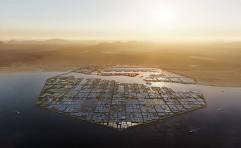
The Scope of Implementation on the World’s Largest Green Hydrogen Plant
The world’s largest green hydrogen plant is one that seems to be effectively taking shape as plans to commence its implementation are underway. ACWA has already contracted Técnicas Reunidas and Sinopec Guangzhou Engineering to conduct a 10-month engineering study for the project. There are also plans to bring the first phase online in 2030. It would represent the largest green hydrogen project in the world. It would have double the capacity of the under-construction 2.2GW NEOM plant, also in Saudi Arabia.
The project would also plug into a rapidly expanding Saudi clean energy manufacturing ecosystem. The Kingdom recently announced its first large-scale battery energy storage manufacturing plant, a joint venture that will produce up to 18GWh of storage hardware domestically — providing the kind of local supply chain that projects of this hydrogen plant’s scale will ultimately depend on.
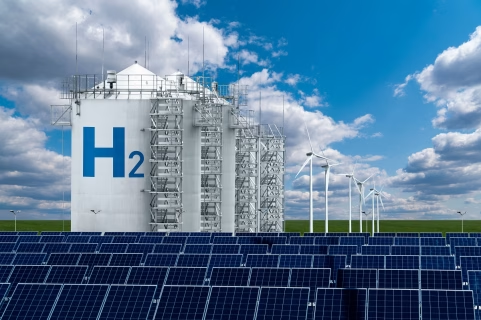
“By developing and exporting green ammonia, we aim to support international markets in their decarbonisation efforts and pave the way for a cleaner, more sustainable world,” said ACWA CEO Marco Arcelli. ACWA has also signed MOUs with Edison, TotalEnergies, Zhero Europe and EnBW to explore European demand for large-scale imports. The significance of the monumental project cannot be overstated as it is expected to revolutionize the Kingdom’s green hydrogen sector.
The Front-End Engineering Design (FEED) phase
The Front-End Engineering Design (FEED) phase for the Yanbu Green Hydrogen Hub acts as a critical blueprint, integrating 10 GW of renewable energy with 4.4 GW of electrolysis to define technical, material, and cost requirements. This phase de-risks the massive capital investment, providing the necessary clarity to transition smoothly from early-stage planning to final physical construction. By establishing this foundational baseline, the Yanbu project transitions from concept to reality through a structured, multi-phase timeline that carefully balances complex engineering with rapid deployment.
The initial design phase is on track for completion by mid-2026 to lock in the final technical blueprints and multi-billion-dollar construction proposals. Following this milestone, heavy engineering, procurement, and construction (EPC) activities will accelerate through the late 2020s, heavily supported by the synchronized rollout of a massive 9GW cross-country transmission line. This systematic progression ensures that the entire 10 GW wind, solar, and grid infrastructure matures in tandem, positioning the world’s largest green hydrogen hub to achieve full commercial operations and begin exporting 2.5 million tonnes of green ammonia by 2030.
Project fact sheet
Project: Yanbu Green Hydrogen Project
Location: Yanbu Industrial City, Saudi Arabia
Estimated Phase 1 investment: $5 billion
Electrolysis capacity: Up to 4.4 GW
Renewable capacity: About 10 GW
Hydrogen production: About 400,000 tonnes annually
Green ammonia: More than 2.2 million tonnes annually
Current status: FEED and development
FID: Expected in 2026
Commercial operations: Targeted for 2030
Project team
Developer: ACWA Power
Project partner: EnBW
FEED contractors: Técnicas Reunidas and Sinopec Guangzhou Engineering
Renewables and grid partner: Larsen & Toubro
Ammonia technology: Topsoe
Owner’s engineer: Kent
Export partners: EnBW, VNG AG and Rostock Port

Leave a Reply