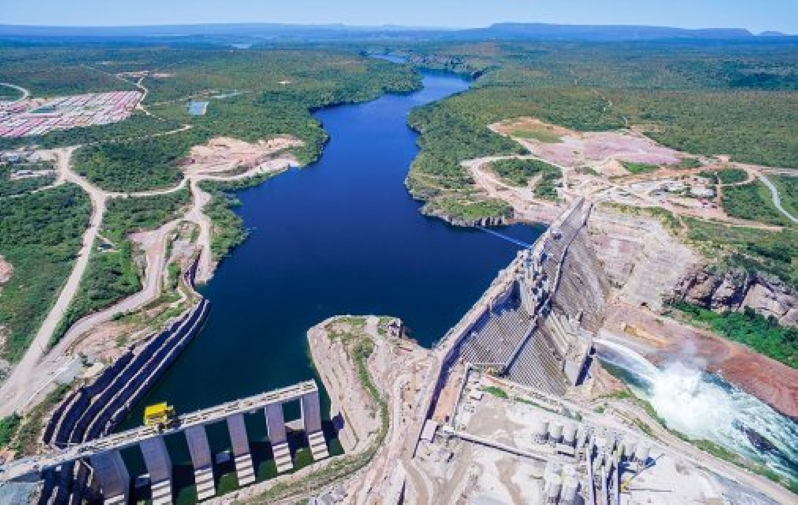
The Lauca Hydroelectric Dam, Angola’s largest power generation asset and one of Africa’s most significant hydroelectric projects, continues to strengthen its role in the country’s energy security and regional power ambitions nearly a decade after entering commercial operation.
Located on the Kwanza River between Malanje and Cuanza Norte provinces, the 2,070MW facility recently recorded a peak generation milestone of 1,516.5MW. This is a reflection of growing domestic electricity demand and grid expansion in Angola. It is also a pointer toward improved transmission efficiency across Angola’s national network.
Operated by PRODEL and developed under the Gabinete de Aproveitamento do Medio Kwanza (GAMEK), Lauca remains central to Angola’s energy strategy. Lauca is aimed at reducing fossil-fuel dependency and stabilizing industrial power supply. The hydroelectric dam is also at the center of Angola’s electricity export to neighboring markets such as the DRC through the planned US$1.5bn Hydro-Link interconnector network.
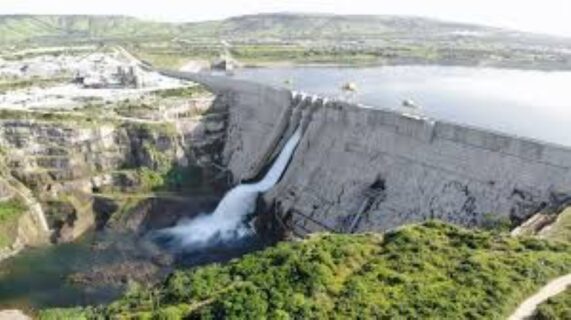
Lauca Hydroelectric Dam: Project Fact Sheet
Location: Kwanza River, near Dondo, between Malanje and Cuanza Norte Provinces
Installed Capacity: 2,070MW
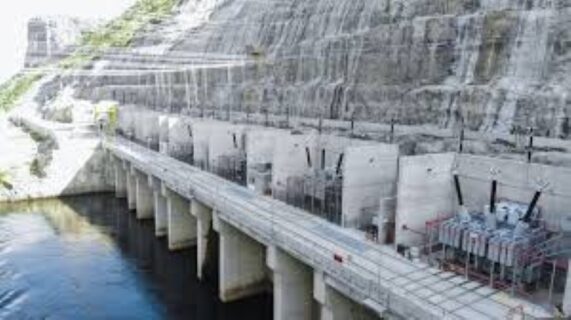
Number of Turbines: 6 main turbines (334MW each), plus an ecological unit
Dam Height: Approximately 132m
Reservoir Capacity: 5.4 billion cubic meters
Estimated Project Cost: US$4.5 billion
Developer: Government of Angola
Operator: PRODEL – Empresa Pública de Produção de Electricidade
Managing Authority: GAMEK (Gabinete de Aproveitamento do Médio Kwanza)
Main Contractor: Odebrecht (now part of Novonor)
Status: Operational
Commercial Operations: Fully operational since 2019
Latest Update: Recorded generation peak of 1,516.5MW
Project Development Timeline
2012 – Construction officially begins under Angola’s Medium Kwanza River hydropower program
2013 through 2016 – Major civil works including dam wall, spillways, tunnels and powerhouse construction progress
2017 – First turbine commissioned and begins initial electricity generation
2018 – Additional turbines progressively synchronized to Angola’s grid
2019 – Full commissioning completed, bringing total installed capacity to 2,070MW
2020 through 2024 – National transmission expansion improves evacuation capacity from Lauca to Luanda and inland industrial zones
2025 – Angola intensifies regional export discussions under cross-border power interconnection strategies
2026 – Plant records new peak generation milestone of 1,516.5MW amid rising domestic demand and planned DRC export integration
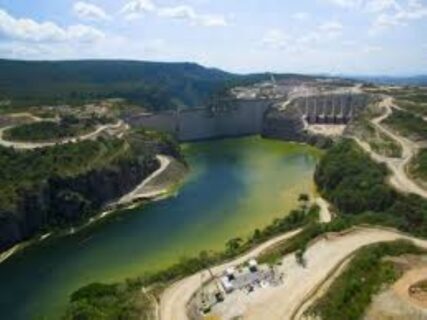
Project Developer, Contractors and Stakeholders
Owner: Government of Angola
Operating Utility: PRODEL – Empresa Pública de Produção de Electricidade
Project Management Authority: GAMEK – Gabinete de Aproveitamento do Médio Kwanza
Supervising Ministry: Ministry of Energy and Water, Angola
EPC Contractor: Odebrecht/Novonor
Transmission: RNT – Rede Nacional de Transporte de Electricidade
Regional Offtakers: SNEL – Société Nationale d’Électricité (DRC)
Lauca Hydroelectric Dam, Angola
Reported January 4, 2023 – Construction of the 2,070 MW Lauca Hydroelectric Dam hydropower project commenced in 2012 and was completed in 2019. The hydropower project was built at the Kwanza River in Dombo-Ya-Pepe. This is 282 kilometres from Luanda in Kwanza Norte province, Angola. The Lauca Hydroelectric Dam is now known as second largest hydropower plant in Africa.
Construction costs for the Lauca Hydroelectric Dam were estimated at $4.3 billion. The hydropower project which consists of 6 turbines. These will generate 8,640 GWh of electricity annually.
Gamek, an enterprise under the Ministry of Energy and Water developed the Lauca Hydroelectric Dam. Odebrecht Engineering and Construction was the lead contractor.
Lauca Hydroelectric Power Project in Angola Begins Generation
Reported July 2017 – The first of the six generator-turbines is expected to begin supplying commercial energy to Angola’s public electricity grid on July 21, at the US$4.5 billion 2,070-MW Lauca hydroelectric plant.
Empresa Nacional de Electrcidade
In a recent report from Prensa Latina, the plant, which is owned by Angola’s Empresa Nacional de Electrcidade, will begin operating before end of July this year. Odebrecht, a Brazilian firm, is the civil engineering and electromechanical assembly contractor.
Back in 2015, Obebrecht awarded Andritz a contract to provide six 340-MW Francis turbines, generators and other equipment for the hydroelectric plant. Andritz at that time said the project was scheduled for commissioning at the end of 2017.
The Lauca plant, Angola’s largest hydropower project should help the country reach its short- and long-term energy goals so as to increase the country’s social and economic status.
Also read: GE to expand on its 18 GW hydropower presence in Africa
Estimates from published sources show that of Angola’s 28 million inhabitants, only 7 million are connected to the public electricity grid. The government however, expects to double the number of users connected to the grid by 2025. At the moment, with an estimated GDP of $102BN, Angola is the third-largest economy in Sub-Saharan Africa, after South Africa and Nigeria.
Sources from the U.S. Department of Commerce say that Angola’s power generation mix will consist of up to 64% hydropower, or about 4 GW. Once the 700-MW Cambambe 2 and the 2,070-MW Lauca hydroelectric projects are fully commissioned, this goal will be achievable.
700-MW Cambambe 2 project
In 2015, reports had it that the World Bank committed $512M to Angola to finance the 700-MW Cambambe 2 project on the Kwanza River.
The second phase of the Cambambe project consists of expansion of the existing plant by 180 MW. It also features the construction of four new turbines.
The Lauca and Cambambe 2 projects are part of a wider plan by the government of Angola to produce a total of 9 GW of energy from hydropower and other energy sources by 2025. This would help the country export electricity to markets in Namibia and South Africa.
Lauca Dam Construction Commences
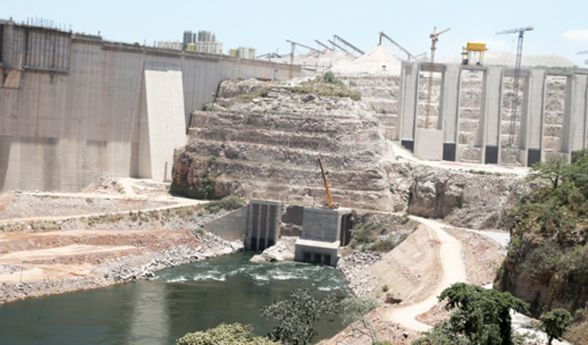
Reported January 2014 – The Angolan government plans to spend over US$4.1 million (AKZ 400 billion) in the construction of the Lauca Hydroelectric Dam, located in northern Kwanza Norte province. The dam will have an installed capacity of 2,060 MW. This is according to the Minister of Energy and Water, João Baptista Borges.
Borges said that tunnels are being built for the diversion of the river. They will be completed by March 2014. He also added that the technicians are digging tunnels to give access to the machinery house. This is where equipment will be installed for the manufacture of concrete for Lauca Hydroelectric Dam’s structures. The dam is expected to start producing power from the third quarter of 2017.
The minister also said the rehabilitation works of the 180 MW Cambambe Dam will be completed by the end of 2015. The dam will have an installed capacity of 960 MW from 2016.
Concerning the modernization of the hydroelectric facilities all over the country, the minister highlighted the rehabilitation of the Gove Dam in the central Huambo province. Gove is already operating with an installed capacity of 60 MW. The Matala Dam in Huila province is also set for rehabilitation after benefiting from improvement works.
He added that the Lomaum and Mabubas Dams, destroyed during the war, were also rehabilitated. However, Lomaum Dam is not yet producing energy as the transmission line is still being placed. It expects completion in April 2014. He reported that his ministry is undertaking an infrastructural development plan that will enable the country to reach 9,000 MW of installed capacity by 2025, which is the major challenge for the sector.



Leave a Reply