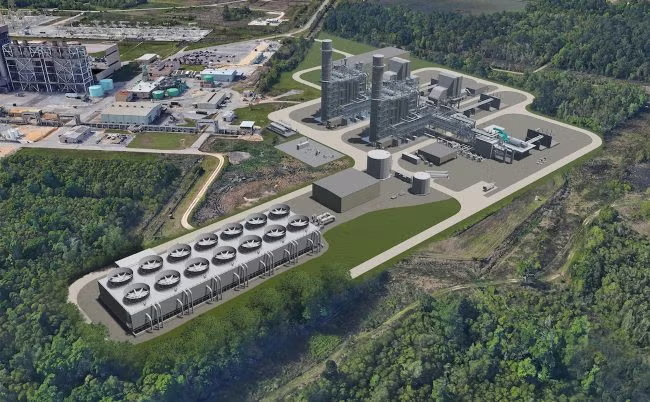
Leaders from Entergy Texas joined Texas Governor Greg Abbott, local officials and community leaders to break ground on Legend and Lone Star power stations, two major generation projects designed to power the region’s expanding population and economy. Together, the highly efficient natural gas facilities will add more than 1,200 megawatts of reliable generation capacity, producing electricity capable of powering more than 300,000 homes. Both plants were approved by the Public Utility Commission of Texas in 2025 and are expected to begin serving customers in 2028. The two new generation resources are expected to deliver over $280 million in customer benefits, including approximately $41 million in fuel savings during the first full year of operation. Including the Orange County Advanced Power Station, which is scheduled to begin operating later this year, Entergy Texas plans to add more than 2.4 gigawatts of new generation capacity by 2028. The groundbreaking, held on 9 April 2026, drew state and federal officials who framed the twin projects as a defining investment in the long-term energy security of Southeast Texas, a coastal industrial corridor that is among the most power-hungry stretches of the southern United States.
Powering a Region in Motion, What This Means Beyond the Megawatts
Southeast Texas sits at the confluence of petrochemical manufacturing, liquefied natural gas export terminals, and a rapidly growing residential base, a combination that makes energy reliability not merely a convenience but an economic and safety imperative. The region shares characteristics with other high-growth Gulf Coast industrial zones: coastal Louisiana, the Houston Ship Channel corridor, and parts of Mississippi where Entergy also operates. Across all of these areas, a consistent pattern has emerged over the past decade, grid investments that lagged behind industrial and population growth have repeatedly exposed communities to price volatility and reliability risks, as seen during Winter Storm Uri in February 2021, when millions of Texans lost power. Projects like Legend and Lone Star represent a deliberate shift away from reactive planning. The decision to commission both plants simultaneously, rather than phasing them separately, signals a confidence in long-run demand forecasting that has often been absent from Gulf Coast utility planning. For communities like Port Arthur, which carries deep histories of industrial employment alongside environmental and infrastructure challenges, the real test will be whether this capacity addition translates into tangible rate stability and resilience for everyday residents, not just for the large industrial customers who command the most grid attention.
This transition toward long-term grid fortification is mirrored in the American Southwest by the SunZia Power Transmission and Wind project, which is nearing full commercial operation in the first half of 2026. As the largest renewable energy infrastructure undertaking in U.S. history, the $11 billion Pattern Energy development combines a 3,500 MW wind complex in New Mexico with a 550-mile, 3,000 MW high-voltage direct current (HVDC) line. Having successfully entered its final testing and commissioning phase in March 2026, the project is designed to deliver fuel-free, affordable power to approximately 3 million people across the Western U.S. Much like the Legend and Lone Star initiatives, SunZia represents a strategic move toward high-capacity, inter-state corridors that utilize “grid-forming” technology to maintain steady voltage and frequency, ensuring that the surge in regional energy demand is met with a resilient and modernized supply network.
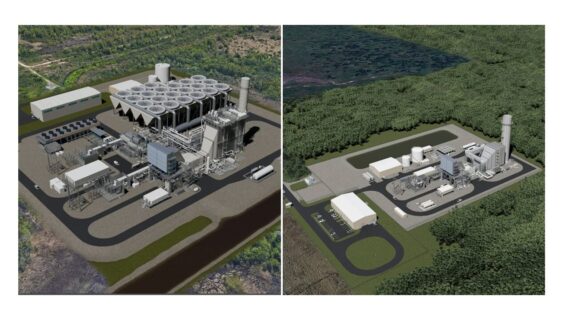
Project Fact Sheet
Project names: Legend Power Station and Lone Star Power Station
Location: Port Arthur area and Cleveland area, Southeast Texas
Developer/Owner: Entergy Texas (subsidiary of Entergy Corporation)
Technology: Highly efficient natural gas generation
Combined capacity: Over 1,200 megawatts (MW)
Homes powered: More than 300,000
Regulatory approval: Public Utility Commission of Texas (PUCT), 2025
Groundbreaking date: 9 April 2026
Expected commercial operation: 2028
Total economic activity generated (construction phase): Approximately $2.7 billion
Construction jobs created: More than 9,000 (across both sites)
Customer benefits: Over $280 million projected
Fuel savings (first full year of operation): Approximately $41 million
Grid connection: Midcontinent Independent System Operator (MISO)
Part of broader plan: Southeast Texas Energy Plan (STEP Ahead) — targeting over 2.4 GW of new generation capacity by 2028
Customers served by Entergy Texas: Approximately 538,000 customers across 27 counties
Project Team
Client/Owner
Entergy Texas — Project owner and developer; subsidiary of Entergy Corporation
Key Leadership
Drew Marsh — Chair and Chief Executive Officer, Entergy Corporation
Eliecer Viamontes — President and Chief Executive Officer, Entergy Texas
EPC Consortium — TSL Power Partners (Joint Venture)
TIC – The Industrial Company (TIC) and Sargent & Lundy, L.L.C. (S&L) have contractually formed TSL Power Partners, a joint venture, which together with Mitsubishi Power Americas, Inc. (MPWA) has entered into an Engineering, Procurement, and Construction (EPC) Agreement with Entergy for both the Legend and Lone Star power stations.
TIC – The Industrial Company — Constructor; responsible for safe, on-time construction delivery across both sites
Sargent & Lundy, L.L.C. — Engineer of record; leading procurement specifications and advanced-class combined-cycle engineering
Mitsubishi Power Americas, Inc. (MPWA) — Original Equipment Manufacturer (OEM); supplying hydrogen-capable combustion turbines and power train systems
Regulatory Authority
Public Utility Commission of Texas (PUCT) — Approving regulatory body
Courtney Hjaltman — PUCT Commissioner
Government Representatives
Greg Abbott — Governor, State of Texas
Randy Weber — U.S. Representative, 14th District of Texas
Janis Holt — State Representative, 18th District of Texas
Jeff Branick — Jefferson County Judge



Leave a Reply