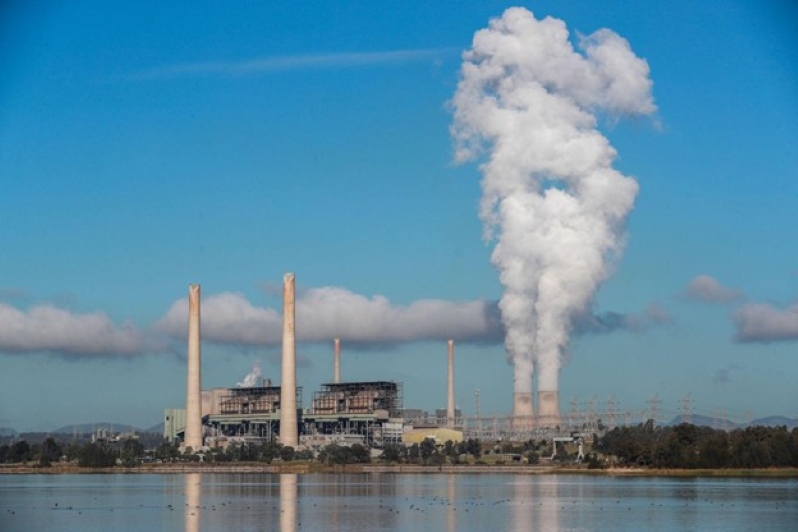
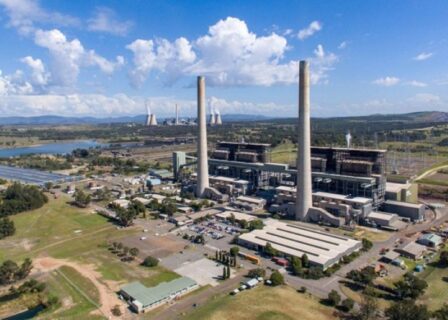
The controlled demolition of the iconic chimneys at Liddell Power Station marks a defining moment in Australia’s energy transition, as the former coal-fired giant gives way to a large-scale renewable and energy storage hub in the Hunter Valley.
Operated for decades by AGL Energy, the plant officially ceased operations in April 2023 after more than 50 years of electricity generation. On May 26, 2026, two 170-metre chimney stacks were brought down in a controlled blast, ushering in the next phase of redevelopment for the site into what is now being branded as the Hunter Energy Hub.
This transition is also part of a broader shift underway across Australia’s power sector. This comes as ageing coal infrastructure is replaced by batteries, renewables and grid support systems.
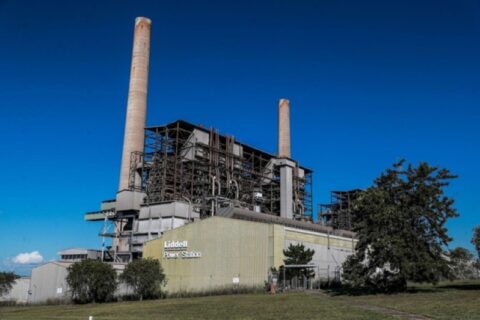
Liddell Coal-Fired Power Station: Overview
Located near Muswellbrook in the Hunter Valley region of New South Wales, Liddell was once among Australia’s most powerful power stations, with a generating capacity of about 2,000MW.
Commissioned between 1971 and 1973, the facility played a major role in supporting the electricity needs of New South Wales for more than five decades. This is before increasing maintenance costs, ageing infrastructure and decarbonization policies fast tracked its retirement.
Demolition marks start of large-scale renewable redevelopment
The demolition of Liddell coal-fired power station forms part of a broader decommissioning and rehabilitation program being undertaken by AGL Energy. According to the company, more than 90% of the materials from the site are expected to be recycled, including around 70,000 tons of steel.
Additionally, Development approval for the demolition and rehabilitation works was granted in January 2025. Demolition activities commenced later 2025.
The cleared site is being repurposed into an industrial-scale energy hub centered around grid reliability and renewable integration. The anchor project is the 500MW Liddell Battery Energy Storage System (BESS). Liddell BESS is under commissioning and is expected to support grid stabilization as more renewable generation enters the National Electricity Market (NEM).
The Hunter Energy Hub concept also includes proposals for pumped hydro storage, hydrogen-related developments and transmission infrastructure reuse. Existing transmission connections from the former coal station will also be an advantage for future renewable projects connecting into the grid.
Australia’s accelerating transition away from coal to renewables
Demolition of Liddell coal-fired power station is a show of Australia’s accelerating transition away from coal-fired generation. The closure of ageing thermal power plants across the country has intensified investment in battery storage, solar, wind and flexible grid infrastructure. Liddell has also became a high-profile example of this transition. This is after the coal-fired plant was the center of national political debate over the years. The debates were over whether the plant should remain operational beyond its scheduled retirement date.
The retirement of the facility has also removed about 1,200MW of dispatchable generation capacity from the grid. This has prompted concerns around electricity reliability and price volatility during the transition period. As a result, both state and federal governments have increasingly supported battery storage projects and transmission upgrades. These, the government says, are aimed at maintaining system reliability while renewable penetration increases.
Additionally, Hunter Valley itself is undergoing major economic restructuring. This is as coal mining and thermal generation assets gradually decline. New investment in renewable energy manufacturing, hydrogen, energy storage and industrial decarbonization are expected to reshape the region over the coming decade.
Environmental and economic implications
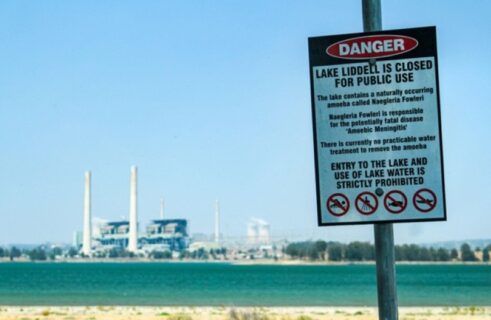
The redevelopment of the Liddell site is expected to generate significant environmental remediation work. This includes ash dam management, land rehabilitation and infrastructure repurposing. AGL has also stated that remediation activities will continue alongside future industrial reuse planning.
Economically, the redevelopment also aims to preserve energy-sector employment within the Hunter region. This is while supporting new investment opportunities tied to clean energy infrastructure. Government officials and industry stakeholders have also framed the project as a model for transitioning former coal generation sites into renewable energy and storage hubs.
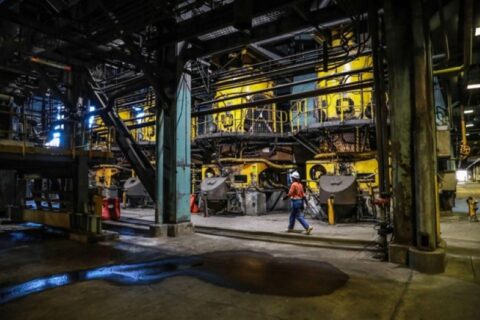
Liddell Coal-Fired Power Station Project Fact Sheet
Location: Muswellbrook
Facility type: Coal-fired thermal power station
Original generation capacity: Approximately 2,000MW
Operational period: 1971 to 2023
Current redevelopment focus: Battery energy storage and renewable energy infrastructure
Flagship replacement project: 500MW Liddell Battery Energy Storage System
Developer/Site owner: AGL Energy
Government and Regulatory Stakeholders: NSW Government, Australian Renewable Energy Agency (ARENA)
Demolition approval granted: January 2025
Major chimney demolition: May 2026
Material recycling target: More than 90%
Future planned uses: Battery storage, renewable integration, industrial energy hub, possible hydrogen and pumped hydro projects
Project Development Timeline
1964 – New South Wales government announces plans for Liddell Power Station
1971-1973 – Plant commissioned in stages
2015 – AGL announces planned closure of Liddell
April 2022 – Initial unit shutdowns begin
April 2023 – Final generating unit retired
January 2025 – Liddell coal-fired power station demolition approval granted
Mid-2025 – Major demolition works commence
May 2026 – Twin 170m chimneys demolished
2026 onward – Hunter Energy Hub redevelopment expected to progress
Leave a Reply