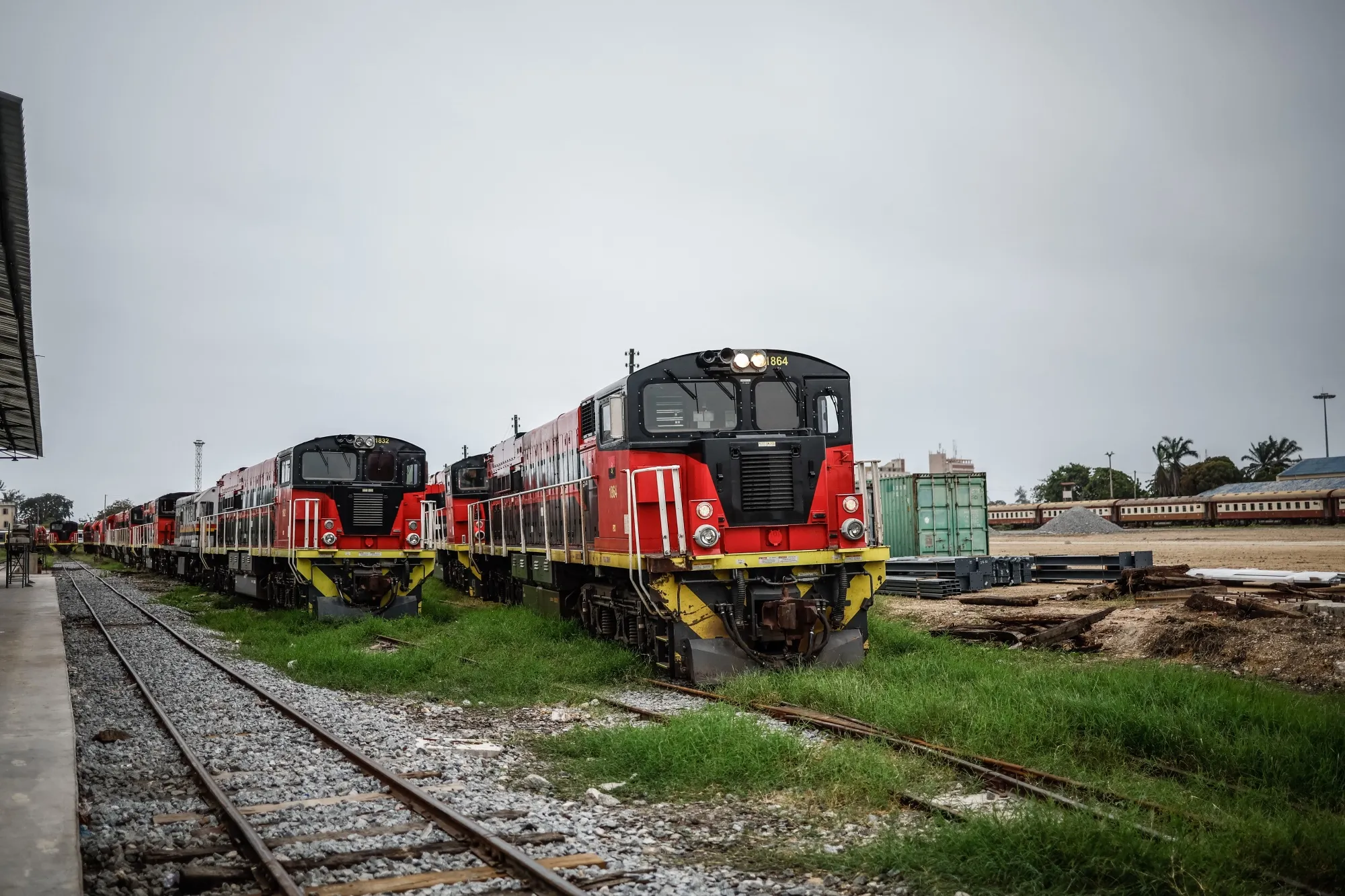
The Democratic Republic of Congo (DRC) has approved a plan to partner with Portuguese construction company Mota-Engil SGPS on rehabilitating a key railway. This railway is critical in transporting copper and cobalt.
The Congolese part of the Lobito Corridor will undergo a “complete rehabilitation.” It will be conducted through a public-private partnership endorsed by Congo’s government on July 10, according to minutes of a cabinet meeting read out the same day on state television.
Mota-Engil is already part of a consortium that operates a connecting rail line in neighbouring Angola. The railway line runs to the Atlantic Ocean coast therefore allowing for cross-border continuity.
Significance of the Project
Moreover, The Lobito Corridor is a major railway project connecting Angola’s Port of Lobito to Africa’s Copperbelt. It promises to significantly cut transport times for critical minerals being exported to western markets. Also, the infrastructure has received financial backing from the US. Additionally, President Donald Trump’s administration has been supportive of Mota-Engil’s efforts to win the deal as his country deepens its involvement in Congo’s booming mining sector.
The Central African country is the world’s second-biggest copper producer. Furthermore, it is the top source of battery material cobalt. US interest in Congo’s natural resources has accelerated since Trump returned to the White House. Trump’s administration tries to reduce dependence on China for a wide range of mineral products.
The US and Congo inked an agreement in December that gives American investors preferential access to some deposits of metals. These metals include copper, cobalt, lithium and tantalum. The agreement emphasized the “strategic nature” of the Lobito Corridor. However, Chinese miners including CMOC Group and Zijin Mining Group currently account for most of Congo’s copper and cobalt production.

While the contract still needs to be finalized, Mota-Engil now looks set to become responsible for renovating the dilapidated railway which passes through the mining hubs of Kolwezi, Tenke and Lubumbashi. The firm’s venture with Trafigura Group on the Angolan side has an existing track access agreement with Congo’s state railway company. The minutes of the ministerial meeting didn’t provide any additional details about the terms or duration of the partnership.
Lastly, in December, the DFC said it had signed a letter of interest for up to $1-billion with the Portuguese firm to help it repair and manage the railway in Congo.
Projects Similar to Lobito Corridor Copper Rail Link
There’s also a separate endeavour to connect Zambia, Africa’s No. 2 copper producer – to the Lobito Corridor. At the same time, China is progressing with a $1.4-billion overhaul of an export railway that can move minerals from Zambia to the Indian Ocean port of Dar es Salaam in Tanzania.
China’s state-owned China Communications Construction Co., or CCCC, owns 31% of Mota-Engil, which has engineering, industrial and mining projects in 20 countries across Africa and South America, as well as in Spain and Portugal.
Lobito Corridor Copper Rail Link: Project Factsheet
Project Name: Lobito Corridor Railway Project (DRC Section)
Core Objective: Complete rehabilitation, modernization, and operation of the dilapidated rail line connecting the DRC’s copper and cobalt mining hubs directly to the Atlantic Ocean via Angola’s Port of Lobito.
Geopolitical Drivers: Backed heavily by the US (under the G7 Partnership for Global Infrastructure and Investment – PGI) and the EU to secure a Western supply chain for critical energy-transition minerals, challenging China’s dominant control over local mining logistics.
Technical and Route Specifications
Total Corridor Length: 1,739 km (1,080 miles)
DRC Section Length: 450 km (280 miles), running from the Angolan border town of Dilolo through the mining hubs of Kolwezi, Tenke, and Lubumbashi.
Track Gauge: Cape gauge (1,067 mm) matching the Angolan network, allowing seamless cross-border train travel without reloading cargo.
Transit Efficiency: Drops inland transit times from the DRC Copperbelt to the Atlantic coast to roughly 7 days (compared to several weeks by truck to Indian Ocean or South African ports).
Funding & Financials
Angolan Core Investment: Over $800 million committed by the consortium to rebuild and modernize the main route and port infrastructure.
DRC Extension Funding: The US International Development Finance Corporation (DFC) has signed a letter of interest for up to $1 billion dedicated specifically to repairing and managing the rail line within the DRC.
Additional Backing: Co-financed via the African Development Bank (AfDB), Africa Finance Corporation (AFC), and the European Union’s Global Gateway package (€116 million).
Operational Impact and Capacity
Target Commodities: Outbound shipments of copper, cobalt, zinc, and lithium. Inbound shipments of sulfur, ammonia, reagents, fuel, and general commercial cargo.
Current Freight Status: Freight traffic officially resumed along the corridor following a brief two-month closure caused by severe regional flooding in April 2026. Emergency works successfully restored the link.
Frequency Target: Transitioning from 12 trains per week up to 20 trains per week by 2027.
Port Capabilities: Connects directly into the dedicated, congestion-free minerals terminal at the Port of Lobito, featuring a 13.5m draft capable of handling Panamax-sized vessels.
Project Team
The Operator (Consortium): Lobito Atlantic Railway (LAR), a joint venture primarily owned by commodities trader Trafigura and Portuguese infrastructure firm Mota-Engil, with Vecturis SA holding a minority stake.
State Partner: SNCC (Société Nationale des Chemins de Fer du Congo), the DRC’s state-owned railway company.
Trafigura: The majority anchor investor providing commercial direction, logistics synchronization, and mineral offtake integration.
Mota-Engil: The primary Engineering, Procurement, and Construction (EPC) Contractor. Mota-Engil is directly responsible for the physical rehabilitation of the track, bridges, and underlying infrastructure under a dedicated Maintenance Service Contract (MSC).
Vecturis SA: A specialized Belgian railway management firm providing niche technical expertise in African rail operations.
CFB (Caminhos de Ferro de Benguela): The Angolan state railway authority, which manages local passenger transport along the Angolan network connecting to the Luau/Dilolo border.
SADC Secretariat: The Southern African Development Community serves as the intergovernmental body facilitating the Lobito Corridor Transit Transportation Facilitation Agency Agreement to harmonize cross-border customs, safety regulations, and trade laws between Angola, the DRC, and Zambia.
Africa Finance Corporation (AFC): Acts as the lead project developer for secondary phases (such as the greenfield Zambia-Lobito connection) and plays a key role in mobilizing the billions in G7 and regional development bank funding.



Leave a Reply