Morocco has long pursued a broad renewable energy agenda aimed at reducing dependency on fossil fuels and increasing clean energy output in its national electricity mix. As early as 2018, the country was highlighted for strategic initiatives designed to diversify generation sources and attract both domestic and international investment in solar, wind, and other renewable infrastructure.
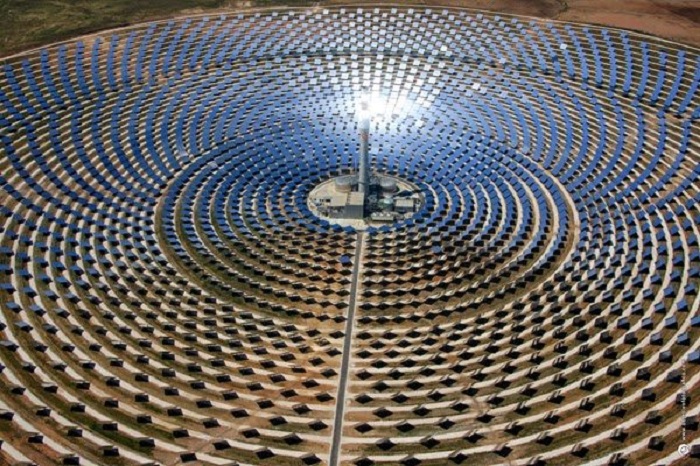
The Kingdom’s renewable push has included large‑scale projects such as the Noor Ouarzazate solar complex, which was noted for its significant contribution to national capacity shortly after commission.
Efforts have also been underpinned by a strong policy drive toward achieving a target where more than half of Morocco’s electricity comes from renewable sources by 2030. These early strategic moves framed later developments in distributed solar generation and broader regional grid enhancement.
Noor Atlas Solar Project
This long‑term orientation toward clean energy set the stage for subsequent investments, including the more recent development of the $300M Noor Atlas solar project, where construction work has begun under lead contractor Eiffage. That initiative builds on Morocco’s renewable energy momentum by deploying six distributed photovoltaic plants to support national targets and grid resilience
Project Overview
Morocco continues to expand its renewable energy portfolio to reduce reliance on fossil fuels and strengthen electricity supply. Early investments focused on large-scale solar and wind projects laid the foundation for more recent initiatives, including the Noor Atlas solar project.
This program features six distributed photovoltaic plants across Morocco, with total capacity of 305 MW, aimed at improving grid stability in remote regions. Construction began in March 2026, led by Eiffage Énergie Systèmes, with full commissioning expected by July 2027.
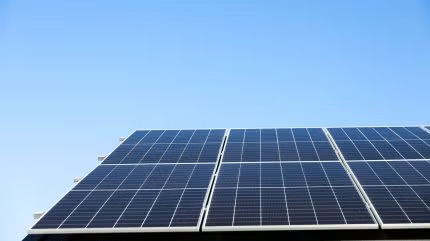
The plants integrate high-efficiency bifacial photovoltaic modules, single-axis trackers, and battery energy storage systems at selected sites to manage peak demand. Funding comes from a hybrid model, including the European Investment Bank, KfW, and Bank of Africa, while MASEN ensures local content through Moroccan subcontractor partnerships
Also Read: Morocco’s Noor Ouarzazate III solar thermal power plant switched on
Noor Ouarzazate III solar thermal power plant
This initiative has come in a year marked by the switch on of Noor Ouarzazate with 580 MW, which together with Noor Ouarzazate III, stands as the largest operating solar farm in the globe.
Morocco also completed two solar farms in the southern Saharan provinces of Laayoune and Boujdour with a joint capacity of 100 MW. These two plants were built thanks to green bonds, a first in the kingdom’s history.
Noor PV II and Noor Midelt
Head of the Moroccan renewable energy agency MASEN, Mustapha Bakoury, highlighted the next steps with regards to the completion of Noor PV II and Noor Midelt in the Atlas Mountains. As for wind energy, the King was briefed about several projects notably the Midelt 180MW plant and the 100 MW plant in Taza scheduled to be ready in 2019.
2019 will also be marked by the re powering of Koudia El Baida wind farm with 120 MW capacity.
At the end of the meeting, King Mohammed VI gave instructions to work in order to exceed the 52% renewable energy target in national electricity mix by 2030. He additionally urged the government to promote the use of renewable energy in public buildings and to encourage energy efficiency.
Leave a Reply