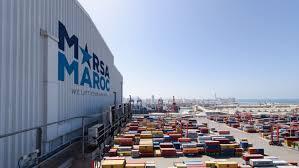
Morocco port investment program leads a $2.1 billion expansion drive as Marsa Maroc accelerates infrastructure upgrades across key gateways. Moreover, the initiative strengthens Morocco’s ambition to become a leading logistics hub linking Europe, Africa, and global markets.
Announced on March, 2026, the board approved the multi-year program running from 2025 to 2030. Consequently, the investment aligns with national trade ambitions and rising cargo demand.
Morocco port investment program accelerates capacity expansion, digitalization and sustainability
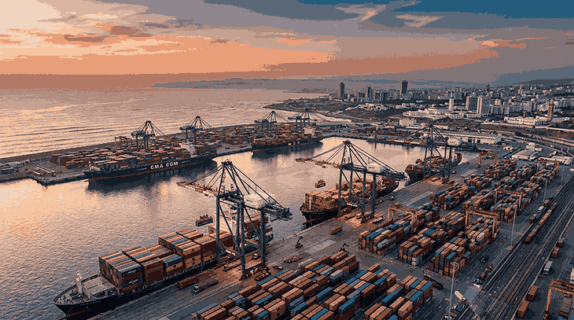
Firstly, the Morocco port investment program prioritizes capacity expansion at strategic locations. Notably, Marsa Maroc will operationalize the East Container Terminal at Nador West Med port. In addition, the company will upgrade existing facilities at Casablanca and Jorf Lasfar ports. Therefore, these upgrades aim to accommodate larger vessels and increased cargo volumes. As a result, Morocco enhances its competitiveness in regional maritime logistics.
Meanwhile, the Nador West Med project stands as a flagship development. It supports transshipment activities and strengthens connectivity across Mediterranean routes. Furthermore, the expansion reflects Morocco’s proactive infrastructure planning approach. Consequently, port congestion risks reduce while operational efficiency improves.
Secondly, the Morocco port investment program emphasizes digital transformation. Specifically, Marsa Maroc will deploy advanced terminal operating systems and automated gate solutions. These technologies reduce truck turnaround times and streamline customs processes. As a result, logistics chains become faster and more reliable.
In parallel, the program supports a green transition strategy. For instance, the operator will install shore-power systems for docked vessels. Ships can connect to electricity instead of burning fuel while berthed. Additionally, on-site renewable energy projects will lower carbon emissions across port operations. Therefore, Morocco aligns its maritime sector with global decarbonization trends.
Strong financial performance supports expansion
Importantly, the investment follows a strong financial year in 2025. Marsa Maroc recorded a 16% revenue increase, reaching approximately $578.5 million. Moreover, the operator handled over 67 million tons of cargo during the year. Consequently, it ranks as the fourth-largest container terminal operator in Africa.
Beyond domestic growth, the company is expanding internationally. For example, it secured a terminal management deal at the Port of Monrovia in Liberia. Furthermore, it is pursuing opportunities in Benin and Djibouti. Therefore, the strategy positions Marsa Maroc as a regional maritime leader.
Strategic relevance to Morocco’s trade ambitions
Significantly, the Morocco port investment program aligns with the country’s 2030 National Port Strategy. This framework aims to modernize infrastructure and support export-driven sectors. For instance, automotive and agri-food industries depend heavily on efficient port operations. Consequently, improved logistics capacity strengthens Morocco’s export competitiveness.
Additionally, the program supports near-shoring trends. European companies increasingly seek supply chain alternatives closer to home. Therefore, Morocco offers a strategic location with upgraded infrastructure and connectivity. As a result, the country attracts more foreign investment and trade flows.
Similar projects such as Nador West Med port project highlights the country’s broader efforts to strengthen its position as a logistics hub connecting Europe and Africa.
Project Fact Sheet
Project Name: Morocco Port Investment Program
Operator: Marsa Maroc
Total Investment Value: $2.1 billion (MAD 21 billion)
Timeline: 2025–2030
Location: Multiple ports across Morocco (Nador West Med, Casablanca, Jorf Lasfar)
Key Components:
- Development of East Container Terminal at Nador West Med
- Expansion and modernization of Casablanca port facilities
- Upgrades at Jorf Lasfar port
- Deployment of smart port technologies
- Installation of automated gate systems
- Implementation of shore-power infrastructure
- Integration of renewable energy systems
Primary Objectives:
- Increase cargo handling capacity
- Improve operational efficiency through automation
- Reduce emissions and support green shipping
- Strengthen Morocco’s position as a logistics hub
Project Team
Project Owner / Operator: Marsa Maroc
Government Stakeholders:
Terminal Operator (Nador West Med – East Container Terminal): Marsa Maroc
Main Contractors (Nador West Med Port – Phase Development):
- SGTM (Morocco)
- STFA Group (Turkey)
- JDN (Luxembourg)
Financiers / Development Partners: African Development Bank (AfDB)
Technology & Digital Systems Providers: To be announced (smart port systems under procurement)
EPC Contractors (Casablanca & Jorf Lasfar upgrades):To be announced
Subcontractors: To be announced
Sponsors / Investors: Primarily state-backed and institutional (details undisclosed)
Leave a Reply