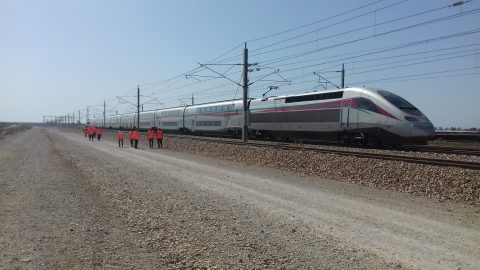
Morocco is accelerating work on its Kenitra-Marrakech LGV project ahead of the 2030 World Cup preparations. The project is the nation’s first high-speed rail network and involves linking several Moroccan cities and the purchase of 168 trains. These remarks were noted by Morocco’s transport and logistics minister Abdul Samad Qayuh told parliament this week.
Moreover, it is part of the $10.5 billion three-year transport investment programme for hosting the tournament. “Nearly 30 percent of the high-speed train project has been finished and it will be completed on time,” he said in an address broadcast live on the state-run Medi1 TV. “This project is part of an investment programme approved by the government for the next three years. It involves investment of MAD96 billion, including MAD53 billion for the high-speed rail project.”
He also added that the project is the largest investment programme in 10 years. In late 2024, Morocco announced the award of contracts worth about $1.86 billion for the high-speed rail project. Another major rail project advancing is the Morocco-Spain rail tunnel that is gradually taking shape despite being marred in setbacks. Furthermore, the closing of the Strait of Hormuz provided clarity on the essence of alternative transport routes with the Strait of Gibraltar being an option.
Another major rail projects advancing across North Africa is the Algiers to Tamanrasset railway project. Dubbed Algeria’s “project of the decade” is a major line linking the north with the deep south region of the nation.
Scope of Implementation on the Kenitra-Marrakech LGV Project
The Kenitra-Marrakech LGV project involves the construction of a 430-kilometer railway distance. It starts from the western Marrakesh city to Kenitra in the northwest through Casablanca on the Atlantic Ocean. Most of the contracts were also awarded to Chinese companies. “This project will likely transform transportation within the Kingdom by reducing travel times between cities by nearly half,” Qayuh said.
He explained that the journey between Tangier and Marrakech, which currently takes about six and a half hours, will be slashed to nearly three and a half hours. On the other hand, the travel time between Rabat and Tangier will be reduced to just one hour instead of the current one hour and twenty minutes.
Qayuh also said the ministry and the National Railway Office (ONCF) are mobilizing funding for the high-speed rail project from global markets. Morocco has been locked in a drive to develop its infrastructure and logistics sector as it braces to co-host the world cup along with Spain and Portugal.
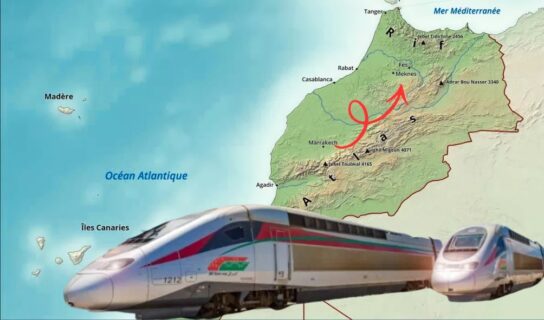
Project Factsheet:
- Project Name: Kenitra–Marrakech LGV High-Speed Rail Project
- Location: Morocco (Kenitra–Casablanca–Marrakech corridor)
- Estimated Investment Value: $5bn+ (part of $10.5bn national transport programme)
- Project Type: High-speed rail (LGV) infrastructure project
Timeline
- Construction progress: ~30% completed
- Contract awards announced: late 2024
- Target completion: ahead of 2030 FIFA World Cup
- Project execution phase: ongoing
Site & Scale
- 430-kilometre high-speed rail corridor
- Connects Kenitra, Casablanca, and Marrakech
- Includes procurement of 168 high-speed trains
- Part of wider national transport investment programme
Key Stakeholders
- Government oversight: Morocco Ministry of Transport & Logistics
- Implementing authority: National Railway Office (ONCF)
- Contractors: multiple international firms, including Chinese companies
- Funding sourced from government allocation and global capital markets
Infrastructure Scope
- Construction of dedicated high-speed rail line (LGV)
- Major rail corridor linking key economic and tourism hubs
- Also rolling stock procurement (168 trains)
- Integration with national rail and logistics network
Strategic Objectives
- Reduce travel times between major Moroccan cities
- Support 2030 FIFA World Cup infrastructure readiness
- Modernize national transport and also logistics systems
- Strengthen regional connectivity and also economic integration
Current Status
- Approximately 30% of construction completed
- Contracts worth $1.86bn already awarded
- Financing and also procurement ongoing
- Project on track for completion before 2030 World Cup preparations


Leave a Reply