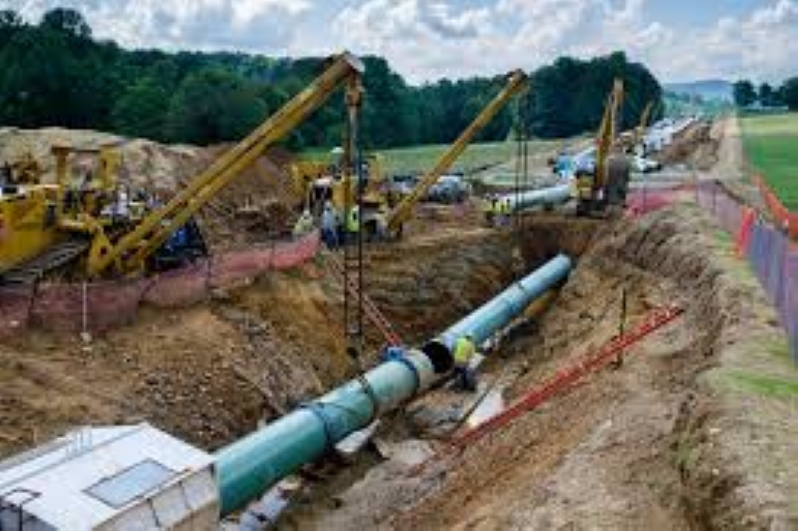
The proposed Mountain Valley Southgate natural gas pipeline extension has received a significant legal boost after a U.S. federal appeals court rejected requests by environmental groups seeking to halt state-issued water quality certifications for the project. The ruling allows Southgate natural gas pipeline construction activities to continue while broader legal challenges proceed, marking another milestone for the pipeline expansion linking Virginia and North Carolina.
US Appeals Court Decision and Environmental Groups Demands
The decision was issued by the Richmond-headquartered U.S. Court of Appeals for the Fourth Circuit. A unanimous three-judge panel denied the stay requests in late April and, in a written opinion by Judge James A. Wynn issued in June, explained that the organizations had failed to demonstrate a strong likelihood of success on the merits of their claims — an essential requirement for obtaining such extraordinary relief. Environmental groups, including the Sierra Club and Appalachian Voices, had challenged water quality certifications granted by Virginia and North Carolina regulators. The environmental groups argue that the project is environmentally harmful, unnecessary and inconsistent with climate objectives. The court’s ruling leaves the permits in place while the underlying cases continue to be reviewed. Photo courtesy: Appalachian Voices In response to a request from Construction Review Online, the Southern Environmental Law Center, which represents groups challenging the permits, said it could not provide new images but shared the following statement on behalf of the community and environmental organizations:
“Unfortunately, MVP is being allowed to move forward with construction while our clients’ challenges to the pipeline’s Virginia and North Carolina water permits are heard, risking real harm to Virginia and North Carolina waters and wetlands. It will have real consequences for landowners and communities along the Southgate route, disrupting their way of life, affecting streams and rivers that people know and depend on, and harming the environment, and the aquatic life that inhabits those waterways.”
The full statement and case background are set out in the SELC’s press release.
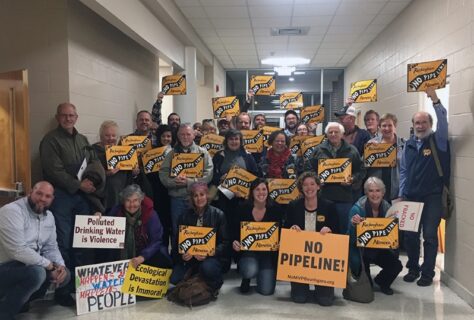
Mountain Valley Virginia-North Carolina Expansion: Southgate Natural Gas Pipeline Project
The Southgate project is an extension of the operational Mountain Valley Pipeline system and is designed to deliver additional natural gas supplies into North Carolina. The amended proposal differs substantially from the original Southgate concept approved in 2020. The latest plan features a shorter route, larger pipeline diameter and higher transportation capacity. The revised project would consist of approximately 31.3 miles of 30-inch-diameter pipeline extending from Pittsylvania County, Virginia, into Rockingham County, North Carolina, with a targeted in-service date of 2028. The latest court decision follows a series of regulatory approvals obtained over the past year. Virginia and North Carolina issued Clean Water Act Section 401 certifications in late 2025 and early 2026, enabling the project to secure additional federal permits for stream and wetland crossings. Temporary administrative stays issued by the Fourth Circuit earlier this year had briefly paused the permits while the court considered requests for longer-term injunctions. Those requests have now been denied, clearing the way for construction to continue. 
What is at Stake?
The Southgate natural gas pipeline expansion is part of efforts to expand natural gas transportation infrastructure across the U.S. Southeast, largely driven by growing industrial development, manufacturing facilities, power generation demand and booming data center construction. Project proponents argue that the pipeline will improve energy reliability, enhance supply diversity and support economic growth throughout North Carolina and neighbouring markets. For the developers, the latest ruling reduces one of the most immediate legal risks facing the project. However, separate challenges remain active, including litigation concerning federal approvals issued by the Federal Energy Regulatory Commission (FERC). Environmental organizations continue to argue that the project is unnecessary and that regulators underestimated potential impacts on waterways, communities and greenhouse gas emissions.
Mountain Valley Southgate Natural Gas Pipeline Expansion Project: Overview
Location: Virginia and North Carolina Developer: Mountain Valley Pipeline, LLC Parent Company: EQT Corporation Pipeline Length: Approximately 31.3 miles Pipeline Diameter: 30 inches Capacity: Approximately 550,000 dekatherms per day Route: Pittsylvania County in Virginia to Rockingham County in North Carolina Target In-Service Date: 2028 Regulatory Authority: Federal Energy Regulatory Commission Current Status: Construction permitted to proceed while legal challenges continue 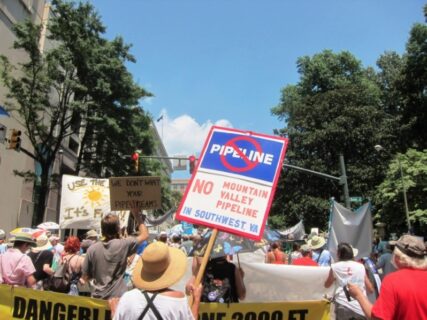 March against Mountain Valley Pipeline, August 2016. Photo Credit: Protect Our Water Heritage Rights (POWHR)
Who is Involved in the project
Developer
- Mountain Valley Pipeline, LLC
- EQT Corporation
Regulatory Agencies
- Federal Energy Regulatory Commission (FERC)
- Virginia Department of Environmental Quality (VDEQ)
- North Carolina Department of Environmental Quality (NCDEQ)
- U.S. Army Corps of Engineers
Environmental Groups
- Sierra Club
- Appalachian Voices
- Southern Environmental Law Center
- Center for Biological Diversity
- Wild Virginia
- Dan River Basin Association
Mountain Valley Southgate Natural Gas Pipeline Expansion Project: Development Outlook
The Fourth Circuit’s decision removes a significant near-term obstacle for the Mountain Valley Southgate project, allowing its development to continue. Nevertheless, the project remains exposed to ongoing regulatory and legal scrutiny, particularly regarding federal approvals and environmental concerns. This type of scrutiny has led to the shelving of billion-dollar projects in the U.S., including the Alberta to Nebraska Keystone XL Pipeline Project. If developers successfully navigate the remaining litigation and permitting processes, Southgate could enter service by 2028, extending Appalachian natural gas supplies deeper into the Southeast and reinforcing regional energy infrastructure, as put by the developer.
Risks Ahead
Key risks for the Southgate natural gas pipeline project include continued litigation, potential permit modifications, construction delays arising from environmental compliance requirements and changing natural gas market conditions. Environmental opposition also remains strong, and the project will most likely continue to face scrutiny throughout its development and construction.

Leave a Reply