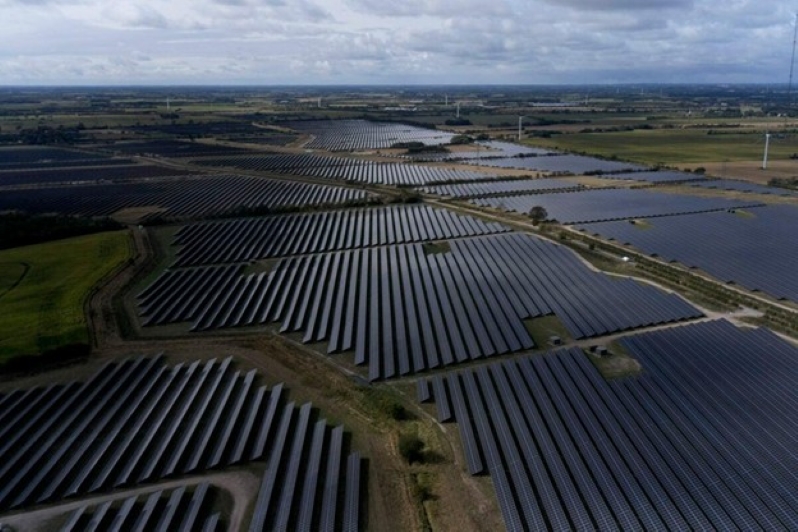
Google, AirTrunk and European Energy Australia are moving closer to energizing the Mulwala Solar Farm in New South Wales, a project joining a host of others in exemplifying how hyperscale digital infrastructure is increasingly being linked directly with renewable energy generation. The announcement comes as Australia faces increasing electricity demand from cloud computing, AI workloads and large-scale data centers. This is prompting tech companies and infrastructure providers to secure long-term clean energy supplies.
According to Mulwala project partners, the solar facility is nearing completion and preparing to connect to the National Electricity Market (NEM). The project aims to add new renewable generation capacity while supporting corporate decarbonization goals.
Google, AirTrunk and European Energy Advance Mulwala Solar Farm in NSW
Located approximately 2km north of Mulwala in the Riverina region of New South Wales, the Mulwala Solar Farm is being developed under a Google, AirTrunk and European Energy Australia partnership.
The project was originally announced in 2023 under a corporate renewable energy agreement designed to match growing digital infrastructure demand with new renewable generation. Tech giant Google has also stated that the project forms part of its strategy to achieve 24/7 carbon-free energy operations centered on decarbonization.
Project Overview
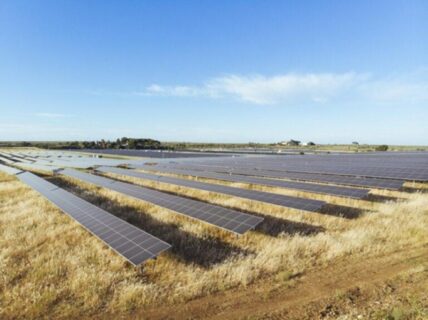
The development has been described through several stages and capacities as planning and ownership structures evolved. Planning approvals were initially granted for an 80 MW solar farm development covering approximately 215 hectares. Following project optimization and ownership changes, European Energy Australia has progressed a project configuration delivering approximately 31 MW of installed solar capacity, expected to generate around 66 GWh of electricity annually.
Key Project Facts
- Location: Mulwala, New South Wales
- Site Area: Approximately 215 hectares
- Installed Capacity: Approximately 31 MW in current delivery configuration
- Annual Generation: Around 66 GWh
- Grid Connection: National Electricity Market (NEM)
- Status: Nearing completion and preparing for grid connection
- Construction commenced date: 2025
- Grid connection target: 2026
- Developer: European Energy Australia
- Partners: Google and AirTrunk
- Original Approval Capacity: Up to 80 MW under state planning approval framework
Project Team
Developer: European Energy
Corporate Partners: Google, AirTrunk
Financing Institutions: Westpac Banking Corporation, DZ BANK AG
Grid Connection Contractor: Intium
Importance for Australia’s Digital Economy
Mulwala Solar Farm highlights a growing trend in which hyperscale technology companies seek dedicated renewable energy projects to offset increasing electricity consumption from data centers and cloud services.
AirTrunk operates some of the Asia-Pacific region’s largest hyperscale data center campuses, serving cloud providers, enterprise customers and AI platforms. As AI workloads expand rapidly, electricity demand from data centers has become a major focus for both operators and regulators. Mulwala solar project is an example of how renewable energy developers and tech majors are collaborating to address future power requirements while meeting sustainability commitments.
For Google, the project contributes to its global objective of operating on carbon-free energy around the clock. The company described the solar farm as part of its Digital Future Initiative. The program aims to ensure that growing digital demand is matched by investment in new renewable generation assets rather than relying solely on existing grid resources.
Project Financing and Development Structure
European Energy strengthened the project’s financial foundation in 2025 when it secured a financing package exceeding €70 million (AUD 130 million) for two Australian solar projects, including Mulwala Solar Farm and the larger Lancaster Solar Park in Victoria.
The financing was provided by Westpac Banking Corporation and DZ BANK AG. It supports construction and delivery of a combined 137 MW renewable energy portfolio.
The project also reflects European Energy’s expansion strategy in Australia. The Demark-based green energy company has been steadily building a renewable pipeline across multiple states in Australia.
Mulwala Solar Farm Project Engineering and Grid Connection
An important component of the project has been the development of connection infrastructure required to integrate the facility into the electricity network.
Australian energy infrastructure company Intium was awarded a Build, Own, Operate and Maintain (BOOM) contract covering grid connection works. The scope includes a 22 kV switching station and approximately 2km of underground cabling connecting the solar farm to Essential Energy’s Mulwala Zone Substation. Advanced connection technologies are also being deployed to ensure efficient integration into the regional network.
The connection infrastructure will play an important role in enabling reliable delivery of renewable electricity to the NEM. This is while supporting local network stability.
Agricultural and Community Integration at Mulwala Solar Farm Project
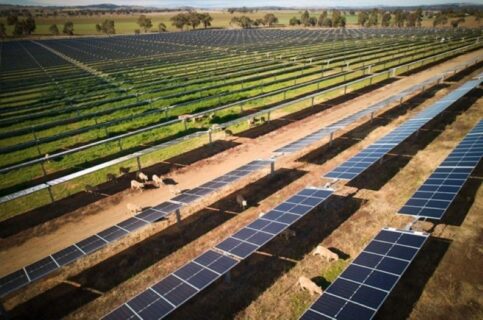
Mulwala’s dual-use land strategy is another hallmark feature of the solar project. Although the development occupies approx. 215 hectares, only about one-third of the land is allocated to solar infrastructure. The remaining area continues to support agricultural activities, particularly livestock grazing.
This approach also speaks of efforts to balance and integrate renewable energy installations with agricultural productivity. This helps address concerns often raised regarding land-use change in rural communities.
European Energy has also stated that community engagement and regional economic benefits form part of the project’s development strategy. Local employment and contractor opportunities were also addresses during construction and commissioning phases.
Outlook on the Development
As Australia accelerates the retirement of coal-fired generation and continues to experience increasing electricity demand from digital infrastructure, projects such as Mulwala Solar Farm are expected to become increasingly common. Other solar projects designed to serve the community directly are also taking shape in the country including Goorambat East Solar Farm expecting commissioning mid-2026.
Additionally, major tech companies are increasingly supporting the development of new renewable projects that contribute additional generation capacity to the grid. This is as opposed to simply purchasing renewable energy certificates.
Once connected and operational, Mulwala will contribute clean electricity to the NEM as well as support Australia’s expanding digital economy with renewable energy resources.


Leave a Reply