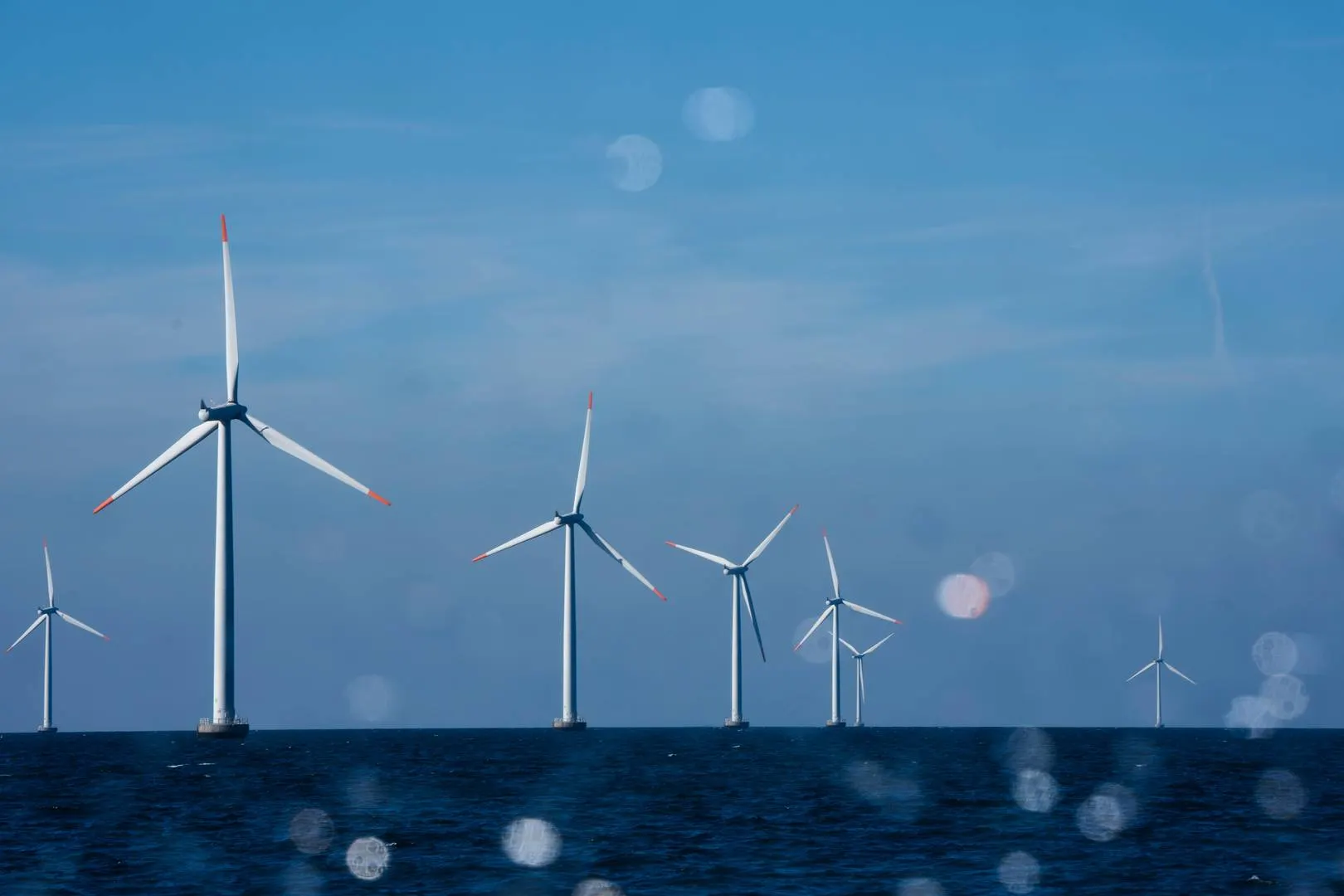
The Netherlands has set aside approximately €3.9 billion in subsidy support for the development of the IJmuiden Ver Gamma-A offshore wind site — a 1 GW project located 53 kilometres off the Dutch North Sea coast — with the tender expected to open in September 2026, while simultaneously advancing the parallel Gamma-B zone alongside it. The announcement, made by the Dutch Ministry of Climate Policy and Green Growth, represents the Netherlands’ decisive return to subsidised offshore wind procurement after a period in which zero-subsidy tenders failed to attract bids. Within 24 hours of the Dutch announcement, France unveiled the largest offshore wind procurement drive in its history: a commitment to award power purchase agreements for 10 GW of new offshore wind capacity by late 2026 or early 2027 under the country’s third Multiannual Energy Programme (PPE 3), comprising 5 GW of fixed-bottom offshore wind and 5 GW of floating offshore wind across all French maritime coastlines. The two announcements — made against the backdrop of an acute European energy security shock triggered by disruption to Middle Eastern fossil fuel supplies in March 2026 — reflect a shared recognition across the continent that offshore wind has moved from climate policy instrument to energy security necessity.
IJmuiden Ver Gamma-A and B: The Site, the Subsidy Structure, and the Market Context
The IJmuiden Ver Wind Farm Zone (IJVWFZ) is the Netherlands’ primary offshore wind development area for the 2020s, a 609-square-kilometre zone located off the Dutch North Sea coast that has been divided into four designated sites — Alpha, Beta, Gamma-A, and Gamma-B — capable of collectively supporting approximately 6 GW of installed offshore wind capacity. Permits for the Alpha and Beta sites were awarded in 2024 to winning consortia in earlier tender rounds. Gamma-A and Gamma-B are the remaining two sites, and the April 2026 announcement confirms that both will now be progressed, with Gamma-A’s 129-square-kilometre, 1 GW site at the centre of the funded tender opening in September 2026.
This massive offshore expansion is mirrored by major onshore achievements, specifically the Windpark Zeewolde, the Netherlands’ largest onshore wind farm. Now fully operational following its 2022 completion, this unique 322 MW repowering project involved replacing over 200 older, smaller turbines with 83 powerful Vestas units, effectively tripling energy output while halving the number of structures. As Europe’s largest community-owned wind farm—with more than 90% of the nearby community participating as shareholders—Zeewolde now produces enough clean electricity to power more than 250,000 households annually, serving as a successful model for local participation in large-scale energy infrastructure.
The subsidy structure represents a significant policy shift. For several years the Dutch government, encouraged by the collapse in offshore wind costs during the mid-2010s and early 2020s, pursued zero-subsidy tenders that required developers to bid for permits without any government revenue support, relying instead on merchant electricity prices for project economics. The approach failed: a 2025 Nederwiek tender attracted no bids, forcing the government to confront the reality that rising construction costs, supply chain inflation, higher interest rates, and lower-than-expected Dutch electricity demand had fundamentally changed the project economics. The return to subsidised procurement — under the Tijdelijk Ondersteuningsmechanisme Windenergie Op Zee (TOWOZ), or Temporary Support Mechanism for Offshore Wind Energy — combines a subsidy procedure based on the SDE++ feed-in premium framework with a parallel auction route for developers willing to bid without subsidy. The maximum subsidy level has been set at €104 per MWh of electricity generated. Of the total €3.978 billion earmarked, approximately €2.5 billion in net expenditure is expected — with €0.9 billion drawn from the Climate Fund and €1.6 billion from the SDE++ scheme.
Project Fact Sheet: IJmuiden Ver Gamma-A Offshore Wind Tender
Site Name: IJmuiden Ver Gamma-A (IJVWFZ)
Location: North Sea, approximately 53 km off the west coast of the Netherlands; site area: 129 km²
Capacity: ~1 GW
Subsidy Budget (Total Allocation): €3.978 billion
Expected Net Expenditure: ~€2.5 billion (€0.9B Climate Fund + €1.6B SDE++)
Maximum Subsidy Level: €104/MWh
Support Mechanism: TOWOZ (Tijdelijk Ondersteuningsmechanisme Windenergie Op Zee) — one-sided CfD; parallel auction route also available
Tender Opens: September 2026 (expected)
Minister: Van Veldhoven (Ministry of Climate Policy and Green Growth; successor to Sophie Hermans)
Parallel Zone: IJmuiden Ver Gamma-B (similar scale; running alongside Gamma-A)
IJV Zone Context: IJVWFZ total ~609 km²; 4 sites (Alpha, Beta, Gamma-A, Gamma-B); ~6 GW total capacity; Alpha and Beta permits awarded in 2024
Netherlands Offshore Wind Target: 40 GW by 2040 (previously stated as 50 GW, since revised)
Policy Context: France PPE 3 Offshore Wind Tender
Programme: Third Multiannual Energy Programme (PPE 3)
Total Offshore Wind Capacity: 10 GW (to be awarded by late 2026 / early 2027)
Fixed-Bottom Component: 5 GW (all French maritime coastlines)
Floating Component: 5 GW (all French maritime coastlines)
France 2035 Target: 15 GW offshore wind
France 2050 Target: 45 GW offshore wind
Energy Transition Goal: 60% fossil energy → 60% fossil-free energy by 2030
European Offshore Wind Macro Context
North Sea Summit (Hamburg, January 2026): 9 nations; 300 GW North Sea target by 2050; 100 GW cross-border; 15 GW/year 2031–2040
WindEurope CEO (Malgosia Bartosik): €1 trillion of investment crowded in over the next decade
Grid Investment Required: ~€500 billion by 2030
March 2026 Energy Shock: Gas prices +70%, oil prices +50%, €13B additional EU fossil fuel import costs
European FIDs (First Half 2025): €34 billion approved
The level of government support will vary with future electricity prices under the one-sided contracts-for-difference (CfD) mechanism: when electricity prices are high, the effective subsidy paid by the government shrinks as developer revenues increase, protecting public finances from overpaying in high-price environments. The Dutch government’s decision to limit the subsidised tender to 1 GW — reduced from an initial ambition of 2 GW — reflects advice from the Netherlands Environmental Assessment Agency (PBL) that the available budget was insufficient for a larger round with a reasonable probability of receiving bids. The parallel Gamma-B tender, running alongside Gamma-A, will bring total IJmuiden Ver Gamma zone capacity toward 2 GW in combination.
France’s PPE 3 Offshore Wind Tender: 10 GW, Floating and Fixed, All Coastlines
France’s announcement one day after the Netherlands represents the most ambitious single offshore wind procurement action in the country’s history, and one of the most significant in Europe for any country in 2026. The commitment to award 10 GW of offshore wind by late 2026 or early 2027 under PPE 3 — France’s third Multiannual Energy Programme — divides equally between 5 GW of conventional fixed-bottom turbines on monopile or jacket foundations, and 5 GW of floating offshore wind: turbines mounted on buoyant platforms anchored to the seabed, which allow wind energy development in water depths too great for fixed-bottom foundations.
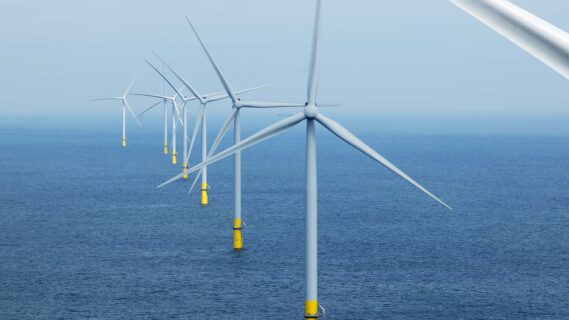
The inclusion of 5 GW of floating offshore wind is particularly notable. Floating wind is a younger and still-emerging technology whose commercial cost structure remains higher than fixed-bottom offshore wind but is falling rapidly as first-mover commercial projects — predominantly in Norway, Portugal, the UK, and Korea — move through final investment decisions. France’s Atlantic and Mediterranean coasts are well-suited for floating wind deployment because their water depths drop steeply beyond the coastal shelf, limiting the area available for conventional fixed-bottom installation. By committing 5 GW of floating wind capacity in a single procurement round, France is signalling its ambition to become a global leader in floating offshore wind technology development and manufacturing, building on the country’s existing maritime industrial base and its ambitions in the naval architecture and marine engineering sectors. The programme will target France’s goal of 15 GW of offshore wind by 2035 and its long-term objective of 45 GW by 2050, consistent with the country’s commitment to shift from 60 per cent fossil energy in final energy consumption to 60 per cent fossil-free energy by 2030.
The March 2026 Energy Security Shock and Why It Accelerated These Decisions
Both announcements were made in the immediate aftermath of a significant European energy security event that sharpened political urgency around the offshore wind transition in ways that no amount of climate policy advocacy had previously achieved. In March 2026, escalating conflict in the Middle East and the near-total closure of the Strait of Hormuz disrupted global LNG and oil shipping lanes in ways that translated directly into European energy market stress: gas prices rose 70 per cent, oil prices jumped 50 per cent, and the European Union estimated an additional €13 billion was added to the continent’s fossil fuel import bills in a matter of weeks. Gas storage levels fell to critically low levels in several member states, and emergency measures were imposed.
The geopolitical argument for domestically generated renewable electricity — which had been made consistently by energy policy advocates for a decade but had struggled to compete with the short-term economics of imported fossil fuels — arrived with sudden and undeniable force. WindEurope framed the moment as a turning point, noting that home-grown electricity had become Europe’s only future-proof energy strategy. German Economy Minister Katherina Reiche articulated the new consensus with unusual directness: energy policy is now security policy. Germany’s response was to add 12 GW to its onshore wind auction volumes through 2030; the UK moved its large renewable energy auction forward to July 2026; and the Netherlands and France moved to accelerate their offshore pipelines. The speed at which these policy decisions were made and announced in the days following the March crisis suggests that the underlying political and administrative groundwork had already been laid — the energy shock provided the final political permission to act.
The North Sea Summit, the 300 GW Ambition, and Europe’s Offshore Infrastructure Race
The Dutch and French announcements sit within a broader European offshore wind acceleration framework established at the North Sea Summit held in Hamburg in January 2026. Nine countries — Belgium, Denmark, France, Germany, Ireland, the Netherlands, Norway, the United Kingdom, and others — committed to a collective target of 300 GW of offshore wind capacity across the North Sea by 2050, requiring approximately 100 GW of new cross-border offshore wind development and the construction of at least 15 GW annually between 2031 and 2040. The industry side of the compact committed to reducing offshore wind electricity costs by 30 per cent by 2040, delivering 91,000 jobs, and generating €1 trillion in economic activity across participating nations.
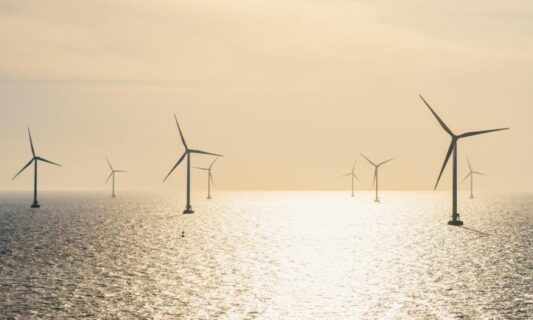
The practical challenge behind these ambitions is substantial. Europe’s electricity grid will require an estimated €500 billion in upgrades by 2030 to handle the increased volumes of offshore wind generation and the cross-border power flows that multi-country coordination implies. Permitting bottlenecks, port congestion, installation vessel scarcity, and supply chain constraints continue to slow the rate at which awarded capacity translates into operational megawatts. The Netherlands’ own experience — with the Vattenfall and CIP Zeevonk II project at IJmuiden Ver Beta delayed from 2029 to 2032 due to grid connection delays on the Delta Rhine Corridor — illustrates the gap between political ambition and physical delivery. Nevertheless, the €34 billion in final investment decisions approved across Europe in the first half of 2025 alone, and the scale of the policy commitments made in Amsterdam and Paris in early April 2026, confirm that the European offshore wind sector has crossed a threshold: it is now a matter of industrial and national security policy, with governments prepared to use public subsidy to guarantee project viability in ways they were reluctant to do for most of the preceding decade.


Leave a Reply