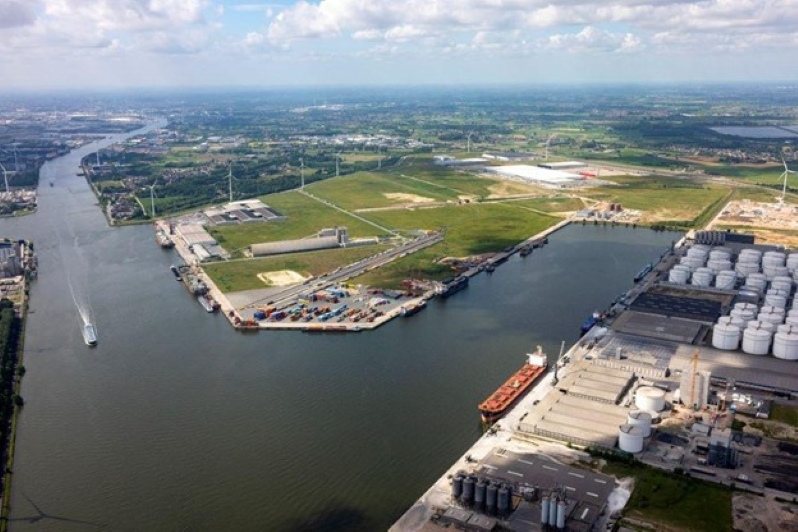
Construction has stated on a new liquefied biogas (LBG) facility at the Port of Gothenburg in Sweden under developer and owner Nordion Energi, marking a major step forward in the decarbonization of the maritime and heavy transport sectors in Scandinavia.
The new LBG project is expected to strengthen the availability of renewable marine fuels. It will also reinforce the Port of Gothenburg’s position as a leading Nordic hub for sustainable bunkering solutions. The development also comes amid growing demand for liquefied biogas from the shipping industry. This is driven by vessel operators’ efforts to reduce greenhouse gas emissions and comply with tightening environmental regulations.
Located at the Port of Gothenburg, the facility will liquefy biogas supplied through Sweden’s existing gas grid. This will enable renewable gas producers to access new markets beyond pipeline coverage areas. Once liquefied, the fuel can be transported and supplied to shipping operators, heavy transport fleets and industrial users across Sweden and wider European markets.
The new Nordion Energi LBG facility at the Port of Gothenburg will complete construction in early 2027 and be operational before the end of that year.
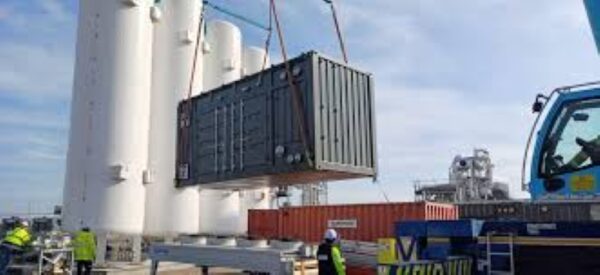
Port of Gothenburg Liquefied Biogas (LBG) Facility Construction: Overview
The new Nordion Energi liquefaction facility at the Port of Gothenburg represents one of the most important renewable marine fuel infrastructure developments currently underway in Northern Europe.
According to Nordion Energi, the plant will have a production capacity of approximately 50 tons of liquefied biogas per day once fully operational. The company also says the facility will support its broader ambition of transitioning Sweden’s gas grid toward 100% renewable gas. This is while creating new opportunities for renewable fuel distribution into hard-to-abate sectors such as maritime transport and heavy industry.
The project already has commercial support from renewable fuel producers and shipping stakeholders. St1 Biokraft has signed an agreement securing part of the future plant capacity, positioning itself as one of the early suppliers of liquefied biogas to the shipping market through the Gothenburg hub.
Importance for Shipping Decarbonization
The project forms part of a broader effort by the Port of Gothenburg to become Scandinavia’s leading renewable marine fuel hub. Shipping companies calling at the port are already using biomethane and liquefied biogas as lower-emission alternatives to conventional marine fuels. The new LBG facility at the Port of Gothenburg is expected to significantly increase fuel availability for maritime operators.
Interest in bio-LNG has also accelerated globally as the shipping industry faces mounting pressure to reduce carbon intensity under International Maritime Organization (IMO) decarbonization targets. Liquefied biogas can be used in existing LNG-powered vessels and infrastructure. This makes it one of the more scalable transition fuels currently available for maritime transport.
The Port of Gothenburg also serves as one of Europe’s most active alternative fuel bunkering ports, with infrastructure supporting LNG, methanol and biomethane operations. The addition of a dedicated liquefaction facility will strengthen the complete renewable fuel value chain within the port ecosystem.
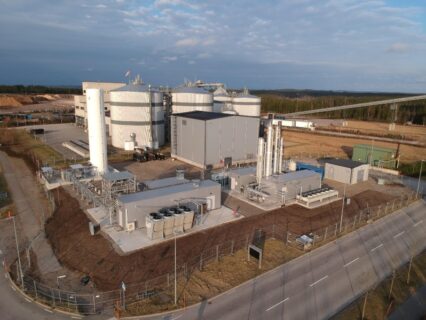
Existing Renewable Fuel Ecosystem at the Port of Gothenburg
The liquefied biogas project builds on earlier biomethane bunkering milestones achieved at the Port of Gothenburg. In 2025, St1 and St1 Biokraft completed the first delivery of Swedish-produced biomethane to the maritime sector at the port, supplying the vessel Tern Ocean operated by Terntank.
That operation demonstrated the viability of integrating domestic Swedish biogas production with marine fuel supply chains. Stakeholders involved in the operation included Nordion Energi, St1 Biokraft, the Port of Gothenburg and maritime shipping operators.
The new liquefaction facility is therefore not a standalone infrastructure investment but as an expansion of an already emerging renewable fuel ecosystem within the port.
Infrastructure and Technical Scope of the New LBG Facility at the Port of Gothenburg
The facility will receive renewable gas through Sweden’s national gas network before converting it into liquefied biogas suitable for transportation and bunkering applications. Liquefaction significantly reduces the gas volume, This makes it easier and more economical to transport over long distances to sectors beyond the reach of fixed gas infrastructure.
Additionally, Finnish technology company Wartsila was appointed to support the construction of the facility following Nordion Energi’s earlier investment decision.
Sustainability and Environmental Impact
Biogas is considered a low-carbon renewable fuel because it is typically produced from organic waste streams, agricultural residues and wastewater treatment by-products. When liquefied into bio-LNG, it can substitute conventional LNG and heavy fuel oil in marine and industrial applications. This will significantly reduce greenhouse gas emissions.
The project also aligns with Sweden’s broader climate goals and the European Union’s ambitions to accelerate renewable fuel adoption across transport and industry sectors. This is mirrored by investments made across other LBG facilities in the country including Götene biogas plant by Gasum with an annual production capacity capped at 120 GWh. The facility is also expected to support the shipping industry’s transition toward carbon-neutral fuel systems over the coming decades.
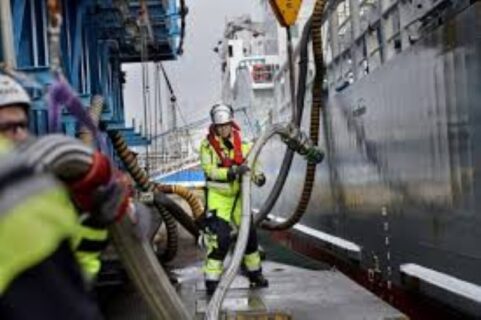
Fact Sheet for the New LBG Facility at the Port of Gothenburg
Location: Sweden
Project Type: Liquefied biogas (bio-LNG) production and bunkering infrastructure
Developer and Owner: Nordion Energi
Host Facility: Port of Gothenburg
Primary Purpose: Renewable marine fuel production and distribution
Key End Users: Shipping, heavy transport and industrial sectors
Production Capacity: Approx. 50 tons of liquefied biogas per day
Construction Start: May 2026
Expected Completion: Early 2027
Expected Operational Date: Before end of 2027
Strategic Focus: Shipping decarbonization and renewable fuel infrastructure
Project Timeline
2024 – Nordion Energi takes investment decision for liquefaction facility
May 2025 – First Swedish-produced biomethane bunkered at the Port of Gothenburg
May 2026 – Construction officially begins on liquefied biogas facility
Early 2027 – Construction of the new LBG facility to be completed at Port of Gothenburg
Late 2027 – Commercial operations expected to commence
Project Team
Project Developer and Owner: Nordion Energi
Port Authority: Port of Gothenburg
Renewable Fuel Partner: St1 Biokraft
Shipping Stakeholder: Terntank
Technology Partner: Wartsila
Leave a Reply