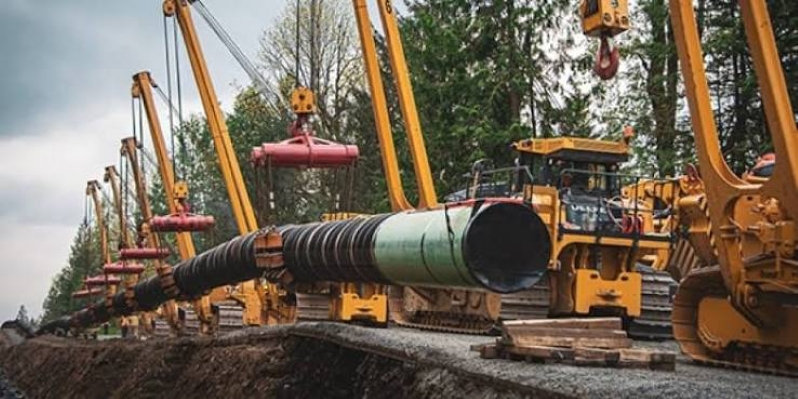
The federal government of Canada and that of Alberta have formally laid out plans for a new indigenous co-owned west coast crude oil pipeline linking Alberta’s oil sands to Canada’s Pacific coast.
The proposed 1 million-barrel-per-day pipeline is set to diversify Canadian crude exports toward Asian markets. The oil pipeline also intends to reduce the Canada’s dependence on U.S. buyers.
The new west coast oil pipeline project marks the culmination of months of negotiations between Ottawa and Alberta. It follows a landmark implementation agreement signed earlier this year. The pipeline project also represents one of Canada’s most ambitious energy infrastructure initiatives since the Trans Mountain Expansion entered service in 2024.
The proposal also reflects a significant shift in Canada’s energy policy under Prime Minister Mark Carney. Carney has sought to balance economic competitiveness with climate commitments. Canada has been tying its pipeline’s development to large-scale carbon capture infrastructure and Indigenous participation.
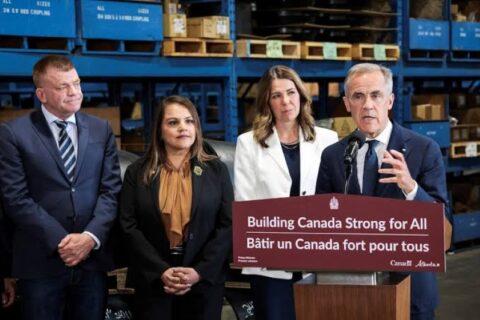
Government-led west coast crude oil pipeline project to link global markets
Unlike previous pipeline proposals led by private developers, Alberta is acting as the initial project proponent. This is after years of industry reluctance to undertake another multi-billion-dollar pipeline amid regulatory uncertainty.
Under the proposal, the new west coast pipeline project will transport approximately one million barrels of crude oil per day from Alberta to British Columbia’s southwest coast. The oil will then be exported to overseas markets, particularly Asia, where long-term oil demand is expected to remain robust.
Construction could begin as early as September 2027. This is subject to regulatory approvals, indigenous consultation requirements and its designation as a Canadian project of national interest.
The federal government also intends to use the new Building Canada Act framework to accelerate the project’s approval process. This is while maintaining consultation obligations with indigenous communities.
Strategic effort to diversify energy exports
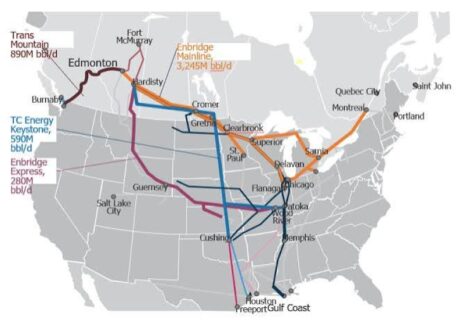
Canada currently has only one direct crude export route to the Pacific through the expanded Trans Mountain Pipeline.
Although the Trans Mountain Expansion significantly increased export capacity, growing oil sands production and heightened geopolitical uncertainty have reinforced the need for additional export infrastructure.
The proposed pipeline would strengthen Canada’s ability to access premium Asian markets. This is while reducing its long-standing dependence on U.S. refiners.
Government estimates based on previous comparable proposals also suggest a west coast oil pipeline project could generate approximately CAD 3.8 billion in annual government revenues across Canada. The project is also expected to support as many as 800,000 jobs over its lifetime.
Indigenous ownership at the center
One of the defining characteristics of the new west coast oil pipeline proposal is its emphasis on indigenous ownership and partnership.
The Alberta government says indigenous communities in both Alberta and British Columbia have been engaged since the earliest planning stages. Indigenous co-ownership is forming a core component of the project’s commercial structure.
Ottawa has likewise stated that meaningful indigenous participation remains a prerequisite for project approval.
Officials also believe Indigenous equity participation could improve both financing prospects and long-term project certainty. This is baselined against previous pipeline developments that faced extensive legal challenges.
Carbon capture linked to new west coast oil pipeline approval
Another notable aspect of the new west coast crude oil pipeline proposal is its direct connection to Alberta’s Pathways Alliance carbon capture and storage project.
The federal and Alberta governments have indicated that advancement of the new export pipeline is closely tied to development of the large-scale carbon capture network. It is designed to significantly reduce emissions from Alberta’s oil sands sector.
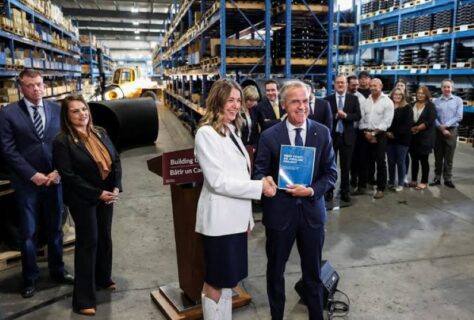
A tripartite agreement involving Ottawa, Alberta and the oil sands industry is also nearing completion. It is expected to establish the framework for moving both projects forward simultaneously.
Political compromise with British Columbia
Securing British Columbia’s cooperation represented one of the largest political hurdles.
A parallel agreement between Ottawa and British Columbia preserves the existing federal ban on oil tankers along the province’s ecologically sensitive northwest coast. This is while leaving open the possibility of a pipeline following an alternative route to the southwest coast.
The agreement also includes commitments to expand infrastructure at Vancouver’s Roberts Bank Terminal. It also aims to accelerate LNG development across British Columbia.
Although British Columbia has not formally endorsed the pipeline, Premier David Eby indicated the province would not automatically oppose a compliant proposal.
Financing structure
The project will initially be developed through government ownership.
Government-owned Trans Mountain Corporation will lead development alongside Pembina Pipeline Corporation. Pembina will acquire an initial 10% ownership interest during construction with the option to increase its stake after commercial operation begins.
The federal government, through Trans Mountain, and Alberta, through the Alberta Petroleum Marketing Commission, are expected to remain majority owners during the initial development phase.
Officials have not yet released an overall project cost. Long-term private investment and indigenous equity participation remain under discussion.
Industry outlook
Despite broad government support, caution on project financing remains substantial under Canada’s existing regulatory environment.
Several major oil producers have argued that carbon pricing and regulatory uncertainty continue to reduce investor appetite for major pipeline infrastructure. This might explain why Alberta stepped forward as the project’s initial proponent.
Government officials also maintain that the new regulatory framework and public-sector participation are intended to provide the certainty necessary to attract long-term investment.
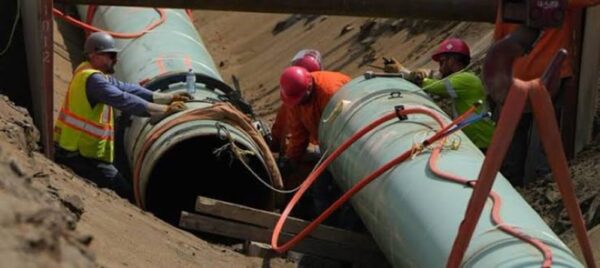
Development outlook on new west coast oil pipeline project
If approved, west coast oil project would become Canada’s second federally owned major crude oil export pipeline. It would also be one of the country’s largest infrastructure investments this decade.
Beyond increasing export capacity, the initiative is intended to strengthen Canada’s energy security. It also aims to deepen trade relationships across Asia-Pacific markets and encourage indigenous economic participation. Decarbonization efforts and parallel carbon capture programs are also within sight.
While significant regulatory, environmental and financing challenges remain, the proposal signals renewed federal-provincial alignment on large-scale energy infrastructure. The new west coast crude oil pipeline could also reshape Canada’s oil export landscape for decades to come.
Canada’s New West Coast Oil Pipeline: Project Fact Sheet
Location: Alberta to British Columbia
Status: Proposal submitted for federal review (July 2026)
Pipeline Capacity: Approximately 1 million barrels of crude oil per day
Estimated Construction Start: September 2027
Ownership Structure:
- Government of Canada (via Trans Mountain Corporation)
- Government of Alberta (via Alberta Petroleum Marketing Commission)
- Pembina Pipeline Corporation (10% initial stake with option to increase)
- Indigenous equity participation planned
Primary Purpose:
- Expand Canadian crude exports to Asia
- Diversify markets beyond the United States
- Improve national energy security
Key Supporting Infrastructure:
- Roberts Bank Terminal upgrades
- Pathways Alliance Carbon Capture and Storage Project
Regulatory Framework:
- Building Canada Act
- Major Projects Office review
- Indigenous consultation and accommodation process
Major Stakeholders in the New West Coast Oil Pipeline Project:
- Government of Canada
- Government of Alberta
- Government of British Columbia
- Trans Mountain Corporation
- Pembina Pipeline Corporation
- Alberta Petroleum Marketing Commission
- Pathways Alliance
- Indigenous communities across Alberta and British Columbia

Leave a Reply