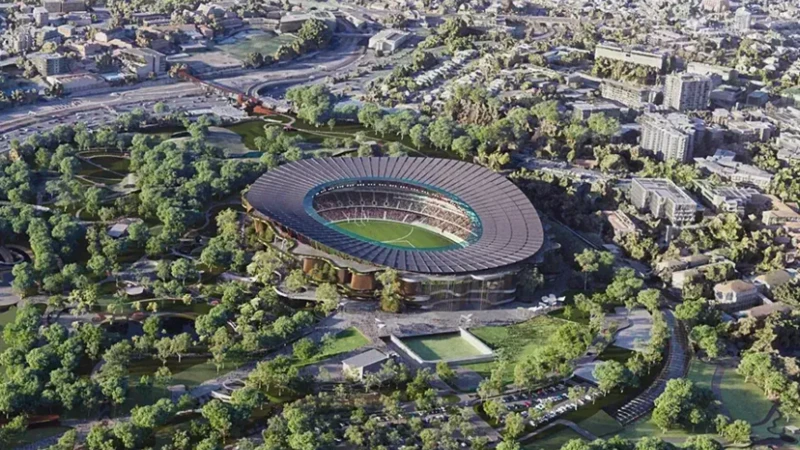
Brisbane Olympic Stadium plans at Victoria Park continue to evolve as authorities refine scope, design and delivery timelines ahead of the 2032 Olympic Games. The project, first announced as a 63,000-seat venue alongside supporting sports infrastructure, has since progressed into a more defined centerpiece within Queensland’s broader Olympic delivery strategy.
The stadium remains central to Brisbane’s long-term infrastructure vision, with updated estimates placing the cost at about AUS $3.8 billion, equivalent to roughly $2.5 billion (USD). It will host opening and closing ceremonies and athletics, before transitioning into a permanent home for major sporting codes in the city.
Brisbane Olympic Stadium development progress
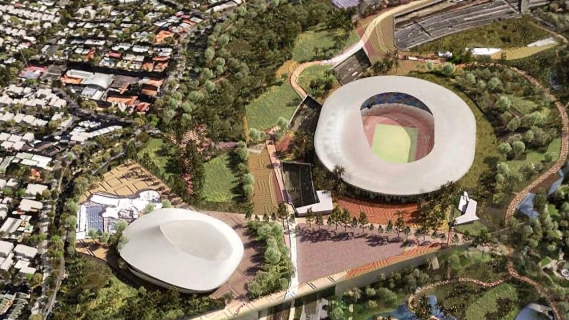
Initial plans outlined a multi-venue approach including a national aquatics center, a boutique stadium at Brisbane Showgrounds and upgrades to the Queensland Tennis Centre. However, the stadium at Victoria Park has since emerged as the anchor project within the delivery plan.
Moreover, authorities have advanced site investigations and planning processes, with construction expected to begin in 2026. This timeline aligns with broader Olympic infrastructure delivery targets and allows sufficient time for testing before the Games.
In addition, planners have refined the stadium’s integration within the parkland, ensuring that a large portion of the green space remains accessible while accommodating the venue footprint. Consequently, the project now reflects a balance between infrastructure delivery and environmental considerations.
Design evolution and key features
The Brisbane Olympic Stadium will feature a 63,000-seat configuration designed for multi-purpose use. The venue will support athletics during the Olympics and later host cricket and Australian rules football, replacing the The Gabba as the city’s primary stadium.
Furthermore, the design incorporates a bowl-style structure integrated into the natural landscape to improve atmosphere and spectator experience. This approach also supports climate-responsive features such as ventilation and shading suited to Brisbane’s conditions.
At the same time, digital infrastructure and fan engagement systems will enhance operational efficiency and user experience. As a result, the stadium is expected to function as a modern, future-ready venue beyond the Olympic Games.
Debate and planning context
The decision to build the stadium at Victoria Park followed years of debate over venue strategy, including earlier proposals to redevelop the Gabba. Authorities ultimately selected a new-build option to deliver a stronger long-term legacy for the city.
However, concerns have persisted regarding environmental impact and heritage considerations linked to the parkland site. Community groups and stakeholders have raised objections, although the government maintains that the project will deliver broader economic and social benefits.
This evolving delivery strategy aligns with the latest $2.5 billion Brisbane Olympic Stadium update, which outlines the refined vision, design approach and construction pathway toward 2032. The updated coverage provides deeper insight into how the project is progressing from concept to execution within the wider Olympic infrastructure program.
READ ALSO: A new stadium for Juventus is being considered as part of the club’s future plans
A confident vision for the Olympic stadiums in Queensland
Brisbane organising committee chief Andrew Liveris has been in contact with Kirsty Coventry, the International Olympic Committee’s point person for the Games. He said:
This is a go-get-it-done plan and this will be delivered. Queensland gets the best of venues, the Games get the best of Queensland.
The new stadiums will shape Brisbane’s sporting future. If managed well, the investment could benefit the city long after the Olympic flame goes out.
Project Fact Sheet: Brisbane Olympic Stadium
Project Name: Brisbane Olympic Stadium
Location: Victoria Park, Brisbane, Queensland, Australia
Estimated Cost: A$3.8 billion (≈ USD $2.5 billion)
Capacity: 63,000 seats
Project Type: Multi-purpose Olympic stadium
Construction Start: 2026 (expected)
Completion: 2031–2032 (expected)
Primary Use (Olympics): Opening and closing ceremonies, athletics events
Post-Games Use: AFL, cricket, major entertainment events
Additional Associated Infrastructure:
- National Aquatics Centre (Victoria Park)
- 20,000-seat boutique stadium at Brisbane Showgrounds
- Queensland Tennis Centre upgrade with 3,000-seat showcourt
Project Team: Brisbane Olympic Stadium
Client / Owner: Queensland Government
Delivery Authority: Games Independent Infrastructure and Coordination Authority
Olympic Organising Body: Brisbane Organising Committee for the 2032 Olympic and Paralympic Games
Architects:
Engineering Consultants:
Key Stakeholders:
- Australian Government
- Brisbane City Council
- Queensland sporting bodies
Future Tenants:
Leave a Reply