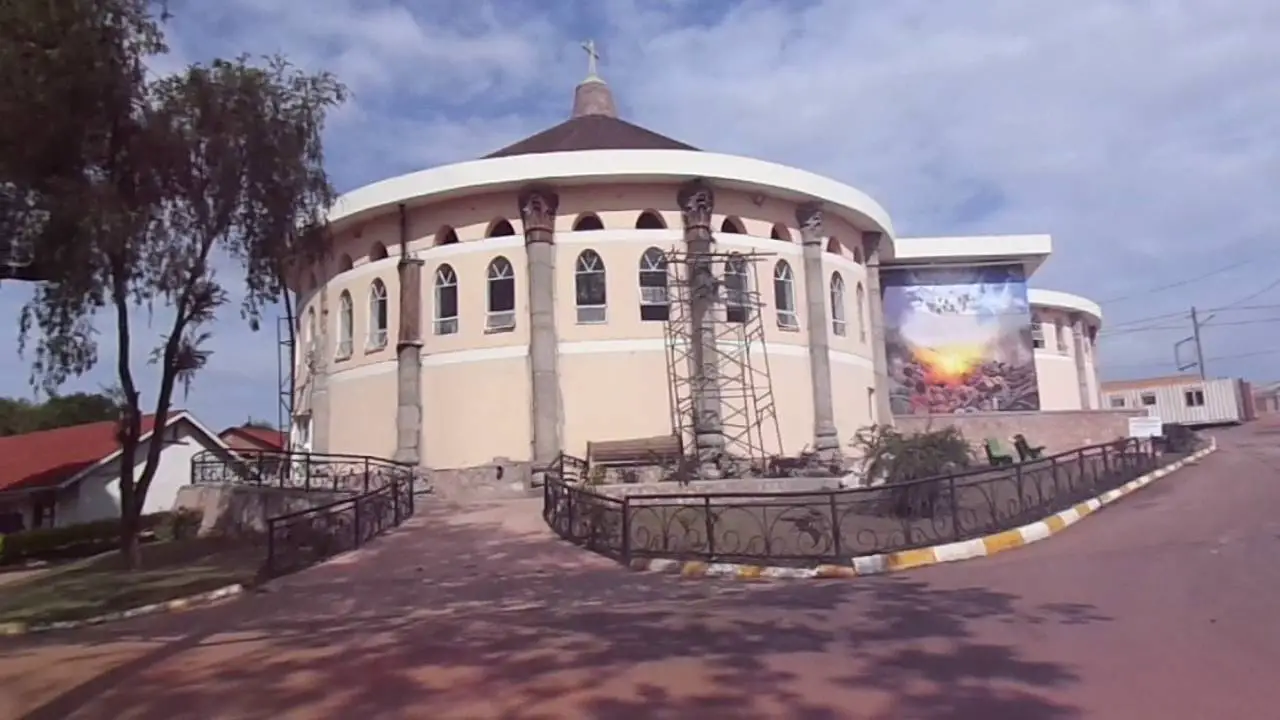
The church of Uganda plans to begin the second phase construction of the Namugongo Martyrs’ Museum at a cost of approximately Shs58 billion.
The chairperson of the Uganda Martyrs’ Museum Development Committee, Retired Bishop Jackson Matovu, said that the church will contribute 70% of the entire cost, while the government of Uganda will contribute the rest within a period of five years.
Also Read: Uganda National Museum set for reconstruction
The scope of the work in this phase
The second phase construction of the Namugongo Martyrs’ Museum includes the construction of worship center or amphitheater with a parish community church, a five-floor martyrs’ museum tower, a 200 roomed museum hotel, a children’s park and recreation center, among others.
The worship center or amphitheater with the parish community church will accommodate the pilgrims and the increasing community fellowships. While the museum tower, which is a continuation of the museum core site in the first phase, will accommodate martyrdom, the genesis, cultural history of Ugandan tribes, wildlife husbandry, and libraries with the history of religion and documentation.
Phase one construction
The first phase construction of the Namugongo Martyrs’ Museum which encompasses the martyrs’ museum core site structure currently housing sculptures depicting the story of the Uganda martyrs, the boundary wall, and two public toilets is still ongoing.
The pending works include building a boundary wall and the main entrance gate finishing and landscaping at the Museum core-site, fixing of wooden doors and windows with glasses, internal and external finishing, and electrical works finishing including CCTV system, fire detection and fighting, solar and lighting system and others.
Bishop Matovu said that they also plan to install an Electronic audio-visual system for the tourists in the museum and a wooden walkway as a guide in the execution areas.
The redevelopment of the Namugongo Anglican site into a world-class faith-based and pilgrimage tourist center began in 2014, and it is mainly aimed at enhancing the image and potential of the site where 25 Christian converts were killed in 1886.

Leave a Reply