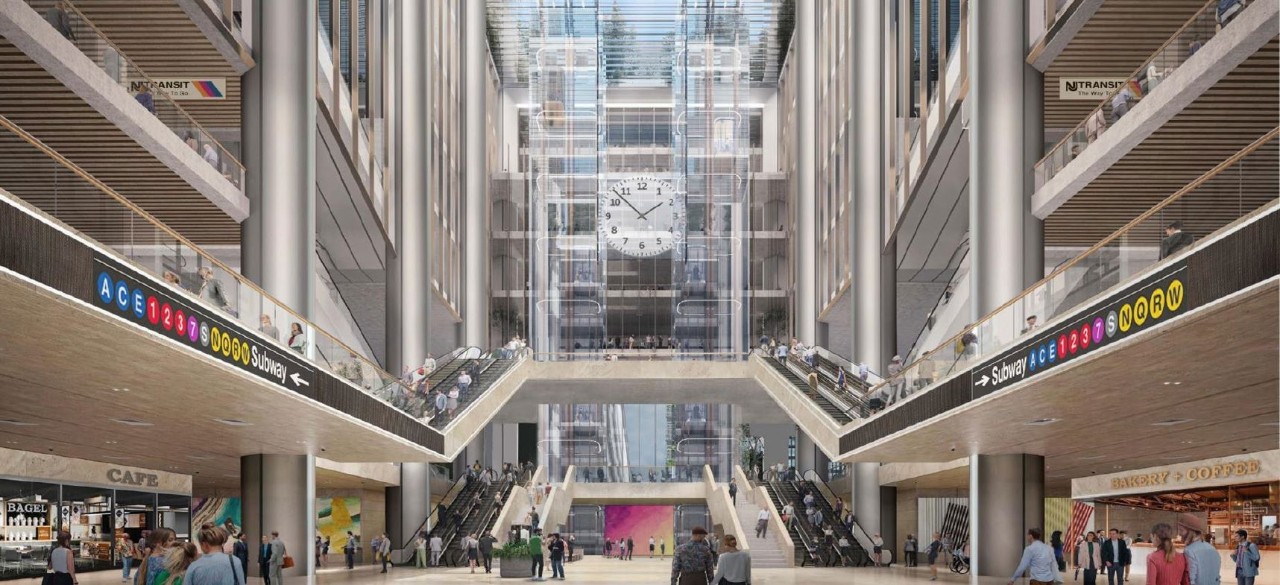
Construction has officially begun on the Dyer Avenue deck-overs, kicking off the long-awaited transformation of New York City’s Midtown Bus Terminal. This initial phase sets the stage for replacing the aging, 75-year-old facility with a modern, net-zero emissions transit hub built to meet the region’s future commuting demands.
Project update
Contacted by Construction Review Online for the latest on the project, the Port Authority of New York and New Jersey pointed out that construction of the Dyer Avenue deck-overs is currently under way and that procurement for the first phase is actively in progress, with the overall redevelopment still estimated at approximately $10 billion and expected to create around 6,000 union construction jobs.
The Port Authority’s project website also sets out the scale of the facility to come: a new main terminal of about 2.1 million square feet built on the site of the existing terminal, and a separate storage and staging facility providing indoor space for up to 350 buses. That storage building will double as a temporary terminal during construction of the main building and connect the terminal, a new ramp structure and the Lincoln Tunnel, keeping idling buses off city streets. The Port Authority says the new terminal is designed to be net-zero emissions and ready for all-electric bus fleets, will be fully ADA-accessible, and that bus service will continue throughout construction.
The groundbreaking
New York Governor Kathy Hochul, New Jersey Governor Phil Murphy, and leaders from the Port Authority of New York and New Jersey gathered on May 29, 2025 to break ground on the project, which is expected to generate roughly 6,000 union construction jobs and significantly enhance the commuter experience for hundreds of thousands of daily riders.
The Dyer Avenue deck-overs are being constructed above below-grade sections of Dyer Avenue and the Lincoln Tunnel Expressway between West 37th and 39th Streets. Initially serving as staging areas for buses during construction, these decks will later be transformed into 3.5 acres of public green space.
The broader redevelopment plan
The broader $10 billion redevelopment plan includes a new main terminal, a separate bus storage and staging facility, and direct ramps into the Lincoln Tunnel. Design elements feature a multi-story indoor atrium, expanded street-level retail, and a permanently pedestrianized section of 41st Street between Eighth and Ninth Avenues.
“The new Midtown Bus Terminal will breathe new life into this neighborhood and serve as a proud gateway to our city for generations to come,” said Governor Hochul. “It’s a powerful example of what’s possible when government and community work together on modern infrastructure.”
Governor Murphy echoed that sentiment, highlighting the project’s regional importance: “This new terminal will reduce congestion, support economic growth, and dramatically improve the daily commute for thousands in the tri-state area.”
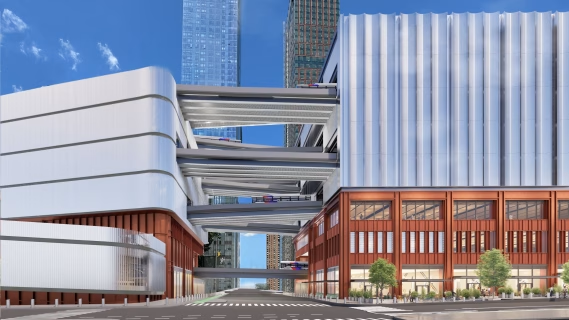
Construction Begins on First Phase of New Midtown Bus Terminal with Dyer Avenue Deck-Overs
Sustainability Features
Once complete, the facility will be fully electric bus-ready and include smart infrastructure aimed at reducing street-level idling and congestion. The terminal will remain entirely on existing Port Authority property, avoiding the need to acquire private land.
The project reflects extensive feedback from local officials, community boards, commuters, and city agencies. Its phased construction approach begins with the deck-overs, followed by the storage facility, which will also function as a temporary terminal during the main building’s demolition and reconstruction.
“This project is a generational investment in mobility and community,” said NJ TRANSIT President & CEO Kris Kolluri. “It represents a new standard for regional transit — a modern gateway connecting New Jersey and New York.”
Port Authority Chairman Kevin O’Toole called the groundbreaking “a milestone moment” for both states, emphasizing the terminal’s long-term benefits for commuters and the surrounding community.
Read also: NASA Breaks Ground on New Causeway Bridge in Wallops Island, Virginia
Construction Begins on First Phase of New Midtown Bus Terminal with Dyer Avenue Deck-Overs: Factsheet
Project Overview
- Total Investment: Approximately $10 billion
- Current Phase: Dyer Avenue deck-overs under construction; first-phase procurement in progress
- Location: Midtown Manhattan — deck-overs above Dyer Avenue and the Lincoln Tunnel Expressway (West 37th–39th Streets)
- Main terminal size: Approximately 2.1 million square feet
- Bus storage capacity: Indoor space for up to 350 buses
- Jobs Created: Approximately 6,000 union construction positions
- Daily Riders Served: Hundreds of thousands
Major Components
- Deck-Overs: Initial staging areas converting to 3.5 acres of public green space
- New Main Terminal: Modern ~2.1M sq ft facility with a multi-story indoor atrium
- Bus Storage & Staging Facility: Up to 350 buses; temporary terminal during construction, with direct Lincoln Tunnel ramps
- New Ramp Structure: Direct connection between the terminal and the Lincoln Tunnel
- Retail Enhancement: Expanded street-level commercial space
- Pedestrian Zone: Permanently pedestrianized 41st Street (8th–9th Avenues)
Sustainability Features
- Net-zero emissions design
- Full electric bus readiness
- Fully ADA-accessible
- Smart infrastructure to reduce street-level idling and congestion
Construction Approach
- Phase 1: Dyer Avenue deck-overs (current)
- Phase 2: Storage facility construction
- Phase 3: Main terminal demolition and reconstruction
- Bus service continues throughout construction
Regional Impact
- Reduced traffic congestion
- Enhanced economic growth
- Improved tri-state area connectivity
- Modern gateway between New Jersey and New York
- Neighborhood revitalization in Midtown Manhattan
Read also: MTA Begins Construction on New Long Island Rail Road Station in Yaphank, NY

Leave a Reply