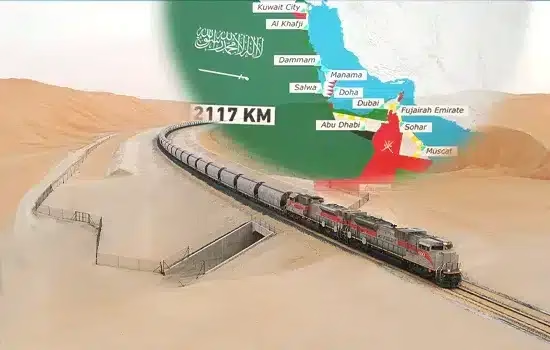
The GCC Railway Project is a regional rail infrastructure development planned to connect the six Gulf Cooperation Council member states through a unified railway network. The project is designed to span approximately 2,117 kilometres across the region and is being coordinated by the Gulf Railway Authority in collaboration with national authorities in each member country. The Ministerial Council has set December 2030 as the target completion date for the network.
According to the Gulf Railway Authority, member states are progressing with their respective phases of development in coordination with existing and planned national railway projects. The approach is intended to ensure technical and operational integration across borders, allowing the regional railway to function as a single transportation system. Once completed, the network is expected to enhance regional connectivity and form a core component of the GCC’s broader transport infrastructure. The Middle East is making commendable steps in its rail projects such as the Riyadh rail link project in Saudi Arabia taking shape.
Other than the GCC railway project, another significant rail project taking shape in the UAE is the Abu Dhabi-Dubai high-speed rail project.
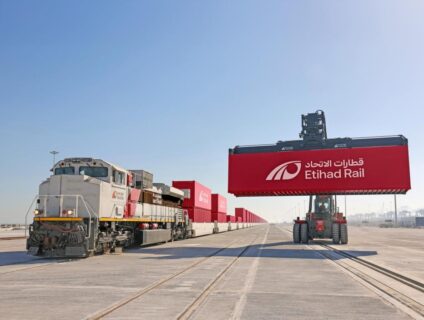
State-owned Etihad Rail has awarded multi-billion-dollar design and build contracts to advance the Abu Dhabi-Dubai high-speed rail project. The contracts also include civil works and station packages of the project which is a high-speed railway (HSR). The Abu Dhabi side of the railway construction contract was awarded to a consortium comprising Abu Dhabi’s National Projects Construction (NPC).
The others include Trojan Tunneling, Turkiye’s Kalyon and Beijing-based China State Construction Engineering Corporation. On the other hand, the Dubai side of the railway was awarded to a consortium led by India’s Larsen & Toubro. The others include Beijing-headquartered China Harbor Engineering Company and local firm Wade Adams.
Project Factsheet
Significance:
- Strategic multi-billion initiative connecting all six GCC member states.
- Will also establish a 2,117 km regional rail corridor, the longest in the Middle East.
- Expected to enhance trade, improve mobility, and support sustainable regional development.
- Passenger trains to operate at speeds over 200 km/h; freight trains between 80–120 km/h.
Infrastructure:
- Network spans Saudi Arabia, UAE, Qatar, Kuwait, Oman, and Bahrain.
- Linked to key seaports and logistics hubs to optimize cargo movement.
- Integrated with national railway projects to form a cohesive GCC transport system.
- Designed to improve regional connectivity and reduce reliance on road freight.
Developer/Consortium:
- Spearheaded by the Gulf Railway Authority under the supervision of the GCC Ministerial Council.
- Coordinated implementation across the six member states with support from national railway agencies.
- Overseen by Eng. Mohammed bin Fahd Al Shubrmi, Director General of the Gulf Railway Authority.
Funding/Timeline:
- Estimated completion deadline set for December 2030.
- Countries advancing construction in phases with harmonized standards and timelines.
- Financing drawn from GCC governments, with potential for private partnerships in logistics and operations.
Significance of the GCC Railway Project as Middle East’s Longest
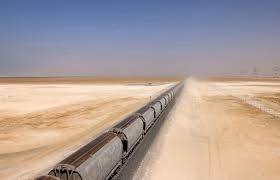
The significance of the GCC railway project extends beyond it being Middle East’s longest railway project. Once complete, the project will connect 6 member states through a network extending over 2,000 kilometers. Fahd Al Shubrmi further highlighted that the project will be linked to seaports and logistics hubs across the member states. This will have a positive impact on the economy by boosting the flow of goods. Furthermore, it will improve mobility and accessibility as it will enable smoother passenger travel among the GCC countries. Al Shubrmi noted that passenger trains will operate at speeds exceeding 200 kilometers per hour. On the other hand, freight trains will run at speeds ranging between 80 and 120 kilometers per hour. This, he emphasized will enhance the efficiency of the transportation system. It will also support sustainable development across the region.
Leave a Reply