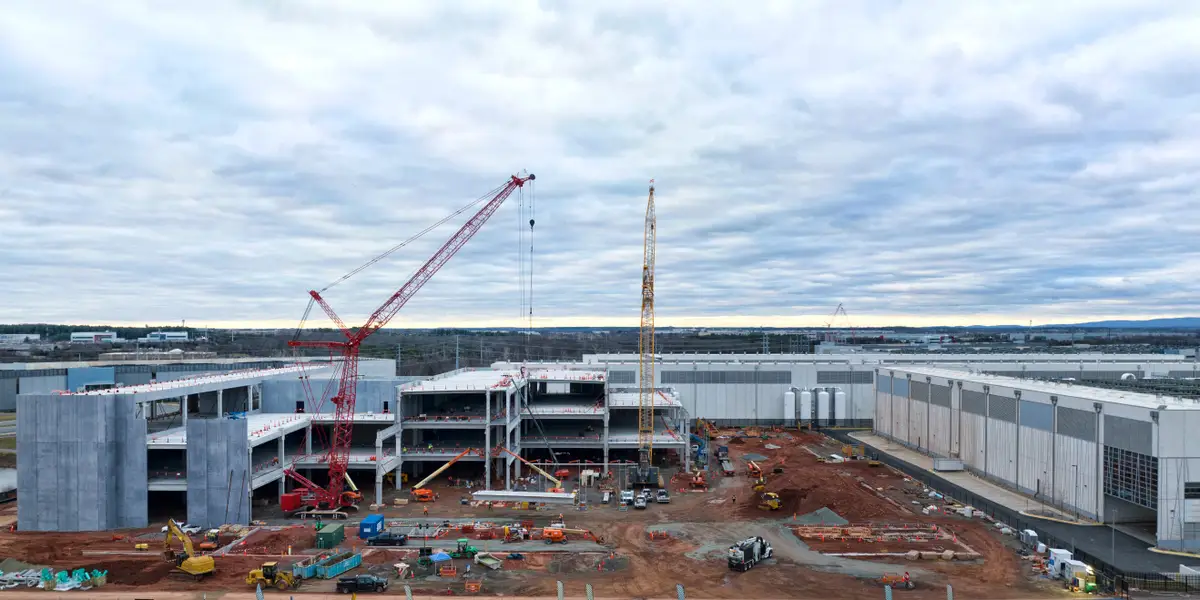
The Utah AI Data Center project is a large-scale digital infrastructure development designed to create one of the country’s most advanced and high-capacity computing campuses outside Salt Lake City, driven by the rapid growth in demand for artificial intelligence (AI) processing and cloud services. The project, located on a 100-acre site in West Jordan, Utah, secured a US $2 billion financing commitment in early 2025 from J.P. Morgan Chase and Starwood Property Trust to complete the build-out of the facility’s second and third phases, extending the flagship campus originally begun by CIM Group and Novva Data Centers.
The campus is planned to reach approximately 175 megawatts of critical IT capacity and more than 1 million square feet of data center space when fully developed, making it one of the largest direct-to-chip cooled AI-oriented facilities in the United States. The financing will enable construction of two additional 318,000-square-foot buildings, each adding significant power and computing capacity, with completion expected by 2026. The first phase of the campus began operations in 2023, having been fully leased to a leading global technology company, highlighting strong market demand for AI-ready infrastructure.
Other benefits of the project include enhanced sustainability practices, such as water-efficient cooling technology, and the strategic advantages of Utah’s favorable power costs, fiber connectivity and low disaster risk. The development reflects a broader shift in data center construction, where private capital and major financial institutions are increasingly underwriting large AI and cloud infrastructure projects to meet surging needs across tech industries. This trend is also evident in Oklahoma, where Meta Platforms’ Project Anthem AI-optimised data center in Tulsa has recently broken ground, underscoring how hyperscale operators are expanding into inland states with strong energy availability, supportive infrastructure conditions, and growing regional development potential.
Project Overview
- Location: West Jordan (Salt Lake City suburb), Utah, USA
- Project Type: AI-focused data center campus
- Site Size: ~100 acres
- Total Planned Size: ~1 million sq ft (all phases)
- Capacity at Full Build: ~175 MW critical IT load
- First Phase: Completed and operational in 2023
- Phases Under Construction: Phase 2 & Phase 3 (each ~318,000 sq ft)
- Expected Project Completion: ~2026
- Special Features: Direct-to-chip or advanced cooling systems; water-efficient cooling
- Leased Space: Fully leased to a global tech company prior to completion
- Strategic Location Benefits: Low disaster risk, cost-effective power, dense fiber connectivity
- Development Drivers: Rising demand for AI computing and cloud infrastructure
Project Team
- CIM Group – Real estate and infrastructure owner/developer
- Novva Data Centers – Data center developer and operator
- J.P. Morgan Chase – Lead arranger and financier
- Starwood Property Trust – Arranger and financier
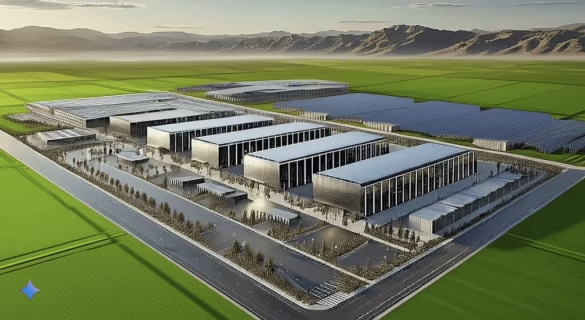
Reported 5th March 2025: A US$2 billion loan has been secured for the construction of a new Artificial Intelligence (AI) Data Center in Utah. Provided by JPMorgan Chase and Starwood Property Trust, the project is to be located in 100-acres of land In West Jordan, just outside Salt Lake City. Additionally, CIM Group and Novva Data Centers are the developers behind this project. Historically, data center loans are granted for less than US$1 billion however, this construction loan has surpassed this figure making it one of the most expensive data centres. Earlier this year, a similar loan was granted by JPMorgan Chase worth US$2.3 billion for a facility in Abilene, Texas.
Details on the Utah AI Data Center financing
The Utah AI Data Center project began construction in 2020 without any leasing agreements. The first phase was completed in 2023 however, it is expected that the whole facility will be completed and operational by 2026. The method of constructing the facility without pre-leased agreements is not common as they are usually secured before construction starts. This is in order for developers to have the money in hand and reduce risk connected to massive data center projects. Some of these problems may include the increased expenses brought about by higher power consumption by artificial intelligence data centers and the advanced semiconductors they need to operate.
Also Read: $1bn Microsoft La Porte Data Center Campus in Indiana Provides Updates on Potential Expansion Plans


Leave a Reply