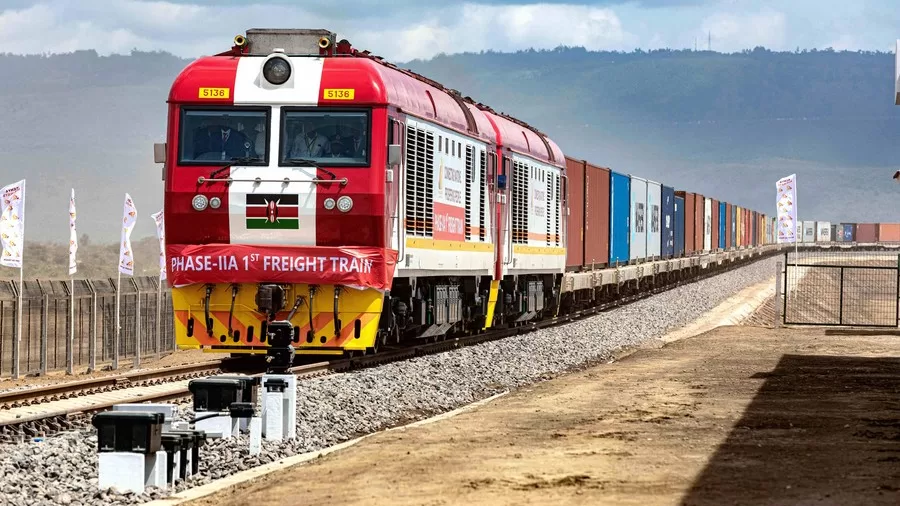
Naivasha–Kisumu–Malaba SGR extension project has progressed into active construction as the government accelerates implementation of its western transport corridor strategy in 2026. The project, initially explored alongside potential partnership discussions with the United Arab Emirates, now forms part of a broader national logistics expansion agenda aimed at strengthening freight connectivity between the Port of Mombasa and the East African interior.
The railway extension connects Naivasha to Kisumu and ultimately to Malaba on the Uganda border. It is designed to complete the western arm of Kenya’s SGR network and improve regional cargo movement efficiency. Construction works are now underway on priority segments following earlier feasibility studies, land acquisition processes, and environmental approvals.
China Communications Construction Company (CCCC) is executing the civil works under the supervision of Kenya Railways. Meanwhile, the government continues to refine financing arrangements as it balances public funding and external investment participation.
Naivasha–Kisumu–Malaba SGR Extension Targets Regional Trade Efficiency in 2026
The Naivasha–Kisumu–Malaba SGR extension remains one of Kenya’s most strategic transport infrastructure projects in 2026 due to its role in regional trade facilitation. The corridor is expected to significantly reduce freight congestion along road networks while improving transit times for cargo destined for Uganda, Rwanda, South Sudan, and the Democratic Republic of Congo.
The project is estimated to cost approximately $2 billion, covering the full Naivasha-to-Malaba alignment. It also includes a key 8.68-kilometre branch line connecting Kisumu Port to support multimodal transport across Lake Victoria.
Authorities have confirmed that the railway will initially operate using diesel traction, with future electrification plans under consideration to align with regional rail modernization standards. Engineering design also allows for future integration with neighboring countries’ rail systems to support seamless cross-border freight movement.
Environmental and social impact assessments remain ongoing in 2026 under regulatory oversight. Kenya Railways has proposed mitigation measures such as wildlife crossings, reforestation programs, and controlled construction zones to reduce ecological disruption.
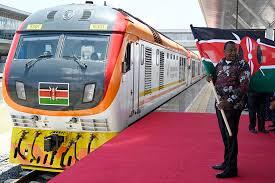
Naivasha–Kisumu–Malaba SGR Extension Strengthens Kenya’s Regional Infrastructure Network
The Naivasha–Kisumu–Malaba SGR extension is increasingly being positioned as a key component of Kenya’s long-term logistics transformation agenda. It complements existing SGR infrastructure from Mombasa through Naivasha and strengthens the country’s role as a regional transport hub.
The project also supports Kenya’s broader infrastructure pipeline, including urban rail rehabilitation initiatives and port modernization programs. In particular, it aligns with ongoing efforts to integrate rail, road, and inland water transport systems into a unified logistics framework.
Construction progress in 2026 reflects renewed government emphasis on completing stalled or phased infrastructure projects. Authorities are also seeking additional partnerships to close financing gaps and accelerate delivery timelines.
Other related development such as the Nairobi Commuter Rail rehabilitation project worth €83 million is also underway, forming part of Kenya’s national rail modernization strategy focused on improving both urban and regional transport systems.
Kenya’s SGR Extension Project Factsheet
The SGR extension project aims to expand Kenya’s railway network so as to improve regional connectivity and promote trade with neighboring countries. The project is divided into phases, with the latest extension focusing on linking Kenya to both Uganda and South Sudan.
Also read: Kenya-Uganda SGR Construction Project to Resume
Kenya Explores UAE Partnership for SGR Extension
“We are currently exploring a partnership with United Arab Emirates that will foresee the extension of the SGR to link Kenya, Uganda, and even South Sudan,” a part of the statement mentioned.
“As part of the plan, we have reached an agreement to carry out a feasibility study over the extension of the standard gauge railway due to its capacity to foster regional integration and also promote trade in the region,” he added.
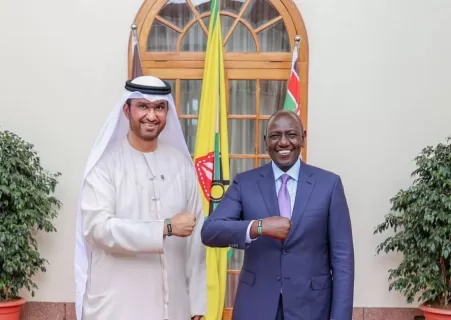
This move from the Kenyan president clearly indicates the country’s diversion from pursuing China on funding the project. However, China was responsible for the development and construction of the initial phase of the SGR and also named several times in the extension plans.
Furthermore, in a statement that was issued a couple months ago by Transport Principal Secretary Mohamed Daghar, made an announcement that the extension works of the SGR to Uganda would commence shortly after a meeting between the investment delegation of China and Kenya’s Transport Cabinet Secretary Davis Chirchir.
Also read: Kenya-Uganda SGR Commercial Contract Signed Amid Extension Plans
Furthermore, during the discussion with UAE’s president, Ruto signed the Kenya-UAE Comprehensive Economic Partnership Agreement (CEPA). This is foreseen to open the market of UAE for more Kenyan goods to enter.
Lastly, this agreement that was signed between the two presidents is the first of its kind for an African country. The agreement is expected to bolster the position of Kenya as a gateway to both East and Southern Africa.
Project Fact Sheet
Project Name: Naivasha–Kisumu–Malaba Standard Gauge Railway Extension Project
Location: Kenya (Naivasha–Western Kenya–Uganda border corridor)
Project Type: Heavy rail infrastructure expansion (freight and passenger corridor)
Estimated Cost: Approximately $2 billion
Total Route: Naivasha–Kisumu–Malaba
Key Component: 8.68 km Kisumu Port branch line
Project Phases:
- Phase 2B (Naivasha–Kisumu)
- Phase 2C (Kisumu–Malaba)
Current Status: Active construction underway in 2026
Primary Objective: Regional trade facilitation and freight logistics enhancement
Environmental Status: EIA approvals and mitigation measures ongoing
Future Capability: Designed for electrification and regional rail integration
Key Markets Served: Kenya, Uganda, South Sudan, Rwanda, DRC
Project Team
Project Owner: Government of Kenya
Implementing Agency: Kenya Railways Corporation
Supervising Ministry: Ministry of Roads and Transport Kenya
Financial Coordination: National Treasury of Kenya
Strategic Oversight: Office of the President of Kenya



Leave a Reply