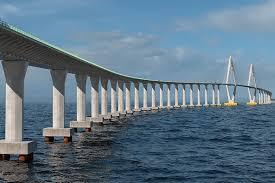
The Salvador–Itaparica bridge project in Brazil is progressing toward construction, with updated plans confirming a start date in 2026. The large-scale cable-stayed sea bridge will connect Salvador to Itaparica Island, forming one of the most significant infrastructure corridors in Latin America. Moreover, the project continues to reflect Brazil’s growing collaboration with Chinese engineering firms. Consequently, it remains a flagship development in the country’s transport and logistics strategy.
The bridge spans approximately 12.4 km over the Bay of All Saints and forms part of a broader road integration program. Authorities expect the project to reduce travel distances by about 100 km while improving connectivity across Bahia. In addition, the structure will support economic growth by enhancing mobility and regional trade links.
Current status of Salvador–Itaparica bridge project
As of 2026, the Salvador–Itaparica bridge project has moved beyond early planning into the pre-construction phase. Agreements between the Bahia state government and Chinese contractors have been finalized, enabling physical works to begin. Construction is scheduled to commence in June 2026, with completion targeted around 2031.
The project previously faced delays linked to financing, contractual renegotiations, and technical reviews. However, recent agreements and funding arrangements have restored momentum. Chinese firms, including China Communications Construction Company and China Railway Construction Corporation, will lead delivery under a public-private partnership model.
Additionally, preparatory works such as geotechnical surveys and seabed analysis have been completed. These steps ensure that the bridge’s deep foundations can withstand marine conditions. Therefore, the project now enters a critical execution phase.
Project scope and infrastructure impact
The Salvador–Itaparica bridge project includes a 12.4 km sea crossing with a central cable-stayed section. This section will feature a main span of around 900 meters and clearance for large vessels.
Furthermore, the development integrates extensive access infrastructure on both sides of the bay. These include new road links totaling over 10 km, designed to connect the bridge seamlessly to existing highways. As a result, the project functions as a full transport corridor rather than a standalone structure.
The bridge will replace the existing ferry system, which currently handles passenger and vehicle crossings. Consequently, travel will become faster, more reliable, and less dependent on weather conditions. Authorities also expect daily traffic volumes to reach tens of thousands of vehicles.
Strategic positioning and link to tourism developments
The Salvador–Itaparica bridge project aligns with Brazil’s broader strategy to develop landmark infrastructure. Similar ambitions appear in tourism-driven projects such as the Santa Catarina glass walkway project, which aims to set global records in design and visitor experience. Together, these initiatives demonstrate how Brazil is combining transport and tourism infrastructure to boost economic visibility.
While the bridge focuses on logistics and mobility, both projects reflect a shared objective of attracting investment and increasing international competitiveness. Therefore, the bridge serves not only as a transport link but also as a symbol of large-scale development capacity.
Also Read: China completes Shanghai-Suzhou-Nantong Bridge project
The consortium will have one year to prepare the project and another four years to execute it, offering over 7,000 jobs in the process. It will come at a total approximated cost of US$1.2 billion. The companies will thereafter control the operation of the bridge for 30 years. Bahia is expected to pay US$365m of the construction costs, and about US$120m in annual fees to the Chinese team, depending on the rate of toll income.
Bahia’s Secretary of Infrastructure Marcus Cavalcanti said the bridge “will be a challenge for engineering since it will use engineering solutions that have never been used before in Brazil. Without a doubt, it will be an example so that we can train our future workforce.” The bridge will improve transport efficiency and reconfigure the region around the Bay of All Saints and the state of Bahia, by connecting the island of Itaparica to the mainland. The bridge will play a key role in the economic development of the state and in creating wealth in northeast Brazil. It will also be the second-longest in Latin America after the Rio de Janeiro to Niterói crossing, as well as 4.6km of access roads in Salvador and a 21.4km expressway on Itaparica.
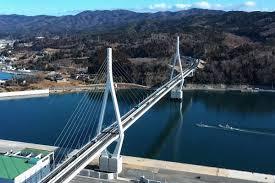
Project Fact Sheet
Project Name: Salvador–Itaparica Bridge Project
Location: Bahia State, Brazil
Project Type: Cable-stayed sea bridge and road infrastructure
Estimated Cost: $1.2 billion
Total Length: ~12.4 km
Main Span: ~900 meters
Status (2026): Pre-construction, works scheduled to begin June 2026
Completion Target: 2031
Key Components:
- Cable-stayed central bridge section
- Marine foundations and deep piling system
- Road access links on both Salvador and Itaparica sides
Projected Impact:
- Reduction of travel distance by ~100 km
- Boost to tourism and regional trade
- Replacement of ferry transport system
Project Team
Project Owner: Government of Bahia State
Model: Public-Private Partnership (PPP)
Main Contractors:
- China Communications Construction Company
- China Railway Construction Corporation
Engineering & Design:
Project Management Consultancy: SYSTRA (with Maia Melo consortium)
Financial & Institutional Partners:
- Bahia State Government
- International financing partners including Chinese-backed funding institutions
Scope Responsibilities:
- Design, construction, operation, and maintenance under long-term concession
- Environmental and regulatory compliance
- Integration with regional infrastructure systems



Leave a Reply