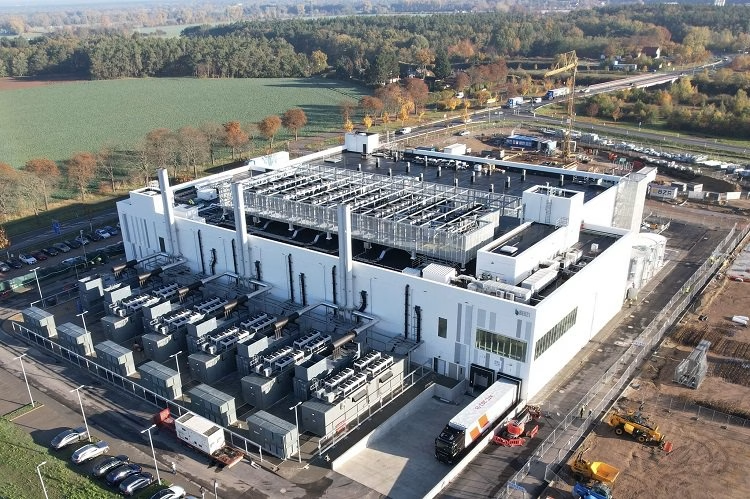
Microsoft’s massive €3.2 billion investment in German digital infrastructure has moved heavily into its construction and expansion phase. Groundwork officially commenced at the flagship 20-hectare Bergheim site, following a milestone groundbreaking ceremony. This facility will soon be accompanied by advanced developments in nearby Bedburg and Elsdorf. Furthermore, the tech giant expanded its regional roadmap by signing a conditional land purchase agreement for a fourth data center site in Grevenbroich. This entire cluster in the Rhenish mining region is architected specifically to scale sovereign cloud computing and power computationally heavy artificial intelligence (AI) workloads, utilizing closed-loop cooling and 100% green wind energy to mitigate local environmental and grid concerns.
Microsoft first announced the Rhein-Erft cluster as part of its long-term European AI expansion strategy. Since then, regional authorities have accelerated approvals to support delivery timelines. Consequently, the development now ranks among Germany’s largest ongoing digital infrastructure projects.
This multi-billion-euro expansion by Microsoft directly mirrors the broader, high-growth momentum fueling the newly announced NTT Berlin 36MW Data Center. As global tech giants rapidly scale their European AI architectures, Germany has become a primary battlefield for hyperscale capacity. While Microsoft is heavily anchoring its AI server cluster in the western region of North Rhine-Westphalia, NTT’s 36MW project, partnered with HOCHTIEF and Turner Construction, seeks to capture the surging colocation demand on the eastern side of the country. Together, these simultaneous mega-developments underscore a strategic, nationwide push to decentralize digital infrastructure outside of the traditional Frankfurt hub, ensuring low latency and data locality across both halves of Germany’s booming digital economy.
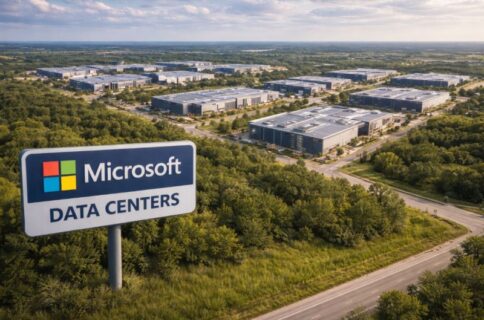
Microsoft Germany Data Center Construction Gains Momentum in Rhein-Erft
Microsoft officially advanced the project during early 2026 after launching groundbreaking activities in Bergheim. Regional leaders confirmed that Bergheim and Bedburg already secured major construction approvals. Meanwhile, Elsdorf continues progressing through advanced planning and infrastructure coordination stages.
The three facilities will operate as connected availability zones supporting cloud and AI operations. Therefore, the project will improve redundancy, data resilience, and localized computing performance across Germany. Microsoft also expects the campuses to support industrial digitalization and enterprise cloud growth.
Developers selected the Rheinisches Revier region because of its available land, strong infrastructure, and economic transition strategy. Additionally, the region continues shifting from coal-based industry toward technology and digital investment. State officials now consider the project a major catalyst for long-term regional transformation.
Construction teams continue preparing energy infrastructure, cooling systems, and fiber connectivity for the campuses. Large AI-focused facilities require massive electricity capacity because advanced processors operate continuously. Consequently, developers prioritize locations with reliable grid access and transport connectivity.
Microsoft Germany Data Center Supports Europe’s AI Infrastructure Expansion
Microsoft’s wider Germany strategy aligns closely with Europe’s growing focus on digital sovereignty and AI independence. Governments across the continent continue encouraging local hyperscale investments to reduce dependence on foreign computing infrastructure.
The Microsoft Germany Data Center project also arrives as France advances its proposed Europe AI Gigafactory development. That €10 billion initiative aims to establish one of Europe’s largest AI computing campuses. Together, the projects highlight rising investment across Europe’s AI construction sector.
Microsoft originally committed €3.2 billion toward expanding AI infrastructure and cloud operations throughout Germany. The investment includes hyperscale facilities, cloud platform upgrades, and digital training initiatives. Furthermore, the company plans to strengthen AI adoption across manufacturing, research, and enterprise services.
Industry specialists expect the development to generate strong demand for engineering, utility, and digital infrastructure contractors. Therefore, suppliers involved in substations, cooling systems, and fiber installation could benefit significantly throughout the construction cycle.
Although Microsoft has not released final operational timelines for all sites, regional authorities continue supporting rapid project delivery. Once completed, the Rhein-Erft cluster could become one of Germany’s largest AI and cloud infrastructure hubs.
Microsoft Germany Data Center Reinforces Regional Economic Transition
The Microsoft Germany Data Center development continues reshaping the Rheinisches Revier region into a technology-focused investment corridor. Local authorities expect the project to support long-term economic diversification and employment growth.
Additionally, the development could attract further hyperscale investment into western Germany as AI infrastructure demand accelerates across Europe. Regional planners now expect digital infrastructure projects to play a larger role in future industrial redevelopment strategies.
The project also demonstrates how hyperscale construction increasingly depends on energy availability, connectivity, and regional planning coordination. Consequently, European governments continue competing aggressively for large-scale AI infrastructure investments.
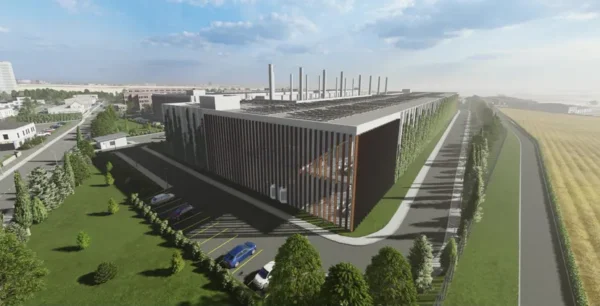
Strategic Expansion Across the Cologne Region
The Elsdorf project joins two earlier sites in Microsoft’s Rhein-Erft district portfolio: one in Bergheim and another in Bedburg. In both locations, Microsoft already purchased land and started work on sites measuring 20 and 18 hectares respectively. With the Elsdorf site, the company grows its redundancy and capacity in a region that supports multiple “Availability Zones” for resilience.
From Coal Town to AI & Digital Jobs
Mayor Andreas Heller called Microsoft’s move “From coal to AI,” a symbolic shift for Elsdorf. He expects the project will drive both economic and social growth for decades. The site’s proximity to infrastructure, like the A4 motorway, and its location near Heppendorf make it ideal. Moreover, developers see opportunities to draw skilled workers from nearby towns, especially with new housing and amenities planned.
Bigger German Cloud Commitments
Microsoft already committed €3.2 billion to double its AI infrastructure and cloud capacity in Germany. The company intends to build data centers that rely on sustainable energy sources, while also addressing surging regional demand. Leveraging its cloud region in Frankfurt and other West Central sites, Microsoft aims to expand AI, compute, and storage capacity in line with its broader European strategy, even as it faces challenges such as the recent delay of a $1 billion data center expansion in Ohio.
Infrastructure and Timeline Insights
Microsoft has not yet shared full technical details or power requirements for Elsdorf. However, the 26-hectare size suggests a hyperscale facility with redundant systems. Earlier data centers nearby are expected to go live by 2026, which gives a reference timeframe.
This center reinforces Microsoft’s push to anchor cloud infrastructure in Germany. First, Germany enjoys strong regulatory stability and renewable energy mandates, key for sustainable operations. Second, regional expansion enhances data locality for European clients who demand service availability and low latency. Third, the project contributes to local economies through job creation in construction, operations, and ancillary services.
Around the globe, Microsoft is making massive investments in purpose-built datacenters and AI infrastructure, the latest being its $4 billion commitment in Wisconsin.
Project Fact Sheet
Project: Microsoft Germany Data Center project
Location: Rhein-Erft district, North Rhine-Westphalia, Germany
Main Sites:
- Elsdorf
- Bergheim
- Bedburg
Total Investment: €3.2 billion
Project Type: Hyperscale AI and cloud data center development
Current Status (2026):
- Bergheim groundbreaking completed
- Bedburg approvals secured
- Elsdorf planning progressing
Primary Purpose:
- AI computing
- Cloud services
- Enterprise digital infrastructure
Key Infrastructure:
- Data halls
- Cooling systems
- Electrical substations
- Fiber connectivity
- Backup power systems
Strategic Importance:
- Expands Germany’s AI infrastructure
- Supports European digital sovereignty
- Strengthens localized cloud capacity
Regional Impact:
- Supports economic transition
- Creates infrastructure jobs
- Expands technology investment
Project Team
Project Developer: Microsoft
Cloud Infrastructure Division: Microsoft Azure
Regional Government Partner: North Rhine-Westphalia Government
Regional Development Authority: Rheinisches Revier
Municipal Authority:
- City of Elsdorf
- City of Bergheim
- City of Bedburg
Infrastructure Stakeholders:
- Regional utility providers
- Grid infrastructure operators
- Fiber network contractors
Sector Focus:
- Artificial intelligence infrastructure
- Hyperscale digital construction
- Cloud computing infrastructure



Leave a Reply