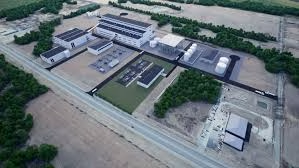
Stardust Power has secured the final major environmental permit needed to build its planned lithium refinery in Muskogee, Oklahoma, clearing a key regulatory hurdle for one of the largest proposed lithium refining projects in the United States.
The Oklahoma Department of Environmental Quality (ODEQ) has issued an air quality construction permit for the facility, allowing Stardust Power to proceed with construction and commissioning once project financing is completed. Large-scale lithium refineries that are fully permitted for construction remain rare in the U.S., where domestic processing capacity has lagged demand from electric vehicle and energy storage markets.
According to ODEQ filings, the Muskogee refinery will operate as a minor source under state and federal air regulations, with projected emissions below thresholds that would require more stringent permitting. The facility will incorporate emissions control technologies, continuous monitoring systems, and a closed-loop water process designed to recycle water and eliminate wastewater discharge.
The air permit follows a detailed technical review by ODEQ, including a public notice period. The agency has also determined that the project does not require an industrial wastewater discharge permit and has approved a General Permit for stormwater discharges associated with construction, supported by a Stormwater Pollution Prevention Plan.
“This milestone completes our construction and commissioning permitting process and positions us, subject to project financing, to move forward with building the refinery,” said Chris Celano, Stardust Power’s chief operating officer.
Advancing toward a final investment decision
With permitting now complete, the company is advancing toward a final investment decision. Once operational, the Muskogee facility is expected to produce up to 50,000 metric tons per year of battery-grade lithium carbonate, supplying domestic manufacturers as North America works to expand local lithium supply chains

Stardust Power is developing a $1.2 billion lithium refinery on a 66-acre site in Muskogee County, Oklahoma. The facility is planned in phases, with public materials targeting roughly 25,000 tonnes per year in Phase 1 and about 50,000 tonnes per year at full build-out to produce battery-grade lithium products for domestic markets.
Key project milestones include a groundbreaking ceremony held on January 22, 2025, followed by the start of initial on-site construction activities. By May 5, 2025, Stardust Power reported progress on early commercial and infrastructure agreements, including a preliminary off-take engagement with Sumitomo for part of its initial lithium output and a power infrastructure agreement with Oklahoma Gas & Electric (OG&E). Under this arrangement, OG&E will design and build the electrical infrastructure needed to supply up to 40 megawatts (MW) of power to the facility.
In December 2024, the company purchased a 66-acre property near the Port of Muskogee following a thorough environmental assessment in 2023 that confirmed the site was viable for the refinery. This location presents multiple construction and operational positives: proximity to the largest inland waterway system in the country, good road and rail access, and an oil and gas-experienced labor force.
The site also has room for future growth, as it is adjacent to a 40-acre plot in which Stardust Power has a right of first refusal.
According to Stardust Power’s CEO, Roshan Pujari, the refinery will help develop better security and supply chains within the country as it is the largest in the U.S. “By returning critical mineral manufacturing to the U.S., we’re helping to strengthen America’s energy leadership. We are excited to start construction now that the land and permits are secured,” he said.
Lieutenant Governor Pinnell emphasized, “The start of this lithium refinery in Muskogee is a big step for Oklahoma, continuing to strengthen both our mineral supply chains and national security.”
Construction Phases
Construction will be done in two phases. Phase one will include a production line with the capacity for 25,000 tonnes annually, while the second will add another line and raise total capacity to 50,000 tonnes.
Once complete, the refinery will create hundreds of jobs in engineering, manufacturing, and operations. The construction phase is expected to generate many more job opportunities in construction and support services.
The refinery is part of a broader wave of U.S. projects aimed at strengthening domestic lithium production and refining capacity. In Nevada, the Thacker Pass Lithium Mine—the largest active lithium development in the country—recently advanced with Emerson announcing new automation and control technology for its processing facilities. Meanwhile, American Battery Technology Company is progressing on its Tonopah Flats Lithium Project, which has cleared key federal environmental studies. Together, these milestones signal significant progress toward building a fully domestic battery materials supply chain.
Read also: Top 10 mining companies in the world by revenue
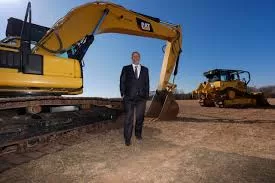
Stardust Lithium Refinery Project in Oklahoma: Factsheet
Project Overview
Location: Muskogee County, Oklahoma
Owner: Stardust Power LLC
Total Investment: $1.2 Billion
Site: 66-acre property near Port of Muskogee
Groundbreaking Date: January 22, 2025

Key Project Details
Capacity:
Phase 1: 25,000 tonnes annually
Phase 2: Total capacity of 50,000 tonnes
Strategic Advantages:
Proximity to largest inland waterway system
Excellent road and rail access
Experienced local labor force
Adjacent 40-acre plot with right of first refusal
Stardust Lithium Refinery in Oklahoma Economic Impact
Job Creation:
Hundreds of jobs in engineering, manufacturing, and operations
Significant construction phase employment opportunities
Project Timeline
December 2024: Property acquisition
January 2025: Construction commenced
Completion: Phased approach (specific dates TBD)
Environmental Considerations
Thorough environmental assessment completed in 2023
Site deemed viable for lithium refinery operations
Read also: Top Mining Countries in the World
Leave a Reply