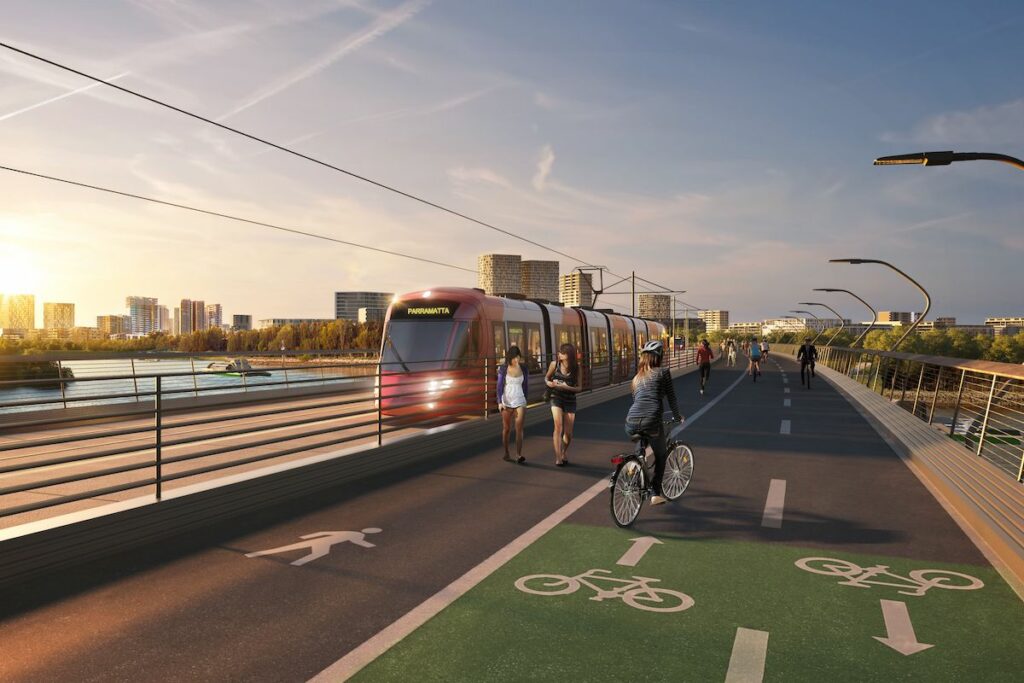
After years of planning limbo driven by budgetary constraints, the New South Wales government has finally authorized the AUD 3.9 billion (USD 2.45 billion) Parramatta Light Rail Stage 2 project. This decisive move effectively ends the uncertainty that has clouded Western Sydney’s development pipeline, officially locking in a 2027 construction start date. Crucially, this green light is not merely a transport decision but a direct response to Sydney’s acute housing crisis, as the corridor is essential to unlocking high-density rezoning in key precincts like Camellia and Melrose Park. Consequently, the project shifts from a political promise to a tangible capital works program, ensuring that the necessary infrastructure backbone is in place to support the thousands of new dwellings mandated by aggressive state planning targets.
Engineering a River Crossing Solution
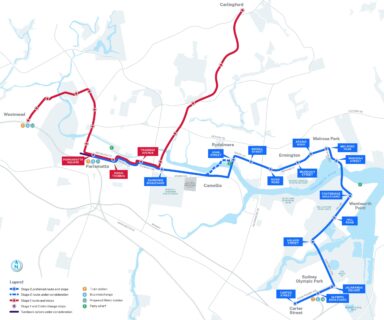
The technical scope of the project is substantial, featuring a 10-kilometer dual-track alignment that will seamlessly integrate 14 new stops into the existing network. Specifically, the engineering challenge centers on crossing the Parramatta River, necessitating the construction of two major bridges, including a massive 320-meter structure connecting Melrose Park to Wentworth Point. For the residents of Wentworth Point—a high-density peninsula historically plagued by severe traffic bottlenecks due to limited ingress/egress points—this infrastructure serves as a vital release valve, physically bridging the gap to the wider rail network without adding cars to the road. Furthermore, the alignment is designed to feed directly into the upcoming Sydney Metro West and heavy rail lines, creating a polycentric transit grid that offers a viable alternative to the congested M4 Motorway.
Parramatta Light Rail Stage 2: Factsheet
Project Name: Parramatta Light Rail Stage 2 (PLR2)
Location: Western Sydney, New South Wales, Australia
Authority: Transport for NSW (NSW Government)
Total Investment: AUD 3.9 Billion (~USD 2.45 Billion)
Route Specifications:
Length: 10 kilometers (6.2 miles)
Stops: 14 new light rail stops
Terminals: Parramatta CBD to Sydney Olympic Park
Key Construction Team:
Enabling Works Contractor: John Holland (Awarded $322M contract for bridge & initial 1.3km track)
Technical Advisors: GHD and AECOM Joint Venture
Main Works Contractor: Procurement commences 2026
Key Engineering Features:
Main Bridge: 320-meter bridge crossing Parramatta River (Melrose Park to Wentworth Point).
Secondary Bridge: Connects Wentworth Point to Carter Street precinct.
Active Transport: 8.5 km of integrated walking and cycling paths.
Timeline:
Planning Approval: Granted 2024
Construction Start: 2027
Passenger Services: 2031
Strategic Impact:
Housing: Unlocks development potential for ~100,000 residents by 2041.
Connectivity: Links to Sydney Metro West and Parramatta Ferry Wharf.
Travel Time: 37 minutes from Parramatta to Olympic Park.
Frequency: Turn-up-and-go services (7.5-minute headways peak).
Corridor Precincts: Camellia (future town center), Rydalmere (education/research), Melrose Park, Wentworth Point (high density).
Active Transport and Operational Timeline
Beyond the rail line itself, the project delivers a transformative “active transport spine” comprising 8.5 kilometers of separated walking and cycling paths running parallel to the tracks. This addition effectively separates pedestrian traffic from heavy vehicles, providing a safe, car-free commuter option that mirrors the successful “Greenway” model utilized in Sydney’s Inner West. While enabling works and geotechnical investigations are already paving the way, the heavy civil construction phase is scheduled to ramp up in 2027, targeting a commercial operation date of 2031.
This momentum in Australian rail infrastructure continues to build as ACCIONA wins a major contract for the $5.75 billion Logan and Gold Coast Faster Rail upgrade. The Queensland Government has appointed ACCIONA Construction Australia to double the rail capacity between Kuraby and Beenleigh from two to four tracks, modernizing nine stations and removing five level crossings to support the population boom ahead of the Brisbane 2032 Olympic Games.
Ultimately, this timeline aligns the transport delivery with the region’s population surge, ensuring that by the time new residential towers reach maturity, a reliable 37-minute rapid transit link to the Sydney Olympic Park events precinct is fully operational—a commitment to expanding transit networks similarly demonstrated with the Gold Coast Light Rail Stage 3. These five accessible vehicles, designed to serve the extension from Broadbeach to Burleigh Heads, bring the total fleet to 23 and are set to begin passenger service following track completion in 2025.
Leave a Reply