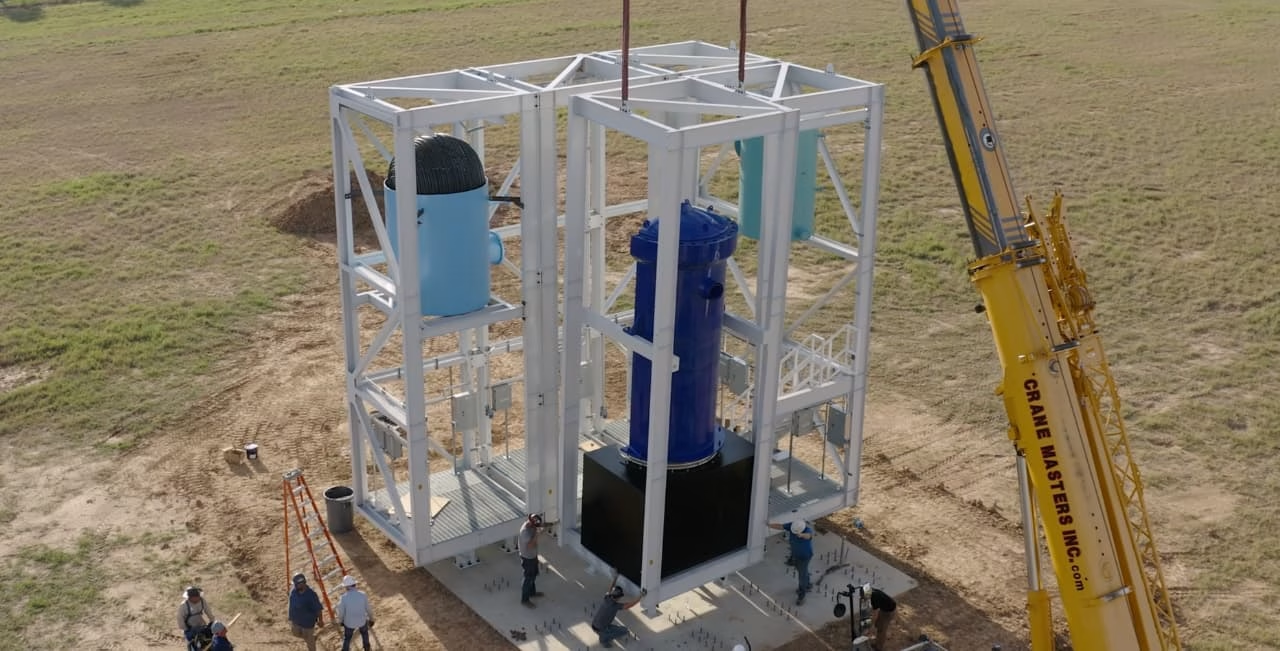
Nuclear startup Last Energy has secured $100 million in Series C to fund its small nuclear reactor project in Texas. The move comes at a time when demand for power to run artificial intelligence systems drives renewed interest in nuclear energy. The company’s funding round was led by Astera Institute and included participation from Galaxy Interactive.
It also involved Gigafund and Woori Technology. Last is developing a 20 MW micro reactor and aims to reduce production costs by incorporating off-the-shelf parts. These parts will be integrated into the common components. The company is part of a growing segment of businesses designing next-generation nuclear systems to address increasing electricity consumption.
The funding amount exceeds the $35 million Last Energy needs to complete a smaller 5-megawatt version. The smaller version is to be showcased as part of a U.S. Energy Department pilot program. “This financing fully capitalizes our DOE pilot project and positions us to transition swiftly into commercialization of our production power plants, ´ Chief Executive Officer Bret Kugelmass noted. SMR projects are taking shape across the U.S. which is seen through other projects such as the Palisades nuclear plant SMR project.
Outlook on Last Energy’s small nuclear reactor project
The implementation of the small nuclear reactor project by Last Energy marks its entrance into the market as a nuclear start up. However, they are not the only ones as numerous startups have raised funds in recent months. For instance, Google-backed X-energy raised $700 million last month. On the other hand, Antares raised $96 million two weeks ago.
In August, Aalo Atomics raised $100 million to build its prototype reactor. Though they are new entrants, Last has an idea in mind that will propel them ahead of the rest. They aim to use an old reactor design developed by the government decades ago.
The new funding will fully fund the pilot project and help the company start delivering its first commercial products, Kugelmass said. Last Energy hopes to turn on the pilot reactor next year, with its 20-megawatt commercial-scale unit entering production in 2028.
Operation on the Startup Reactor Project
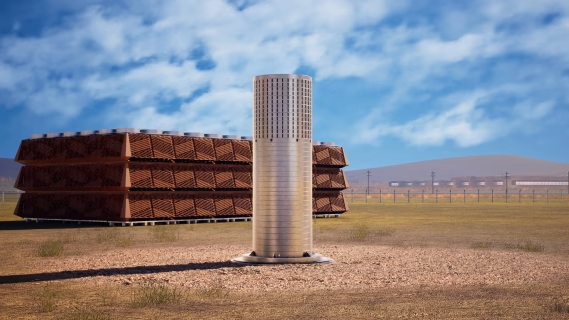
Last Energy’s small nuclear reactor is not designed to be serviced during its lifetime. Instead, Last Energy is permanently encasing each core in 1,000 tons of steel. The reactors will arrive on site fueled with six years’ worth of uranium. Apart from electrical and control connections, there are no other penetrations that break the steel wall. Heat from the fission reactions will warm the steel. On the other hand, water flowing through pipes on the outside will harvest that heat to spin a steam turbine. When the reactor’s time is up, Last Energy will leave it on site, with the steel chamber serving as the waste cask, eliminating the need for separate disposal.
Project Factsheet
Overview
Last Energy secures funding of $100m to construct small nuclear reactor in Texas.
Aims to capitalize on high energy demands from AI and data centers.
Key Partners
Developer: Last Energy
Principal Investor: Astera Institute.
Other Investors: Galaxy Interactive, Gigafund, Woori Technology.
Pilot Partner: U.S. Department of Energy.
Project Scope
A 20 MW small nuclear micro-reactor.
Building of a pilot reactor 5 MW on an DOE program.
Modular design with off-the-shelf components used to construct the factory-built reactor.
Investment Value
Total Equity Raised: $100 million (Series C)
Pilot Funding Requirement: 35 million (now completely funded)
Technology Features
Closed reactor core and no on-site maintenance.
Reactor was supplied pre-fuelled with six years of uranium.
Steel-cored core as a permanent waste containment.
Timeline
Pilot Reactor: It should commence operations in 2026.
Commercial 20 MW Units: Will be implemented by 2028.
Strategic Objective
Offer dependable and scalable baseload power.
Meet the increasing power requirement of AI and data centers.
Leave a Reply