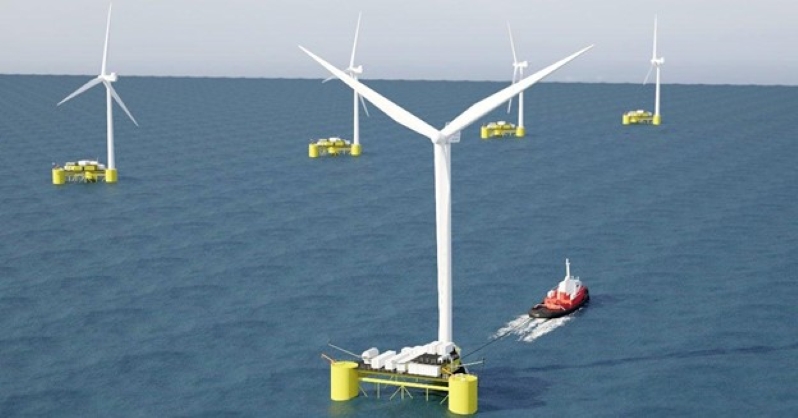
In a significant development in Scotland’s offshore wind sector, Ørsted and BlueFloat Energy have exited the Stromar floating offshore wind project, leaving Nadara as the sole owner. The development which is part of the ScotWind leasing round is a 1.5GW floating wind project off the coast of Caithness, Scotland.
Project Overview
The Stromar project is one of the most ambitious floating offshore wind developments in the UK. It is designed to harness deep-water wind resources in the North Sea.
Capacity: 1.5 GW
Location: Off the coast of Caithness, northern Scotland
Technology: Floating offshore wind turbines
Estimated output: Enough to power 1.5 million homes
Water depth: 60-100 meters
Distance offshore: 50 km
Seabed area: 256 km
The project was originally structured as a three-way joint venture between Ørsted, BlueFloat Energy, and Nadara.
What Ørsted and BlueFloat’s Exit from Stromar Means for the Floating Wind Farm Project?
The exit of Ørsted and BlueFloat Energy from Stromar floating offshore wind project is a show of hurdles the offshore wind industry is facing. This can be narrowed down to floating wind assets where costs, supply chain constraints, and changing investment priorities are reshaping project ownership structures. Nadara’s move to assume full ownership of Stromar floating offshore wind project also matched its strategy to consolidate control over key assets. This will also see the developer make accelerate decision-making across its portfolio.
This transition also follows earlier restructuring within the BlueFloat-Nadara partnership, where Nadara agreed to acquire stakes in multiple floating wind projects across the UK and Italy.
For Ørsted, the exit may signal a tightening of capital allocation toward core markets and projects with clearer near-term returns. For BlueFloat Energy, this is an opportunity to continue to refine its global pipeline and partnerships.
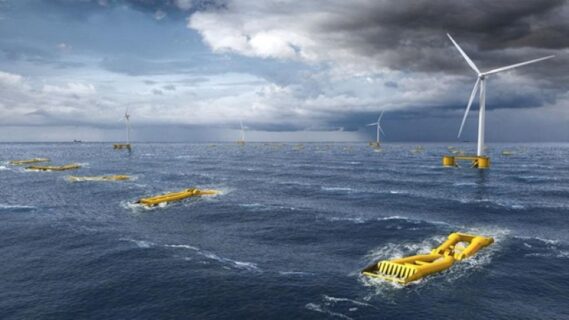
Stromar Floating Wind Project: Development and Outlook
With Nadara now in full control, Stromar floating offshore wind project is expected to proceed under a single-developer model. This will potentially streamline planning, procurement, and financing processes. Nadara has also indicated continued commitment to stakeholders, suppliers, and local communities, suggesting minimal disruption to the project’s development trajectory.
Floating offshore wind remains central to Scotland’s long-term energy strategy as the country seeks to exploit deeper waters unsuitable for fixed-bottom turbines. Scotland is also investing in multiple turbine manufacturing hubs in the country with Vestas being the latest interested investor with a €250 million nacelle and hub factory.
Additionally, the ScotWind leasing round itself represents one of the world’s largest commercial offshore wind initiatives. This shows Scotland’s ambition to become a global leader in floating wind technology.
However, challenges remain. Floating wind projects face higher capital costs, ever-changing technology risks, and infrastructure hurdles. The latter is especially true in grid connection and port capacity. Nadara’s ability to manage these risks independently will also be critical to Stromar’s progress toward financial close and construction start in 2028.
Project Team
Developer and Owner
- Nadara
Former Joint Venture Partners
- Ørsted
- BlueFloat Energy
Leasing Authority
- Crown Estate Scotland
Regulatory and Policy Framework
- Scottish Government
Stromar Floating Offshore Wind Farm Project Fact Sheet
Location: Caithness coast, Scotland
Capacity: 1.5 GW
Ownership: 100% Nadara
Previous Ownership Structure: JV (Ørsted, BlueFloat Energy, Nadara)
Leasing Round: ScotWind
Status: Development phase
Expected Start of Construction: 2028
Expected Start of Operations: Between 2030 and 2033
Leave a Reply