
Ethio-Djibouti US$ 3.4bn railway project commence full ride trials

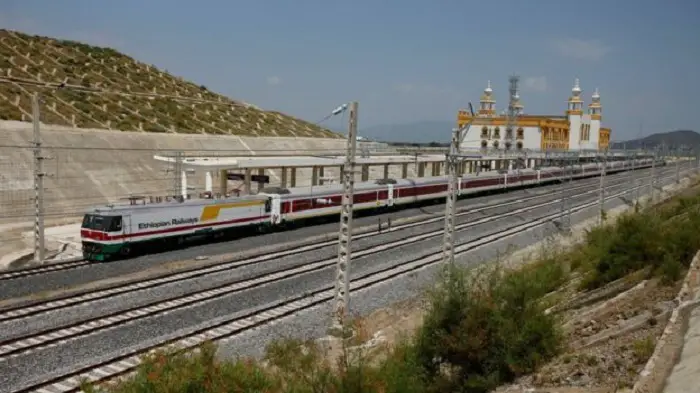
Full ride trials have commenced on the Ethio-Djibouti railway project. The trials units are prior to the commencement of passenger and freight services.

According to Dereje Tefera, Ethiopian Railways Corporation (ERC) Communication Services Head, any railway project has to undergo various trails and checking. It also needs to be certified by external institutions before it begins full operation.

China Railway Engineering Corporation (CREC) and China Civil Engineering Construction Corporation (CCECC) are in charge of managing the overall activities of the project for the coming six years.

Also read: China to construct the Lagos-Calabar coastal railway line in Nigeria

Furthermore, within the six years, the companies will train the Ethiopian and Djibouti personnel. The training will touch on operation, maintenance and the like. However, the railway construction marks Ethiopia’s commitment in fighting poverty. It will also help the country to build its image in the face of the world.

Moreover, the progress made so far regarding the full rail ride is promising and the two sisterly nations are inspecting the trial ride and other related matters. The Corporation did accord its attention to ensuring safety as the Ethio-Djibouti railway is a flagship project.

The project is also the first of its kind in the Sub-Sharan Africa.

Also read: Angola begins rehabilitating over 1000km of Railway

The project cost

The railway project was executed at a cost of US$3.4bn, with Ethiopia and Djibouti contributing 70 percent and 30 percent respectively. Ethio-Djibouti railway project stretches from Sebeta to Dewele – 656km- and from Dewle to Negad via Dorale, over 100km.

Ethio-Djibouti Railways also known as the Ethio-Djibouti Railway, is both a railway company and a railway based in the Horn of Africa. Parts of the railway still exist in 2017. The Ethio-Djibouti Railway is one of the colonial era meter gauge railways in Africa that is built between 1894-1917.

However, inside Africa, the project serves as a clear economic purpose over decades easing the transport of goods between almost inaccessible Ethiopia and the ocean and clearly replaced camel caravans as the transport means of choice.
Chinese firm launches a US$ 2.45bn prefab project in South Africa

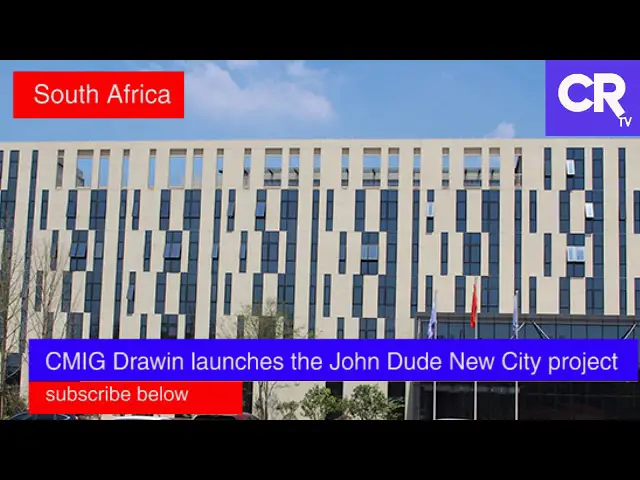
China Minsheng Drawin Technology Group (CMIG Drawin) has launched the John Dude New City project in South Africa’s Gauteng province. The US$ 2.45bn investment marks the company’s initial entry into Africa’s affordable housing market. It also introduces signature construction technology to the continent to help improve sustainable development of city construction in Africa.

CMIG Drawin will build 18,000 affordable homes which include public leasing houses and commercial properties, plus other public facilities. The project is also one of the 31 Mega City Projects in Gauteng set to improve infrastructure and create jobs for local residents.

Jun Yin, CEO of CMIG Drawin said that the move feeds into the company’s mission to build partnerships with BRICS countries. He further added that it is an affirmation of CMIG Drawin’s leading technology.

The entire project will include properties built using CMIG Drawin’s ‘prefabricated construction’ technology. Moreover, 95% of the staff will be hired locally to provide more employment opportunities in South Africa.

Also read: Boosting affordable housing in Africa using ABTs

Compared with traditional construction methods, prefabricated construction is much more efficient, productive and eco-friendly. This makes it ideal for addressing South Africa’s housing shortages with the promise of greatly-shortened construction time.

CMIG Drawin has signed framework agreements with subsidiaries of French construction group VINCI to jointly develop the prefabricated construction industry in South Africa. John Dube New City marks one of their first partnership projects. VINCI, will also adopt CMIG Drawin’s prefabricated construction techniques in other countries such as the Netherlands and New Zealand.

China Minsheng Drawin Technology Group

China Minsheng Drawin Technology Group Limited (CMIG Drawin), a unit of CMIG, is a world-leading construction service provider. The group is setting an example of high-quality, eco-friendly, and efficient construction. Having applied for more than 1,300 patents, CMIG Drawin has developed five leading technology systems for building industrialization. What’s more, the company  is actively cooperating with countries along the ‘Belt and Road’ route. In this way the firm uses its leading construction technology to help those countries upgrade their industries.


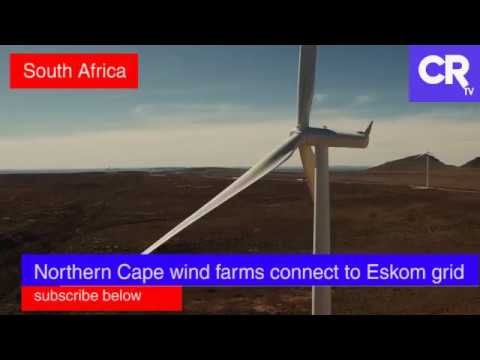
Northern Cape wind farms in South Africa connect to Eskom grid

The Loeriesfontein Wind Farm and the Khobab Wind Farm in the Northern Cape last week marked a break through as the wind farms officially connected to the Eskom grid.

The wind farms have been integrated through Eskom’s Helios Substation and commissioning of wind turbines is reported to have began.

“We energized the wind farm substations with Eskom Transmission’s Helios substation on 28 September,” the country construction manager for Mainstream Renewable Power, Kevin Foster said. He further added that it marks a pivotal point in the construction of both wind farms. It will now continue the process of wind turbine commissioning.

Wind farms supplying electricity

The wind farms are expected to start supplying electricity to the national grid by early December. They will also continue to work closely with the various Eskom teams to achieve this milestone.

Also read:Loeriesfontein Wind Farm operates on mobile transformers

“We’re working together with the Eskom teams in the Northern Cape and Western Cape Operating Unit. This aims to ensure a smooth and safe energization as well as commissioning process,” Foster added.

Khobab Wind Farm confirmed the completion of all of their 61 wind turbine generators, on 8 September, more than two weeks ahead of the expected schedule.

How the substation works

Each wind turbine is connected to a step-up transformer which boosts the voltage output of the wind turbine generator from 690 V to 33,000 V. These transformers are located outside at the base of each wind turbine.

From there these medium-voltage structure power cables are routed underground from turbine to turbine according to grouped circuits. They also bring the collective circuit power from the step up transformers to convene at the wind farm’s substation. This is where the main transformer is situated.

The substation built on the wind farm is divided into two attached substations. One is owned and operated by the wind farm; and the other – along with the overhead line – is handed over to Eskom for ownership and operation.  Each substation is given a unique name.

The two joined substations are situated in a central location to the grouped circuit power cables’ meeting point. At this end point of the circuits, the collective power from the wind farm is run through several power quality checks and various measurement devices.

Consequently, the power is directed through the main transformer where the voltage is increased again to 132,000 V.


Bujagali Energy seeking US $500 Million in fresh debt

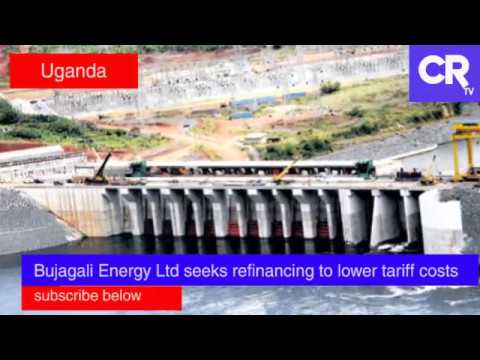
Bujagali Energy Ltd in Uganda seeks to raise US $500 million in a refinancing plan. The Ugandan power generating company’s plan will see it lower electricity tariffs at a time when the government is struggling to increase access to power.

Also read: Pressure Mounts to Lower Cost of Bujagali Power in Uganda

Sourcing of the new 15-year debt will be from the international market. The money will be used to settle current existing short term debt. These heavy repayments have forced Bujagali to price its electricity higher than other sources.

44 per cent of the country’s electricity comes from the 250MW project. However it constitutes 65% of the power generation cost.

According to a report by World Bank’s investment arm, The total amount of funds required to refinance it is US$500 million. That is the total cost of refinancing Bujagali’s existing loans and to fund costs associated both with the prepayment of existing loans and the refinancing.

IFC  has agreed to help the company to raise the remaining US $340 million from other international lenders. Meanwhile it has already  lent the company US $160 million.

Refinancing will lengthen the tenure of the company’s existing loans. Therefore this will  reduce the amount of annual debt service. In turn this will lower the project’s tariff under the power purchase agreement with Uganda Electricity Transmission Company. Making  electricity in Uganda more affordable.

Loan classification

According to IFC it will give US $100 million under a classification of Loan A and $60 million as Loan B. This means it  has the option of selling the $60 million debt to other players in the market . It  has also offered to shield the project from future movement. This will be done  in the price of loans in what is referred to as interest rate hedging.

Bujagali has been under pressure to lower its power prices.  On the other hand the government pushes to increase electricity connections in the country.  Unfortunately the connections are so low resulting in unused supply.

The government wants to reduce power from Bujagali to US $0.05. However power from the Bujagali operated dam costs US$0.1152.