
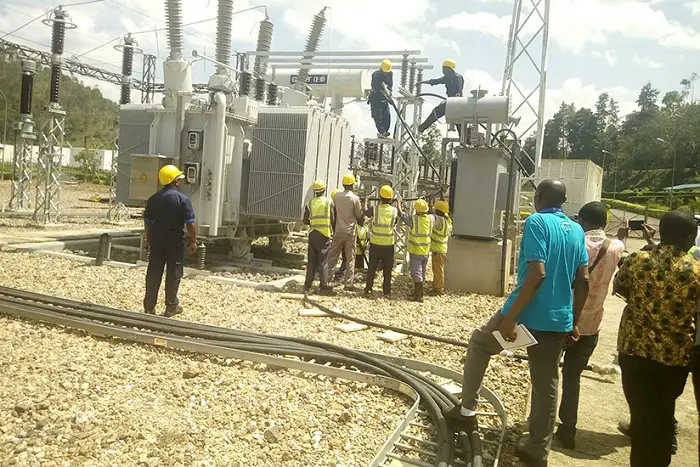
Seven South Korean firms Eye Zimbabwe’s Energy Sector

Seven South Korean Firms are scouting for energy  investment opportunities in Zimbabwe. This will include investing an initial $300 million into solar plants. This will be solar plants with the capacity to produce 220 megawatts

Mr. Partson  Mbiriri is the Energy and Power Development secretary. According to him the investment by South Korean firms would be the first technical and also commercial cooperation in the field of energy.

Also read: Kariba South Extension Project to boost Zimbabwe’s power grid

Mr. Mbiriri said that Seondo Electric Company and Parkmate Investments have engaged ZENT with an aim of creating a joint venture over the last two years. ZENT is a Zesa subsidiary.

Additionally the consortium of companies expressed interest in the manufacture of LED bulbs, hi-tech manufacturing, subsequent manufacture of solar panels, solar water geysers and general lighting.

Drafting of a contract to this effect is ongoing. Also the State Procurement Board has already endorsed the joint venture. Consequently signing of  an initial memorandum of  understanding has already taken place.

The Ministry of Energy and Power Development, Seondo Electric and Hanwha Investment and Securities (HISC) will be party to the initial MoU. Substantive agreements will then follow this.

The consortium

The consortium also comprises of  Jung-Myung Engineering, Korea Consortium,  Hyundai Power Solatech and  Bund Holding Group. Seondo Electric, Hanwha and Parkmate are also part of the consortium of  South Korean companies.

The aim of the visit by the South Korean Companies is exploring possibility of setting up medium size solar plants. This will happen in a number of substations across the country. The consortium is already touring these substations. The medium solar plants will be in Tokwe, Chertsey, Mutorashanga, Haven, Marondera, and others.

HISC will arrange the project financing. Estimation of the cost of the first phase is about $300 million. Unfortunately the total project cost is yet to be established. According to Mr. Mbiriri the initial power generation capacity they intend to generate  is 220 megawatts. Studies in terms of social and environmental impact assessment, Grid impact and  feasibility will also be handled by the consortium.
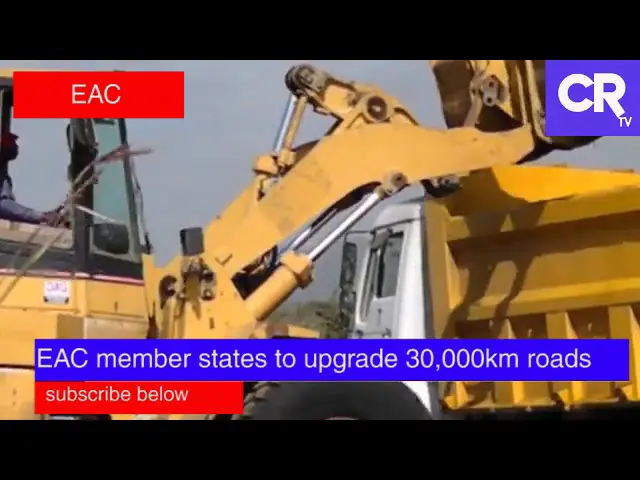
EAC member states to upgrade 30,000km road network to bitumen standards

East African Community (EAC) member states are considering upgrading their 30,000km road network to bitumen standards in the coming 33 years.

At an average rate of 900km per annum, the region is looking to cover its entire road network come 2050. This is according to EAC vision 2050.

Decent road infrastructure is among the development milestones details for the Vision 2050. The project prioritizes improved road networks to support industrialization drive and ease movements of both people and goods.

Besides, the EAC Partner States have agreed on ten transit transport corridors. The corridors constitute EAC Road Network, including twelve feeder corridors. Also maintaining the infrastructure vision under the Road Transport Sub-sector will be achieved through developing the EAC Corridors.

However, it is envisioned that 2050, the level of services along the main transport corridors will have improved substantially, reaching categories B and A, from the current average regional levels of C, D and E.

Also read: Namibia Roads Authority confirms upgrade of Windhoek-Okahandja road

Current flagship projects include Uganda’s Entebbe and Kampala-Jinja Expressways, the Mombasa-Mariakani and Chalinze Expressways in Kenya and Tanzania, respectively. Of critical importance also will be the upgrading of secondary and feeder roads from gravel to bitumen standards.

The discovery of oil and gas in the region is a boon for road construction sector. Furthermore, the costs of construction are likely to drop because of reduced import costs of petroleum based products. Moreover, the upgrading cost is likely to cost between US$20-25bn.

Nonetheless, projects prioritized under the Heads of State to relieve the congestion at the ports constitute much of the priorities in the sub- sector for the next 20-25 years.

Also read: World Bank approves US$ 200m for Zambia’s rural roads upgrade

The East African Road Network

The current East African Road Network covers Kenya, Rwanda, Uganda, Burundi and Tanzania, including the Northern Corridor (Mombasa-Voi-Eldoret-Bugiri – Kampala-Masaka-Kigali-Kibuye – Kayanza-Bujumbura), measuring 1,800 kilometres.

The 3,100-kilometre Central Corridor covers Dar es Salaam – Morogoro-Dodoma-Singida – Nzega-Nyakanazi-Bujumbura to Kigali and Gisenyi and the Dar es Salaam (TAZARA) Corridor (Morogoro-Iringa-Mbeya -Tunduma) is 1,100 kilometres.

There is also the Namanga Corridor (Iringa-Dodoma-Kalema -Arusha-Nairobi-Thika-Murang’a – Embu-Nyeri-Nanyuki-Isiolo – Marsabit-Moyale), with 1,800 kilometres.

The Sumbawanga Corridor links Tunduma-Sumbawanga-Kasulu-Makamba-Nyanza Lac-Rumonge, all the way to Bujumbura, measuring 1,300 kilometres while the Sirari Corridor (Lokichokio -Lodwar-Kitale-Bungoma-Kisumu -Kisii-Mwanza-Biharamulo) is 1,500-kilometre long.

The Coastal Corridor (Mingoyo-Dar es Salaam; Chalinze-Vanga -Mombasa-Malindi-Lamu) has 1,500 kilometres.

Also read: Uganda commissions the 66km Fort Portal-Kamwenge road

The Mtwara Corridor (Mtwara-Mingoyo – Masasi-Tunduru-Songea-Mbamba Bay) is 800-kilometre long. There are also the 500-kilometre Arusha Corridor (Arusha-Moshi -Himo-Lushoto – A1) and the Gulu Corridor (Nimule – Bibia – Gulu – Lira – Soroti – Mbale -Tororo), 600 kilometres.

The Lamu Port-South Sudan-Ethiopia-Transport (LAPSSET) Corridor (Lamu-Isiolo-Lodwar – Nadapal) transcends to Ethiopia through 1,700 kilometres.

The corridors bring the total EAC Road Corridor Network length to 15,800 kilometres, which if joined to other feeder roads, stretch to 30,000 kilometres in total.

US$150m Off-grid solar project to benefit 14 counties in Kenya

Early this week, Kenya launched the Kenya Off-grid Solar Access Project (KOSAP). This is a $150 million World Bank initiative. The intention is for the project to provide power to multiple areas across the country. This is also part of the governments 2020 vision.

Joseph Njoroge, the Principal Secretary in the Ministry of Energy and Petroleum told a media briefing in Nairobi that approximately 690,000 households in 14 counties will benefit from the project. “KOSAP will involve setting up mini-grids in areas that currently do not have connection to the national electricity grid,” Njoroge said.

Off-grid solar project

Media reports show that data from the Ministry of Energy and Petroleum indicates that 6.2 million households have electricity connection. This also represents 70% of the population.

According to Njoroge, the Northern part of the country has many arid and semi-arid areas that are not currently connected to the electricity grid. He further explained that this is because the cost of electricity infrastructure is very expensive. This is especially considering the large distances and low population densities.

“As a result these households end up having to use kerosene for lightning and cooking,” he added.

The project aims to compliment the Last Mile Connectivity Project that subsidizes households to access the national grid, media said.

Also read:First Off-Grid Solar House Unveiled in Lagos

Sudeshna Banerjee, Practice Manager, for World Bank’s Global Energy and Extractives Practice for the African Region said that the country’s electricity grid footprint remains largely localised in the central belt of the country where 80% of the population lives.