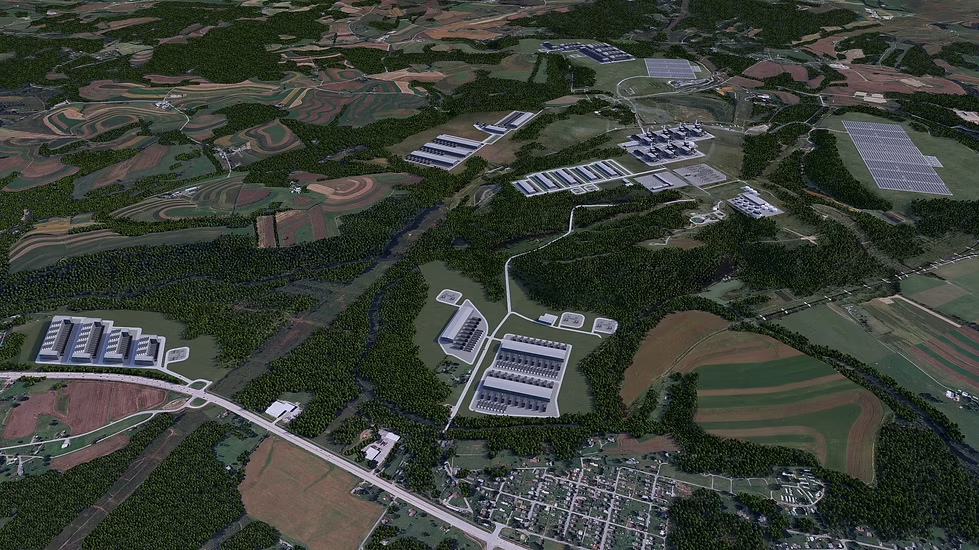
Pennsylvania’s emerging role as a major U.S. hub for artificial intelligence infrastructure is increasingly defined by a three-way split: projects already under construction, a growing pipeline of energy-backed developments, and mounting community resistance slowing or reshaping the buildout.
The Energy-First Development Model
At the center of this expansion, a new generation of hyperscale data center proposals is moving beyond standalone digital facilities to become tightly linked with dedicated energy systems.
A recent example is the natural gas infrastructure plan in Pennsylvania’s northern tier involving UGI Energy Services and Prime Data Centers. This partnership pairs pipeline and storage development with a proposed on-site, gas-fueled power system to support a future hyperscale AI campus. The project reflects a broader industry shift toward co-located energy and compute infrastructure, where power availability is now a core design constraint rather than an external utility assumption.
Transitioning from Concept to Execution
This energy-first model is already driving projects into the construction phase. In Indiana County, the Homer City redevelopment is advancing as one of the largest active energy-and-data-center builds in the United States. By combining multi-gigawatt natural gas generation with planned hyperscale computing, the project has moved from concept to active site work, marking a major milestone in the state’s AI buildout.
Localized Friction and Permitting Hurdles
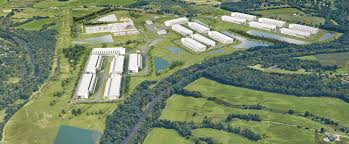
Further east, smaller but increasingly controversial clusters are emerging in places like Archbald. Here, multiple hyperscale proposals within a concentrated footprint have triggered local concern over land use, infrastructure strain, and the scale of industrial transformation.
At the same time, not all projects are advancing smoothly. In southeastern Pennsylvania, specifically East Whiteland, developers have revised or withdrawn proposals following regulatory pressure and sustained community opposition. These cases highlight the friction between rapid digital expansion and existing local zoning frameworks.
Grid Pressures and Municipal Scrutiny
This tension is occurring against a backdrop of tightening regional grid conditions. PJM Interconnection notes that large-load customers like data centers are now a primary driver of long-term demand growth, adding pressure to generation planning and transmission expansion.
The result is a fragmented development landscape:
- Active construction: Large energy-plus-data-center projects moving into the build phase.
- Pipeline development: Gas, transmission, and grid-linked infrastructure enabling future campuses.
- Permitting friction: Projects slowed or reshaped through local review.
- Community resistance: Growing pushback in suburban and rural municipalities over scale and impact.
The Path Forward
Pennsylvania is no longer seeing a linear expansion. Instead, it is navigating a multi-layered transition where energy systems, land use policy, and digital infrastructure converge—and often collide. The state is not just building data centers; it is simultaneously building the energy systems to power them while debating how this industrial-scale infrastructure fits within its communities.


Leave a Reply