The Cape Town second data center project continues to advance South Africa’s digital construction landscape, supporting growing demand for cloud infrastructure and hyperscale computing capacity. Initially announced as part of a broader expansion of regional data center facilities, the project targets increased cloud redundancy, improved latency performance, and stronger AI-ready infrastructure across the Western Cape.
Moreover, the development forms part of wider private-sector investments in South Africa’s digital economy, where hyperscale operators are scaling capacity to meet rising enterprise and government demand. Additionally, construction activity focuses on modular data halls, high-efficiency cooling systems, and resilient power infrastructure designed for AI workloads.
Cape Town second data center project advances construction works
Construction on the Cape Town second data center project has progressed through phased infrastructure deployment. Engineering teams have focused on expanding high-density server capacity and integrating advanced energy systems to support continuous cloud operations. Furthermore, electrical and mechanical installations have been prioritized to ensure operational resilience under heavy computing loads.
In addition, network interconnection systems are being upgraded to improve regional and international data traffic flow. As a result, the facility is expected to significantly enhance South Africa’s cloud hosting capability once fully operational.
Cape Town second data center project aligns with 2026 digital infrastructure growth
By 2026, the Cape Town second data center project remains aligned with ongoing hyperscale expansion across South Africa’s cloud sector. Although initial construction timelines targeted earlier completion phases, current market demand has driven continued investment into capacity upgrades and ecosystem integration.
Moreover, the project complements other regional developments, including new hyperscale cloud deployments and interconnection hubs across Cape Town. Consequently, South Africa continues to strengthen its position as a leading African data center and cloud services hub.
The project also links directly to broader infrastructure investments such as Microsoft’s $329 million South Africa cloud expansion project, which is accelerating cloud capacity and AI training across the region.
The company’s wider plans for African expansion also include the construction of a new facility. In order to provide customers with the world’s best facilities, the company is increasing its investments in the African market. It is also concentrating on Cape Town as the location for deployments. Customers can use this to reserve several sites for redundancy.
Tesh Durvasula, CEO of Africa Data Centers, asserts that the company is constructing a second facility to meet demand in the region and beyond. Cape Town has the second-largest economy in South Africa. It is recognized as the country’s IT and software hub. The market for data centers in the region is growing significantly. The city is a preferred destination for both local and international cloud software and IT service providers.
What will be offered by the second data center in Cape Town?
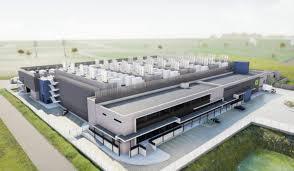
The second facility will provide capacity and redundancy for the region. Tesh said that they developed and run the city’s first hyper-scale colocation data center. The facility is currently home to a number of international providers. It also houses major South African enterprises and the government.
Despite the fact that the physical site would be significantly larger, the facility will have a leasable space of 12,000 square meters.
A popular tourist destination, Cape Town is the second-largest city in South Africa. Due to its ideal location for data centers and proximity to all the submarine cable landing points, Cape Town is a great decision. Additionally, the new facility is positioned to provide geographic redundancy with Africa Data Centers’ second facility, which is located in the southern part of the city, offering customers the alternative of deploying in two locations.
Project Fact Sheet
Project name: Cape Town Second Data Centre Project
Location: Cape Town, Western Cape, South Africa
Sector: Digital infrastructure / data centers / cloud computing
Project type: Hyperscale data center expansion
Scope of works:
- Construction of additional data halls
- Expansion of server and colocation capacity
- Installation of advanced cooling systems
- Electrical and backup power infrastructure upgrades
- Network connectivity and fiber integration
Technology focus: Cloud hosting infrastructure, hyperscale computing systems
Construction status (2026): Ongoing phased upgrades and capacity optimization
Objective: Increase regional cloud capacity and improve redundancy for enterprise workloads
Primary users: Cloud providers, enterprises, financial services, and public sector systems
Energy systems: High-efficiency cooling and redundant power supply integration
Connectivity: Direct interconnection with regional and global cloud networks
Strategic role: Supports South Africa’s position as a leading African digital infrastructure hub
Project Team
Project developer: Africa Data Centers (Cassava Technologies subsidiary)
Primary operator: Hyperscale data center and colocation service provider
Engineering design team: Data center infrastructure and modular construction specialists
Civil works contractors: South African construction and infrastructure firms (project-specific appointments)
Mechanical & electrical contractors: Data center power, cooling, and systems integration specialists
Technology partners: Cloud infrastructure providers supporting hyperscale workloads
Network providers: Fiber and telecommunications operators enabling regional connectivity
Energy consultants: Specialists in high-efficiency power systems and redundancy design
Regulatory authorities: Western Cape provincial government and municipal planning authorities
Skills and training partners: ICT workforce development and technical training institutions
Project management team: Cassava Technologies infrastructure delivery and operations division
Quality assurance teams: Data center compliance, reliability, and uptime monitoring specialists

Leave a Reply