
The E18 Western Corridor motorway project in Oslo continues to progress as Norway upgrades a critical transport artery connecting Lysaker and Asker through major infrastructure works. The project forms part of a long-term national strategy to modernize the E18 corridor and improve traffic flow into the capital region. Additionally, it aims to reduce congestion, enhance safety, and support sustainable mobility across one of Norway’s busiest road networks. Skanska was originally awarded a major contract for a key section between Fornebukrysset and Strand, marking a significant phase in corridor delivery. Moreover, the works include tunnels, interchanges, cycle routes, and extensive road realignment across densely populated suburbs.
E18 Western Corridor motorway project in Oslo reaches advanced construction phase
The E18 Western Corridor motorway project in Oslo is now in an advanced execution stage as major structural works continue along the alignment. Construction began in 2023 and is scheduled for completion around 2030, reflecting a long-term infrastructure rollout plan. Currently, contractors are focusing on tunneling works, earthworks, and utility relocation across multiple active work zones. In addition, several bridge structures and interchange modifications are progressing simultaneously along the corridor.
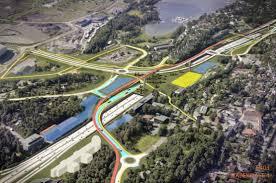
The project includes a 2.3-kilometre motorway section designed with 2×3 lanes to increase capacity. Furthermore, the scope incorporates major tunnels such as Høvik and Gjønnes to streamline traffic flow. Environmental certification targets remain high, with BREEAM Infrastructure “Excellent” standards guiding delivery. Consequently, sustainability and emissions reduction remain key priorities throughout construction.
E18 Western Corridor motorway project in Oslo reshapes transport efficiency
The E18 Western Corridor motorway project in Oslo is transforming how traffic moves through the capital’s western approach. As a result, road users are already experiencing phased traffic diversions and temporary disruptions. However, authorities are maintaining continuous traffic flow through staged construction sequencing. Moreover, safety upgrades and modern traffic systems are being integrated into the new corridor design.
The project also includes new cycle routes and improved pedestrian infrastructure. In addition, local road networks are being reconfigured to reduce conflict points and congestion. Therefore, the long-term outcome is expected to significantly improve regional mobility. Meanwhile, the corridor remains a key national investment in Norway’s transport modernization strategy.
The E18 Western Corridor development aligns with broader European motorway expansion trends, including the recently reported Prague–Poland motorway project led by VINCI, which is strengthening cross-border connectivity across Central Europe.
The scope of the contract entails designing and constructing a new motorway with 2×3 lanes. It covers a distance of 2.3 kilometers between Fornebukrysset and Strand. It also includes the construction of a continuous cycle route along the entire section and a local access road to the Fornebu area. Additionally, the project involves building two tunnels, the 660-meter Høvik Tunnel and the 440-meter Gjønnes Tunnel. Furthermore, they will be tasked with modifications in the nearby local road systems to incorporate pedestrian and cycle paths.
READ ALSO: Milan-Rome Railway Expansion Project: Work begins on Florence Tunnel
Start and completion of the construction of the new E18 Motorway in Oslo
The current section of the E18 motorway has been plagued by traffic congestion. It also has limited public transportation access and significant noise and air pollution problems. As part of the project, Skanska will ensure compliance with all necessary environmental standards. Furthermore, it will seek BREEAM Infrastructure certification at the “Excellent” level.
Construction is set to commence in a few months, with completion expected by early 2030. Throughout the project, Skanska will prioritize environmental considerations and work towards mitigating the existing issues of traffic congestion and pollution, ultimately improving transportation infrastructure in the Oslo region.
Project Fact Sheet
Project Name: E18 Western Corridor Motorway Project (Oslo Section)
Location: Lysaker – Strand corridor, Oslo metropolitan region, Norway
Country: Norway
Client: Norwegian Public Roads Administration (Statens vegvesen)
Contract Value: Approx. NOK 4.6 billion for key section
Main Contractor: Skanska (key motorway section contract)
Project Scope:
- 3 km motorway (2×3 lanes)
- Tunnel construction (Høvik Tunnel, Gjønnes Tunnel)
- Interchanges and local road upgrades
- Cycle and pedestrian infrastructure
- Utility relocation and drainage systems
Construction Start: 2023
Expected Completion: Early 2030
Design Standard: BREEAM Infrastructure – Excellent
Project Type: Urban motorway expansion and tunneling works
Objective: Reduce congestion, improve safety, and modernize Oslo western corridor access
Project Team
Client / Owner: Norwegian Public Roads Administration (Statens vegvesen)
Main Contractor: Skanska Norge
Joint Delivery Partners: Civil engineering subcontractors and tunneling specialists (regional infrastructure firms)
Design & Engineering Consultants: Multidisciplinary consortium supporting road alignment, tunneling, and structural design
Environmental Certification Authority: BREEAM Infrastructure assessment bodies
Municipal Stakeholders: Bærum Municipality and Oslo transport authorities
Utility Coordination Partners: Water, wastewater, and power network operators
Traffic Management Authorities: Norwegian Road Traffic Control and safety agencies
Key Disciplines: Highway engineering, tunneling, geotechnical engineering, environmental planning, and urban mobility design




Leave a Reply