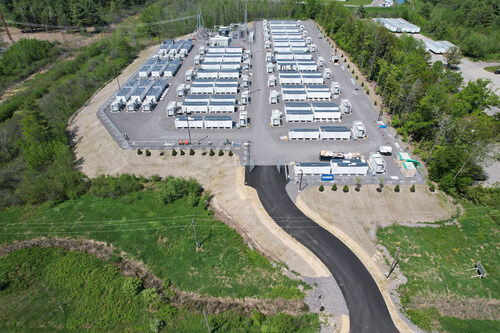
Plus Power has begun operations at its Cross Town Energy Storage facility in Gorham, Maine, marking the state’s first utility-scale standalone battery energy storage project and the largest of its kind currently operating on the ISO New England power grid, according to the company.
The 175-megawatt, 350-megawatt-hour facility is designed to store excess electricity during periods of low demand and discharge power during peak usage, a function grid operators use to balance supply and demand and reduce reliance on fossil fuel-fired generation during high-stress periods.
Maine Governor Janet Mills said the project is expected to help lower electricity costs and improve grid reliability, particularly during extreme weather events that strain regional power supplies. This is alongside others like Three Rivers Solar project that is also involved in community engagement initiatives.
The project was developed as part of Maine’s broader push to expand energy storage capacity. The state has set a target of deploying 400 megawatts of battery storage by 2030 as it works toward meeting renewable energy goals that call for 90% of electricity sales to come from renewable sources by 2030 and 100% by 2040.
The Cross Town facility occupies approximately five acres and is interconnected near Central Maine Power’s 115-kilovolt Moshers substation, an area of the transmission system that experiences frequent congestion. Its location allows stored energy, including wind power generated in northern Maine, to be delivered more efficiently to demand centers in southern Maine and the Boston area.
ISO New England, which operates the regional electricity grid, has increasingly relied on battery storage as older gas-fired and other conventional power plants retire. Projects such as Cross Town are expected to help offset lost generation capacity while supporting system reliability.
Battery units
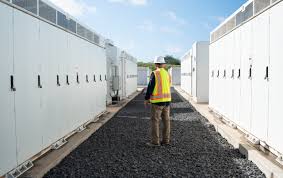
The facility consists of 156 battery units supplied by Sungrow and was built with engineering, procurement, and construction support from Maine-based Cianbro Corporation.
Cross Town is Plus Power’s second operational battery energy storage project in New England. Its 150-megawatt, 300-megawatt-hour Cranberry Point Energy Storage facility in Carver, Massachusetts entered service in spring 2025.
According to the company, Cranberry Point was fully available during a heat-driven supply shortage on June 24, when regional electricity demand exceeded forecasts and wholesale power prices spiked. Both Cranberry Point and Cross Town were also fully operational during Winter Storm Fern, which brought prolonged cold temperatures across New England and tested the region’s power system.
As extreme weather events become more frequent, grid operators across the region are increasingly turning to battery storage to manage demand volatility and limit price spikes during peak conditions.
While Cross Town focuses on utility-scale storage in Maine, companies like Lunar Energy are expanding U.S. home battery deployments, reflecting a growing trend in distributed energy storage. Lunar Energy recently secured $230 million in funding to accelerate its residential battery expansion.
Project Factsheet: Cross Town Energy Storage
Project name: Cross Town Energy Storage
Developer: Plus Power
Project type: Utility-scale standalone battery energy storage system (BESS)
Status: Operational
Location:
Gorham, Maine, United States
Grid operator:
ISO New England
Interconnection point:
Central Maine Power 115-kV Moshers substation
Installed capacity:
Power: 175 MW
Energy: 350 MWh
Technology:
Lithium-ion battery energy storage system
Battery supplier:
Sungrow (PowerTitan system)
Number of battery units:
156
Site footprint:
Approximately 5 acres
Project Team
Developer: Plus Power
Grid Operator: ISO New England
Battery Supplier: Sungrow (PowerTitan system)
Engineering, Procurement & Construction (EPC): Cianbro Corporation (Maine-based)
Interconnection / Transmission Support: Central Maine Power
Primary functions:
Store excess electricity during periods of low demand
Discharge energy during peak demand periods
Reduce transmission congestion
Support grid reliability during extreme weather events
Role in regional power system:
Provides capacity and energy services to ISO New England
Helps offset capacity losses from retiring gas and other thermal power plants
Facilitates delivery of wind power from northern Maine to southern New England demand centers
Policy context:
Supports Maine’s target of deploying 400 MW of battery storage by 2030
Aligns with state renewable electricity goals of 90% by 2030 and 100% by 2040
Engineering, procurement, and construction:
Cianbro Corporation (Maine-based)
Developer’s regional portfolio:
Cross Town Energy Storage (175 MW / 350 MWh), Maine
Cranberry Point Energy Storage (150 MW / 300 MWh), Carver, Massachusetts (operational since spring 2025)
Leave a Reply